‘A Cinema Behind His Eyes’

The desert was a patient thing, older than the towns that dotted its edge and the rumours that lingered like heat mirages. It did not hurry; it did not worry. It simply breathed in the dawn and exhaled, time tasting grainy, sun-warmed air. And in this vast quiet lived a man named Rafi, whose home was a shack of sun-baked bricks and a roof that sagged like a tired camel. Rafi had no access to the things most people clung to, mobile phones, televisions, and the internet. He did not miss them, exactly, because he had never known them as more than stories told by others with fingers stained by ink and eyes tired from bright screens. Instead, he carried something else, something more intimate: a cinema behind his eyes.

Each morning, the desert woke with a soft hiss of wind over sand. Rafi would rise, stretching like a cat that had slept with its gaze fixed on distant dunes. He kept his world simple: a ledger of days, a small pot of water, a handful of dates, and his memory. The memory was not a collection of dates or numbers, but a living theatre that played whenever he needed it. If he walked to the edge of a cliff where the earth dropped away into a blue heat, his cinema offered him a panorama of the day to come. He could replay the way the sun glowed first on one ridge, then on another, like a celestial painter testing colours. He could hear the crisp whisper of a breeze that would pass through the date palms by the dry riverbed. He could feel the tremor of a distant thunderstorm, even when it stayed far beyond the horizon, a rumour in the air.

If a passer-by stopped by his shack to trade news or water, Rafi would listen with the careful attention of someone who knows how stories travel through footprints, through the way a camel’s knee bends on the sand, through the scent of rain that’s only a rumour until it touches skin. And in his cinema, those stories did not simply exist as words; they became scenes with actors, with light that shifted and trembled, with music that rose and fell like dunes breathing. One evening, a girl named Luma wandered into his life, drawn by the lazy glow of a stubborn desert sunset. She carried a notebook and a bottle of ink, things the city called useless, and yet she believed writing could carry a memory from one place to another. She asked, softly, if he ever forgot. Rafi shook his head, a slow, almost imperceptible movement that mirrored the swaying of a palm tree in a gentle wind.

“I do not forget,” he said, and his voice carried the weight of a man who had learned to listen to the world until it spoke back in its own language. “I remember everything, and between the remembered shadows and the remembered lights, there is a cinema behind my eyes.”

Luma was patient. She asked to see this cinema, not as a trick or a spectacle, but as a companion to the stories they could tell together. So he closed his eyes, and the desert quiet pressed in, and the cinema opened. He saw the first dawn he could recall, not just as a colour but as a sound, the hum of distant bees, the crackle of dry grass as the sun’s first kiss touched it. He saw his mother’s hands, calloused with years of tending oil lamps and whispered prayers. He saw the first spring rain, a gentle curtain of droplets turning the clay of the earth into a mirror. She watched as the images unfurled with a patient grace, a procession of seedlings breaking through hard soil, a caravan moving like a slow river, a child learning to walk and then to run with the light of a whole village inside him. The cinema did not demand attention; it offered it as a gift, a steady tide that washed away the fear that loneliness might someday swallow a person whole.

“Why tell stories to the sand when you can tell them to the wind?” Luma asked, half-jest, half-wonder.

Rafi smiled, a quiet widening of lips that had learned generosity from years of listening.

“Because the wind forgets, sometimes. The sand remains, but the shapes it remembers fade with the sun. My cinema remembers more than a handful of days; it remembers a lifetime.”

In his cinema, he did not simply relive memories; he reinterpreted them. He learned to see the world through a sun-drenched lens where even misfortune became a scene with a turning point. A drought did not merely dry the wells; it set the stage for a decision to stay, to walk, to share a bloom of resilience with those who would listen. And people did come, beggars, merchants, and shepherds, a traveller with a cracked flute who claimed the desert had stolen his tune. They came not for news, but for a glimpse of the man whose eyes could render a full life as if it were a screen playing on a wall of air and memory. Rafi never spoke much about the cinema; he allowed it to show itself in actions, how he would mend a broken jar with wax and patience, how he would guide a wayward goat back to its penned friends, how he shared the last of his water with a stranger who asked for nothing in return. The cinema behind Rafi’s eyes was more than nostalgia. It was a compass, pointing toward moments when courage is just a decision you make while the world murmurs around you. It was a map of choices: to endure a hardship with quiet grace, to give when you have little, to remember when everyone else forgets. It was a chorus of tiny, intimate revolutions, the way a day can be survived by knowing exactly how it begins and ends, and what happens in between.

One day, a storm rolled in with the ferocity of a hundred drums. The desert weathered the night with a raw, unfiltered rage. The rain that followed was a rare confession, a memory poured into the earth until it remembered to drink again. In those hours, Rafi’s cinema did not merely show him what had happened; it rehearsed what could happen next. He saw, with crystal clarity, the steps necessary to salvage a family’s store of water and to keep their wells from going dry. He saw the faces of the neighbours who would lend their hands, the children who would gather wild grasses to feed the herd, the old man who would tell stories that stitched the community back together. When dawn finally arrived, pale and forgiving, the desert smelled of wet stone and green growth where it had never dared to show such life before. Rafi rose, not with triumph, but with a quiet resolve. He had learned that the cinema behind his eyes was not a prison of memory, but a living collaborator always ready to illuminate the path forward.

Luma stayed with him for a time, writing in her notebook the sentences the desert whispered when no one else was listening. She copied one line into her pages, a single, luminous truth: a man who lived where there were no screens could still see more clearly than most, because he did not merely observe; he remembered, and his memory became a cinema, a sanctuary where the past and future met and chose to walk hand in hand. In the end, the desert did not change Rafi’s world, and Rafi did not save the desert in any grand way. He did something quieter: he kept the space between people alive with memory. He showed that a life without modern contraptions could still be rich with connection not through notifications, but through the art of noticing, of listening, of turning a barren landscape into a stage where human warmth could perform its daily miracle: the simple act of being present.

And when the wind rose again, carrying the sigh of the dunes and the faint strains of a distant flute, Rafi would close his eyes, let the cinema behind them open, and smile at the living film of the world, clear, intimate, and forever unfolding before him. 

The Day After Halloween

The morning after Halloween arrived with a soft, pale light that belonged to no season and all seasons at once. The town lay in a curious hush, as if the world itself was letting out a sigh after a long, wild party. There were candy wrappers like fallen confetti strewn along the sidewalks, and a faint scent of cinnamon and rain lingered in the air. Beyond the old clock tower, where the town’s gears creaked and sighed, a seam of pale frost appeared along the cobblestones. It wasn’t ice but the beginning of a doorway, thin and shimmering, like a heat mirage that had learned to whisper. The creatures of the night, who had danced under the streetlamps and stirred the shadows with laughter that tasted of danger and delight, began to drift toward it.
The goblins, still wearing their impish grins and pockets full of trinkets, counted the last of their glittering loot and tucked it away. Their hands, stained with chalky dust and moonlight, moved with surprising tenderness as they tied small knots in their little satchels, ensuring nothing spilled into the waking world. Werewolves, who had sung to the moon in a chorus of howls that could shake windows, paused at the threshold of the mist. Their fur still carried the scent of the night, earth, rain, and pine yet their eyes held something softer now, a lineage of loyalty to a world that no longer needed guardians in a hunt. They offered a wary nod to the town, as if to say: we leave the hunt to the dark and return to the dark’s house. Spirits drifted with a measured ease, their forms wavering like candle smoke. They carried with them the memory of laughter that tasted like autumn sugar and the ache of goodbyes spoken in a language older than stone. They glided past alleyways and gardens, leaving behind a delicate frost that sparkled with tiny, unspoken promises. Some wore expressions of mischief that would have frightened a mortal, but the day’s calm offered them a moment of pause rather than a boast.

Ghouls and shadows, silk-wrapped phantoms and lantern-eyed wraiths all moved toward the seam with a surprising uniformity. It was as if a tide of night had been receded, leaving behind an ocean of memory and the soft thump of real-world feet resuming their everyday rhythms: a dog’s eager bark, a kettle singing to itself, a bicycle bell that rang in the distance.
In the center of town, Mrs Alderney, who ran the little bakery that baked more dreams than bread, stood on the last step of her shop, watching the pale seam. Her chalk white apron fluttered in the dawn breeze, dusted with flour and something like starlight. She had spent the night listening to the stories of the day after, the stories told by those creatures who had wrapped the night in their own form of poetry and menace.

“Until next year,” she whispered, as if addressing both the town and the departing travellers. Her voice carried not fear but a gentle familiarity, the way an old grandmother’s voice carries a soft warning and a warm joke in the same breath.

The goblins paused, counting their steps back toward the seam, and the werewolves tilted their heads in a rare gesture of gratitude. The spirits, who often forgot to speak in anything but sighs and chimes, paused to tilt their translucent faces toward the bakery’s warm light. It was as if a single, unspoken agreement passed between them: we visit, we feast, and we fade until the next turning of the calendar when the door will open again. When the last of the wanderers stepped through the seam, the frost dissolved into dew that clung to leaves and ribbon spun spider webs. The town woke in a careful way, as if waking from a dream in which you were sure you’d forgotten something important, and then remembered you’d forgotten all the wrong things. Children who had chased their shadows the night before woke to find their costumes still clinging to the corners of their rooms like friendly ghosts who had not quite finished telling their stories. They traded their masks for crayons and notebooks, their pockets for clean hands, and their mouths for the first sincere “please” and “thank you” of the day. The mayor, who always kept a pocket watch for emergencies, found himself with a moment of unusual clarity. The city might forget the exact shape of a goblin or the echo of a howl, but it would not forget the lesson etched into its heart by their brief presence: difference is a kind of magic, and magic loves a world brave enough to let it pass in and out like breath.

As the sun climbed higher, painting the town in gold and the soft green of early fall, something in the air carried a note of promise. Not a vow of fear, but a vow of wonder: that the world is large enough to hold both the ordinary and the extraordinary, and that, come next Halloween, the door might open again, not for chaos, but for a shared moment of awe.
And so, with the day after Halloween spreading calm like a quilt over the town, the spirits, ghosts, werewolves, goblins, and creatures of the dark world returned to their own realm, content that they had kept a delicate balance between mischief and mercy. Peace settled into the streets, like a lullaby hummed at dusk, until the next year when the music would play again and the seam would glow once more with the soft light of a world that believes in magic even for just one night a year.

The Bench Beneath the Moon – A Story for Halloween

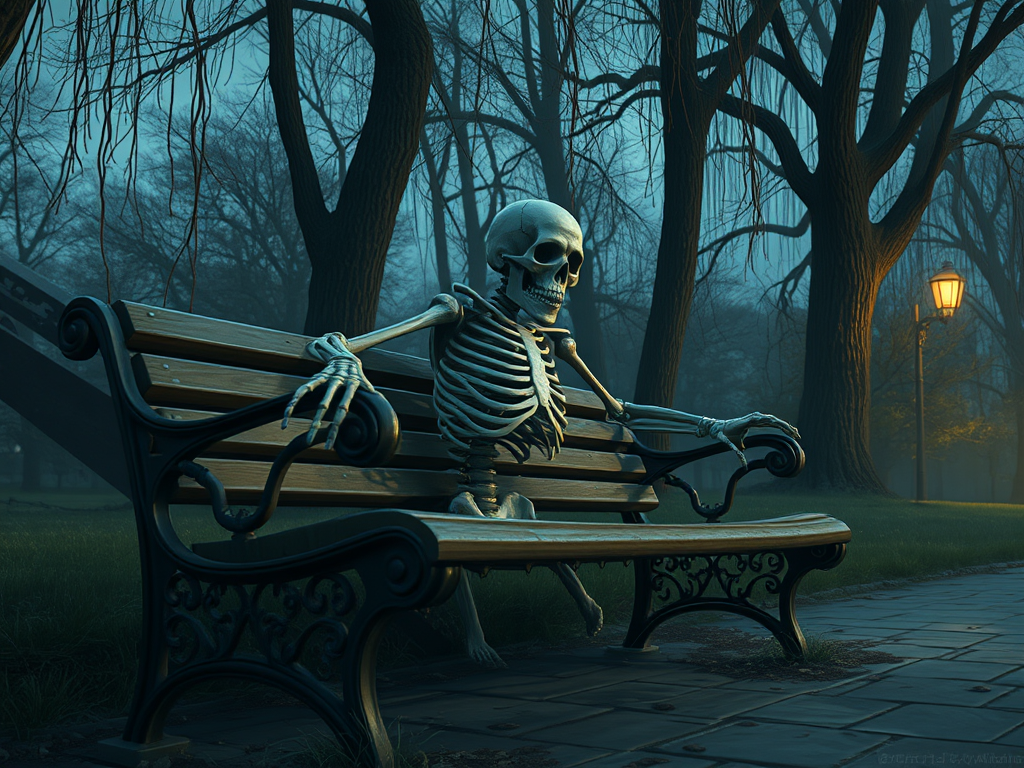
The Park, a sprawling mouth of shadows, swallowed the last yawns of daylight as a chill crept along the grass. Leaves skittered like frightened promises across the benches, and a solitary streetlamp flickered with the stubborn glow of a tired lighthouse in fog. It was Halloween, all the way from the first orange of dusk to the final graveyard hush of midnight, but tonight the park wore its spookiness with a slow, almost reverent patience. In the oldest corner, where trees bent like old storytellers, stood a park bench weathered by more conversations than the town library cared to admit. Its wood bore the quilted marks of a hundred seasons, and two iron arms were etched with the names of picnics that had never forgotten the taste of summer. It looked as ordinary as a seat can look when it has learned to listen.

From the creak of those iron joints rose a sigh, a breath of something long unspent. The bench shuddered, not with fear but with memory, and then like a page turning in a book left out in the rain something began to unthread itself from the wood beneath the seat. It wasn’t a ghost in the blustering, streaking sense; it was more precise, more patient: a skeleton, radiant in a pale, glimmering fear, stepping from the bench as if the bench itself was a cocoon. The bones wore a suit of dust and old dusk, a cloak of autumn’s last sighs. The skull tilted, the jaw creaked, and a rough, cheerful voice once bright, now hollow whistled from it. The skeleton glanced around, ears long since retired in the flesh, listening for sound remembered from a century ago: the soft chime of a bell on a bicycle, faraway laughter of a child, clink of a glass toasting the night.

“Do you hear it?” it questioned, though no one stood near to hear except the rustle of leaves and the shy tremor of a distant crow. The skeleton’s eye sockets glowed with pale blue light, not anger but insistence, a beacon in the half-light. It stood upon the bench’s edge as if on a tightrope between two lives, between then and now. It wasn’t hunting fear or chasing a haunting. It was seeking something gentler: a memory to finish, a farewell to grant, a name that could finally be spoken aloud without tremor. For years, decades perhaps, connections had frayed around the town’s Halloween festival. The living would come with lanterns and laughter, and the dead would drift with the wind, collecting the crumbs of the day’s happiness.

But this particular night, a thread tugged the skeleton toward the living world: a letter, long misplaced, written by a girl who had grown up and learned to forget the names she used to call her neighbours. The letter, tucked in a desk drawer of a house long since gone quiet, spoke of a promise to return, to tell a story that would bind the living and the dead in a single breath. The skeleton found the bench because it was the last place the girl, now a grown woman, sat with her grandmother on the night of her tenth birthday. The grandmother whispered a ritual in her ear, one that promised that on Halloween, the veil between the worlds would open just enough for a small truth to cross.

So the skeleton waited, patient as a librarian who knows every overdue book by heart. It listened for the creak of a distant gate, the soft sigh of a bicycle tyre, the whisper of a name spoken in the dark. And when the woman finally arrived, lantern in hand and pockets full of memories, the corridor between then and now widened. The skeleton stepped forward, not to frighten but to answer.

“Is it you?” the woman asked, voice tremulous yet steady.

“I am you, once,” the skeleton replied, its voice a wind through dry leaves. “And you, perhaps, are me, once more, if we tell the story true.”

It spoke the name they had promised to remember together, and with that, the park exhaled a quiet sigh of relief. The bench, no longer merely wood and iron, settled back into its old, patient seat, and the night hummed with the soft glow of restored promises.

Why now? Because Halloween is the hour when endings learn to breathe again, and beginnings, too, are given a chance to stand in the light and be remembered.

LOVE KNOWS NO END – ELIZABETH HAMILTON PYLYPIW – BOOK REVIEW

LOVE KNOWS NO END by Elizabeth Hamilton Pylypiw is a delightful book of verse dedicated to her son Kris, who sadly passed away suddenly from natural causes a decade ago. One hundred and thirteen poems of beauty speaking to the grief and loss of a beloved son invite the reader, to join Elizabeth on a helter-skelter of emotion and moreover, a journey of deep everlasting love. The book is beautifully illustrated with images and memories of the life Kris lived.

‘Sometimes in our lives something happens that turns our world upside down. It’s the loss of a child. A grief like no other and life as we knew it, is never the same again.’

Just over a year after her son Kris, passed to spirit, Elizabeth began writing poetry depicting many aspects of Kris’s life. For her, this was a talent she never knew existed. Writing such powerful verse is in itself most carthartic. Kris was only thirty-two when the wings of death embraced him, a short life but as Elizabeth’s words tell us, a life well lived. The beauty inherent within her prose is a clear testament to the range of emotions a parent may face with the loss of a child.

The prose is very easy to relate to especially when considering the emotive subject of grief and loss. Grief is a very personal emotion but in this beautiful book we find many themes relatable to all.

‘Spirituality comes in may forms, places and deeds. My spiritual faith and knowledge have been an immense insight for staying positive’

I strongly recommend this book for any parent facing the grief and loss of losing a child, therapists and anyone interested in the subject of bereavement.

‘Interview with Elizabeth Hamilton Pylypiw in Conversation with Lazarus Carpenter’ (Recorded for Book at Bedtime – Tales from Wales, Oystermouth Radio)

Available on Amazon https://amzn.eu/d/ewI6fdy

Paperback 12.50 – Kindle 9.99

Proceeds of book sales are donated to MIND

Lazarus Carpenter

Inspector Septimus Summer-Garden and the Case of the Missing Teddy Bear

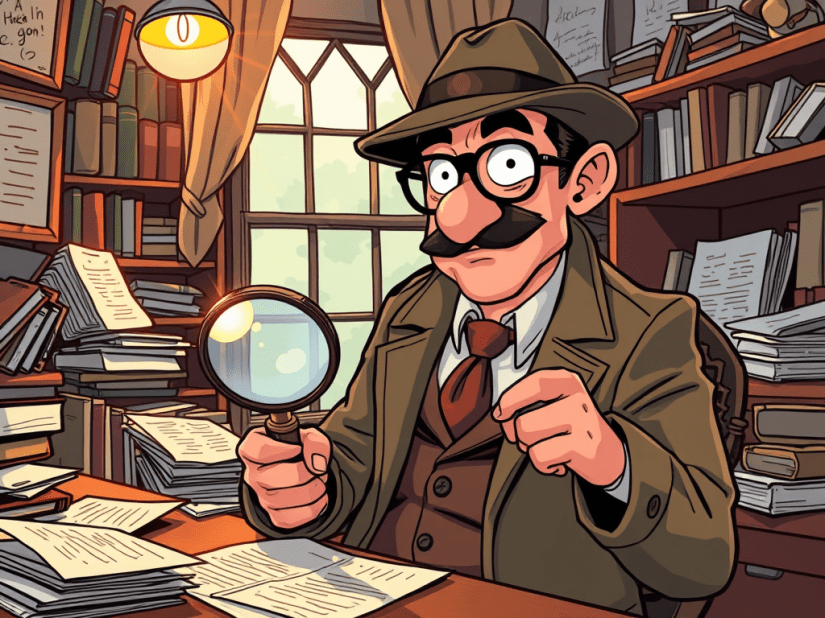
Inspector Septimus Summer-Garden tipped his hat at a suspiciously grand angle, shuffled his umbrella just so, and peered at the town clock as if it might reveal its own alibi. The bell above the door of Mellish & Co. Antiques gave a polite tinkle, and Septimus stepped inside as if he were entering a parlour where every chair had a secret.

“Good afternoon,” he announced to the shop, as if addressing a court. “I am here to investigate a most peculiar case, the case of the aging balding teddy bear named Rufus.”

The shopkeeper benevolently raised an eyebrow.

“Rufus is at the back, dear boy,” she said, pointing toward a dim corridor lined with velvet ropes and the soft scent of mothballs and lemon wax. “He’s been with us since the days of village fairs and the annual puddings contest. Which I suppose doesn’t help your case much, Inspector.”

Septimus wheeled into the back room, where a display case gleamed with the sort of pride that only comes from owning a lot of things people once loved. In the center sat Rufus: a classic teddy bear, hand-sewn with patchwork fur that had once been a cheerful cinnamon but now wore patches of balding wool like little pause marks on a sentence. Rufus’s glass eyes seemed to blink in apology at every wobble the inspector made as he approached. Rufus had two obvious problems. First, his fur was thinning in patches, particularly across the crown where the stuffing peeked through like a shy bump on a road. Second, his eyes once bright as buttercup petals had a certain faraway look, as if Rufus were thinking about something you wouldn’t understand, perhaps a biscuit he’d never eaten or a child he’d never hugged again.

Septimus cleared his throat.

“I understand you’ve noticed some… changes with the subject of our inquiry.”

The shopkeeper nodded.

“Changes indeed. Rufus arrived in this town when a Mrs. Alderidge donated him to the hospital fund drive. He’s always drawn crowds, a certain sentimental magnet, you see. Then suddenly, well, not suddenly, but over a few weeks the fur started thinning, and the little bald patches grew. We thought perhaps the museum’s climate was a touch too dry, or perhaps Rufus had a secret life as a magician and was shedding his tricks.”

Septimus studied Rufus with the seriousness of a man who had once stopped a clock from running by arguing with it. He pressed a gloved finger to Rufus’s paw, feeling the seams. He listened to the creak of the joint between arm and torso, the sort of creak that says, “I have been hugged by countless small children and probably a few overzealous grandmothers who insisted on tucking in the stuffing.” He examined the back, where a tiny tag lay, worn nearly smooth by decades of handling.

“Tell me about the last time Rufus was treated with care,” Septimus said, not looking at the shopkeeper but at the bear as if Rufus might respond.

The shopkeeper shrugged.

“The hospital volunteers took him for a charity visit three weeks ago. The children sang the bear’s song,” she added with a smile.

Septimus nodded slowly. A song. A bear. A case. He opened the display case a fraction, just enough to let in a breeze that carried the faint scent of peppermint and old oak. The inspector’s mind, which often resembled a mildly caffeinated hedgehog, began to feel around the edges of the problem. Clues were never as loud as the obvious; they were whispers tucked into corners, like moths in a wardrobe. He started with the obvious fuel for a mystery of this kind: the room’s climate and Rufus’s materials. The shop’s owner had mentioned moths and indeed the air carried a faint suggestion of their presence, a grandma’s attic musk that felt protective and a touch accusatory at the same time.

“Let’s have a look at the stuffing,” Septimus said, producing a small magnifying glass from his pocket with the fanfare of a magician revealing a rabbit.

He peered under the bear’s seam and found something surprising: not rot or mold, but a faint, chalky residue almost like the trace of old sugar dust. He touched it with a gloved finger and sniffed, then frowned as if he’d smelled a memory.

“Dusting powder?” ventured the shopkeeper, half afraid to know.

Septimus shook his head. “No. This is talcum dust with a hint of cinnamon and there it is, a signature.” He looked at the tag again, then at the shelves. “Rufus has the sort of care label you don’t usually see on children’s toys or vintage bears, almost as if he were treated as a patient and not a playmate.”

The shop fell quiet except for the distant lilt of a child’s laughter from the street, the sound curiously like a memory slipping through the cracks of time. Septimus visited the hospital the next day, dragging his umbrella with him as if it were a witness. The children greeted Rufus with the same enthusiasm you’d reserve for an old hero returning from a long voyage. A nurse named Mrs. Wimple guided Septimus to a quiet corner where a small group of volunteers stood by a card table with a banner reading: Rufus’s Radiant Rescue.

“Is this the bear you were looking for?” Mrs. Wimple asked with a dry smile.

Septimus offered her a small, apologetic bow.

“Ma’am, I am chasing a theory that Rufus is aging due to a combination of wear and perhaps unseen care. I’d like to interview anyone who has handled him closely in the last few weeks.”

A little girl with a ribbon in her hair stepped forward.

“I remember reading a story to Rufus during the last visit. He listened very kindly when I read about a brave clock that forgot the time. He didn’t blink when I bumped the case and whispered to the man with the red scarf.” She frowned. “Is Rufus sad? He looked a little sad after we left.”

Septimus crouched to the girl’s level, listening as if he were a seashell listening to the ocean.

“Sometimes sadness wears a fur coat and a pair of button eyes,” he said softly. “But sometimes sadness is just yesterday’s rain tapping at the window.”

Back at the ward, he found something else: a receipt tucked in Rufus’s back seam, not something that would have belonged to a toy’s care, but a charity donation receipt dated three months ago, signed by a Dr. Mallory, the hospital administrator known for keeping long hours and shorter tempers. The receipt was for a “special preservation experiment” not the kind of thing ordinarily disclosed in a fundraising drive, but not unheard of in a hospital that changed its fundraising strategies with the seasons. Septimus sat on a chair in the quiet corner and thought about the weird phrase: preservation experiment. The phrase had a clinical bite to it, as if someone were treating Rufus not as a teddy bear but as something to be studied, catalogued, and perhaps cured of some ill. He tucked the receipt into his coat and returned to the shop to gather people for another conversation.

“Let us consider the possibility that Rufus is aging not by malice but by method,” he announced to the shop’s patrons, who had gathered as if a stage show had begun. “It is possible he has been part of a controlled study, one that involves materials that degrade with time, perhaps a rare local ramie fiber mixed with wool causing thinning fur and a slow, almost dignified receding of his hair, like a gentle old man’s receding hairline.”

A murmour travelled through the crowd, half skepticism, half reverence for the inspector’s inferential appetite. The shopkeeper, who had a soft spot for theatrics and good-natured gossip, shrugged.

“Well, if Rufus is the subject of some secret experiment, I hope he’s being treated kindly. He’s always been kind to us.”

Septimus, who had a knack for finding structure in chaos, retraced the morning’s steps. He visited the attic above the shop a cluttered sanctuary of forgotten things where every trunk had a story and every moth hole whispered a rumour. He found a small metal box wedged behind a stack of dusty hats. Inside lay a set of tiny vials labeled with dates and letters: “Aging Elixir—test batch A,” “Stability Compound,” and a few plain, almost innocent-looking labels that suggested something scientific but not dangerous, more like a test specimen for a new kind of textile preservation. The inspector’s eyes widened slightly, then settled back into their usual kindly-narrow gaze. He pocketed the box, careful to note every lable’s placement and every footprint on the attic’s floor. The evidence suggested someone had been experimenting with Rufus’s fur, perhaps to study how materials age under certain environmental conditions. But why Rufus, and who? That evening, Septimus returned to Mellish & Co. with more questions than answers. The shop’s bell chimed a tired welcome, and the shopkeeper poured him a cup of tea that steamed with curiosity more than heat.

“Inspector, you look like you’ve discovered a map in a teacup,” she teased gently.

Septimus sipped, thinking of the child’s laughter, the memory of the missing clock in the hospital ward, and the tiny vials in the attic. He put Rufus’s speaking-stuffing theory aside for a moment, and instead looked at the people who had touched Rufus, the volunteers, the nurses, the donors, the patients. The bear belonged to more than one life; he had collected pieces of many hearts.

“Dr. Mallory,” he finally said, almost to himself, “the administrator with the long hours and the shorter tempers.” He paused, then added aloud, “He had access to the attic, to the hospital’s spare materials, and he cared about Rufus in the way someone cares about a symbol.”

The shopkeeper glanced at him with a curious mixture of awe and scepticism. “Are you saying Dr. Mallory is a saboteur of fur and memory?”

“No,” Septimus replied. “I am saying he might have used Rufus as a vessel for an idea, a project that romanticises aging, assigns it a process, and thus makes it easier to discuss with donors when you talk about preserving the past. The audacious thing is that Rufus’s case has become a symbol within this hospital’s fundraising strategy.”

The next day, Septimus visited the hospital with a calm certainty that comes from having seen a lot of human logic fail to account for human kindness. He spoke with Dr. Mallory in a quiet office filled with charts and a single flower, wilting in a vase. The doctor wore the fatigue of people who solve other people’s problems for a living and forget to eat. Septimus presented the evidence tagged fur samples, vials in the attic, the donation receipt tied with a thread of conscience.

“Is Rufus aging?” Mallory asked, not defensively but with a sort of worn curiosity. “He is older than most of the patients who pass through here. He’s a symbol of a time when care wasn’t measured in metrics but in hugs.”

Septimus nodded, his mind balancing between the literal and the sentimental.

“Perhaps Rufus isn’t aging because someone is harming him. Perhaps he is aging because he represents a memory of a time when people believed objects could carry kindness. If you tell a story about Rufus aging, you invite people to care for him, to care for others. If that is the case, then what we must do is ensure Rufus receives that care, not an experiment.”

Mallory looked thoughtful, and for once not defensive but reflective. He admitted that the hospital’s fundraising literature had indeed embraced the idea of Rufus as a “vessel of time,” a gentle nudge to remind people of aging and memory. He hadn’t realised the emotional weight his framing placed on the bear’s fur, nor how it might be misinterpreted by anxious volunteers and grateful children.

Septimus returned to the shop, Rufus nestled in the quiet corner as if listening to the world’s soft weather report. He spoke to the bear as one speaks to a patient in need of rest after a long journey.

“Rufus,” he said softly, “you are not merely a relic to be studied or a prop to raise funds. You are a memory keeper, and your fur’s thinning is a reminder of the many hugs you have carried. If your hair is thinning, it is because your life has absorbed time like a tree that grows rings to show its age.” He patted Rufus’s head with the lightest of touches, making the bear seem almost to sigh in contentment.

The town’s people, hearing of the inspector’s theories and the hospital’s confession, began to treat Rufus with renewed tenderness. The bear would spend weekends in the hospital’s lobby, not as a display but as a guest, listening to children read stories, volunteering to model “how to hold on to love gracefully” with a bravery that wasn’t loud but deeply felt. The elastic in Rufus’s joints still creaked, and the fur still thinned in the crown, but the community’s care mended what time and neglect had threatened. In the weeks that followed, the mysterious case of the aging balding teddy bear became, for Septimus, a story about memory, care, and the gentle power of misinterpreted clues. He left the bear with a small card tucked under his paw: a reminder that some mysteries aren’t solved with perfect logic but with patient listening, with the willingness to accept that a bear can be loved into old age by the people who adore him.

Back in Mellish & Co., Septimus was asked if he would declare the case closed. He looked toward Rufus, who seemed to decide, in his quiet, button-eyed way, to blink once, as if to say, “Yes, the case is closed — by love.”

“Case closed,” he announced to the patrons, with a bow that was more wry grin than grand gesture. “Rufus is aging, yes, but only in the sense that a cherished life accumulates stories and scars that make it all the more precious. Let us not force him to be younger than his history. Let us allow him to be Rufus.”

And so Inspector Septimus Summer-Garden, the bumbling, generous, endlessly curious detective went away with a sense of completion that didn’t rely on a neat bow but on the soft, unfolding story of a teddy bear, a hospital lobby, and a town that learned to grow a little kinder with every passing season. Rufus, for his part, remained on his shelf in the back room, listening to the room’s quiet, and whenever a child pressed their face to the glass and whispered, “Rufus,” he would tilt his head just so, and the room would seem, for a heartbeat, to remember all the hugs that had ever crossed their paths.