The desert was a patient thing, older than the towns that dotted its edge and the rumours that lingered like heat mirages. It did not hurry; it did not worry. It simply breathed in the dawn and exhaled, time tasting grainy, sun-warmed air. And in this vast quiet lived a man named Rafi, whose home was a shack of sun-baked bricks and a roof that sagged like a tired camel. Rafi had no access to the things most people clung to, mobile phones, televisions, and the internet. He did not miss them, exactly, because he had never known them as more than stories told by others with fingers stained by ink and eyes tired from bright screens. Instead, he carried something else, something more intimate: a cinema behind his eyes.
Each morning, the desert woke with a soft hiss of wind over sand. Rafi would rise, stretching like a cat that had slept with its gaze fixed on distant dunes. He kept his world simple: a ledger of days, a small pot of water, a handful of dates, and his memory. The memory was not a collection of dates or numbers, but a living theatre that played whenever he needed it. If he walked to the edge of a cliff where the earth dropped away into a blue heat, his cinema offered him a panorama of the day to come. He could replay the way the sun glowed first on one ridge, then on another, like a celestial painter testing colours. He could hear the crisp whisper of a breeze that would pass through the date palms by the dry riverbed. He could feel the tremor of a distant thunderstorm, even when it stayed far beyond the horizon, a rumour in the air.
If a passer-by stopped by his shack to trade news or water, Rafi would listen with the careful attention of someone who knows how stories travel through footprints, through the way a camel’s knee bends on the sand, through the scent of rain that’s only a rumour until it touches skin. And in his cinema, those stories did not simply exist as words; they became scenes with actors, with light that shifted and trembled, with music that rose and fell like dunes breathing. One evening, a girl named Luma wandered into his life, drawn by the lazy glow of a stubborn desert sunset. She carried a notebook and a bottle of ink, things the city called useless, and yet she believed writing could carry a memory from one place to another. She asked, softly, if he ever forgot. Rafi shook his head, a slow, almost imperceptible movement that mirrored the swaying of a palm tree in a gentle wind.
“I do not forget,” he said, and his voice carried the weight of a man who had learned to listen to the world until it spoke back in its own language. “I remember everything, and between the remembered shadows and the remembered lights, there is a cinema behind my eyes.”
Luma was patient. She asked to see this cinema, not as a trick or a spectacle, but as a companion to the stories they could tell together. So he closed his eyes, and the desert quiet pressed in, and the cinema opened. He saw the first dawn he could recall, not just as a colour but as a sound, the hum of distant bees, the crackle of dry grass as the sun’s first kiss touched it. He saw his mother’s hands, calloused with years of tending oil lamps and whispered prayers. He saw the first spring rain, a gentle curtain of droplets turning the clay of the earth into a mirror. She watched as the images unfurled with a patient grace, a procession of seedlings breaking through hard soil, a caravan moving like a slow river, a child learning to walk and then to run with the light of a whole village inside him. The cinema did not demand attention; it offered it as a gift, a steady tide that washed away the fear that loneliness might someday swallow a person whole.
“Why tell stories to the sand when you can tell them to the wind?” Luma asked, half-jest, half-wonder.
Rafi smiled, a quiet widening of lips that had learned generosity from years of listening.
“Because the wind forgets, sometimes. The sand remains, but the shapes it remembers fade with the sun. My cinema remembers more than a handful of days; it remembers a lifetime.”
In his cinema, he did not simply relive memories; he reinterpreted them. He learned to see the world through a sun-drenched lens where even misfortune became a scene with a turning point. A drought did not merely dry the wells; it set the stage for a decision to stay, to walk, to share a bloom of resilience with those who would listen. And people did come, beggars, merchants, and shepherds, a traveller with a cracked flute who claimed the desert had stolen his tune. They came not for news, but for a glimpse of the man whose eyes could render a full life as if it were a screen playing on a wall of air and memory. Rafi never spoke much about the cinema; he allowed it to show itself in actions, how he would mend a broken jar with wax and patience, how he would guide a wayward goat back to its penned friends, how he shared the last of his water with a stranger who asked for nothing in return. The cinema behind Rafi’s eyes was more than nostalgia. It was a compass, pointing toward moments when courage is just a decision you make while the world murmurs around you. It was a map of choices: to endure a hardship with quiet grace, to give when you have little, to remember when everyone else forgets. It was a chorus of tiny, intimate revolutions, the way a day can be survived by knowing exactly how it begins and ends, and what happens in between.
One day, a storm rolled in with the ferocity of a hundred drums. The desert weathered the night with a raw, unfiltered rage. The rain that followed was a rare confession, a memory poured into the earth until it remembered to drink again. In those hours, Rafi’s cinema did not merely show him what had happened; it rehearsed what could happen next. He saw, with crystal clarity, the steps necessary to salvage a family’s store of water and to keep their wells from going dry. He saw the faces of the neighbours who would lend their hands, the children who would gather wild grasses to feed the herd, the old man who would tell stories that stitched the community back together. When dawn finally arrived, pale and forgiving, the desert smelled of wet stone and green growth where it had never dared to show such life before. Rafi rose, not with triumph, but with a quiet resolve. He had learned that the cinema behind his eyes was not a prison of memory, but a living collaborator always ready to illuminate the path forward.
Luma stayed with him for a time, writing in her notebook the sentences the desert whispered when no one else was listening. She copied one line into her pages, a single, luminous truth: a man who lived where there were no screens could still see more clearly than most, because he did not merely observe; he remembered, and his memory became a cinema, a sanctuary where the past and future met and chose to walk hand in hand. In the end, the desert did not change Rafi’s world, and Rafi did not save the desert in any grand way. He did something quieter: he kept the space between people alive with memory. He showed that a life without modern contraptions could still be rich with connection not through notifications, but through the art of noticing, of listening, of turning a barren landscape into a stage where human warmth could perform its daily miracle: the simple act of being present.
And when the wind rose again, carrying the sigh of the dunes and the faint strains of a distant flute, Rafi would close his eyes, let the cinema behind them open, and smile at the living film of the world, clear, intimate, and forever unfolding before him.
The morning after Halloween arrived with a soft, pale light that belonged to no season and all seasons at once. The town lay in a curious hush, as if the world itself was letting out a sigh after a long, wild party. There were candy wrappers like fallen confetti strewn along the sidewalks, and a faint scent of cinnamon and rain lingered in the air. Beyond the old clock tower, where the town’s gears creaked and sighed, a seam of pale frost appeared along the cobblestones. It wasn’t ice but the beginning of a doorway, thin and shimmering, like a heat mirage that had learned to whisper. The creatures of the night, who had danced under the streetlamps and stirred the shadows with laughter that tasted of danger and delight, began to drift toward it. The goblins, still wearing their impish grins and pockets full of trinkets, counted the last of their glittering loot and tucked it away. Their hands, stained with chalky dust and moonlight, moved with surprising tenderness as they tied small knots in their little satchels, ensuring nothing spilled into the waking world. Werewolves, who had sung to the moon in a chorus of howls that could shake windows, paused at the threshold of the mist. Their fur still carried the scent of the night, earth, rain, and pine yet their eyes held something softer now, a lineage of loyalty to a world that no longer needed guardians in a hunt. They offered a wary nod to the town, as if to say: we leave the hunt to the dark and return to the dark’s house. Spirits drifted with a measured ease, their forms wavering like candle smoke. They carried with them the memory of laughter that tasted like autumn sugar and the ache of goodbyes spoken in a language older than stone. They glided past alleyways and gardens, leaving behind a delicate frost that sparkled with tiny, unspoken promises. Some wore expressions of mischief that would have frightened a mortal, but the day’s calm offered them a moment of pause rather than a boast.
Ghouls and shadows, silk-wrapped phantoms and lantern-eyed wraiths all moved toward the seam with a surprising uniformity. It was as if a tide of night had been receded, leaving behind an ocean of memory and the soft thump of real-world feet resuming their everyday rhythms: a dog’s eager bark, a kettle singing to itself, a bicycle bell that rang in the distance. In the center of town, Mrs Alderney, who ran the little bakery that baked more dreams than bread, stood on the last step of her shop, watching the pale seam. Her chalk white apron fluttered in the dawn breeze, dusted with flour and something like starlight. She had spent the night listening to the stories of the day after, the stories told by those creatures who had wrapped the night in their own form of poetry and menace.
“Until next year,” she whispered, as if addressing both the town and the departing travellers. Her voice carried not fear but a gentle familiarity, the way an old grandmother’s voice carries a soft warning and a warm joke in the same breath.
The goblins paused, counting their steps back toward the seam, and the werewolves tilted their heads in a rare gesture of gratitude. The spirits, who often forgot to speak in anything but sighs and chimes, paused to tilt their translucent faces toward the bakery’s warm light. It was as if a single, unspoken agreement passed between them: we visit, we feast, and we fade until the next turning of the calendar when the door will open again. When the last of the wanderers stepped through the seam, the frost dissolved into dew that clung to leaves and ribbon spun spider webs. The town woke in a careful way, as if waking from a dream in which you were sure you’d forgotten something important, and then remembered you’d forgotten all the wrong things. Children who had chased their shadows the night before woke to find their costumes still clinging to the corners of their rooms like friendly ghosts who had not quite finished telling their stories. They traded their masks for crayons and notebooks, their pockets for clean hands, and their mouths for the first sincere “please” and “thank you” of the day. The mayor, who always kept a pocket watch for emergencies, found himself with a moment of unusual clarity. The city might forget the exact shape of a goblin or the echo of a howl, but it would not forget the lesson etched into its heart by their brief presence: difference is a kind of magic, and magic loves a world brave enough to let it pass in and out like breath.
As the sun climbed higher, painting the town in gold and the soft green of early fall, something in the air carried a note of promise. Not a vow of fear, but a vow of wonder: that the world is large enough to hold both the ordinary and the extraordinary, and that, come next Halloween, the door might open again, not for chaos, but for a shared moment of awe. And so, with the day after Halloween spreading calm like a quilt over the town, the spirits, ghosts, werewolves, goblins, and creatures of the dark world returned to their own realm, content that they had kept a delicate balance between mischief and mercy. Peace settled into the streets, like a lullaby hummed at dusk, until the next year when the music would play again and the seam would glow once more with the soft light of a world that believes in magic even for just one night a year.
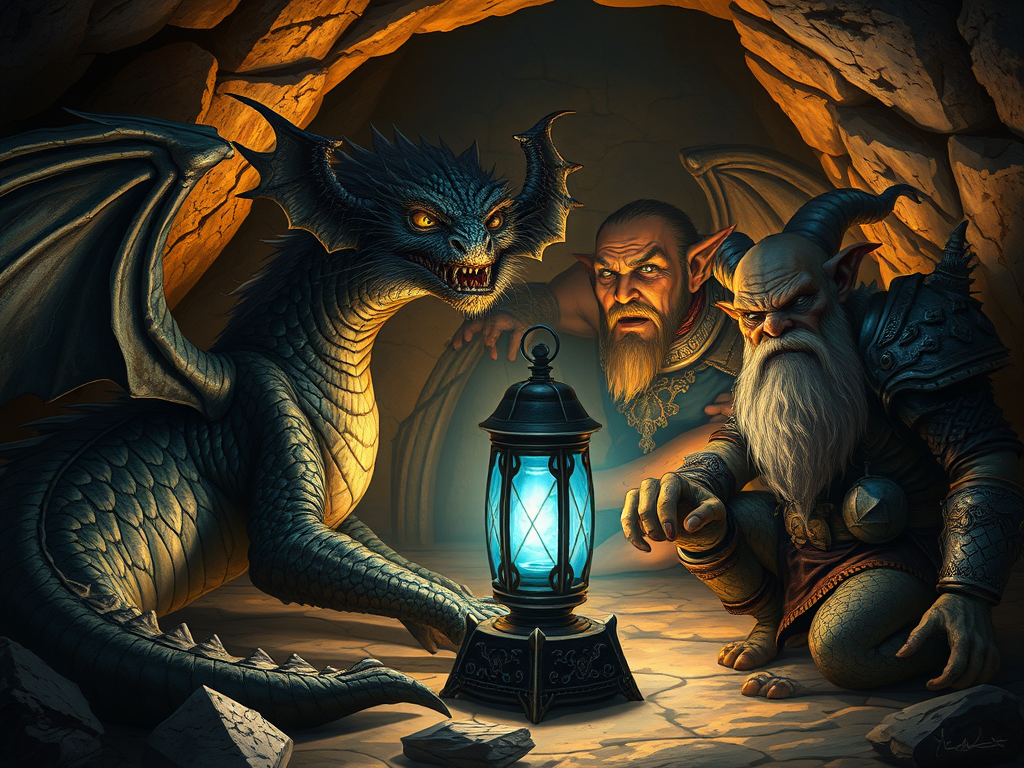
On Halloween night, when the world wore a cloak of mist and the caverns of Dan y Ogof whispered with ancient secrets, a goblin named Gril, a dwarf named Thoren, and a dragon named Emberth awoke from their long, stony slumber. Dan y Ogof, the Ogof Caves, stretched underground like a sleeping beast. Torch-lit passages curled into black mouths, and the air smelled of coal, damp earth, and something sweeter that no map could name. It was here, in a deep amphitheatre carved by rivers of time, which the trio found themselves drawn to a rumour carried by the echoes: a pot of imaginary gold.
Gril the goblin scampered first, quick as a spark among wet stones. His eyes, pale and mischievous, watched the walls for pockets of air where the cave might hum a tune only goblins could hear. He wore a hat pitched too far back on his head, a patchwork coat that never kept out the chill, and a grin that suggested a clever plan for any situation so long as that situation involved mischief. Thoren the dwarf followed, his beard braided with tiny bells that tinkled with each careful step. He carried a pickaxe that glittered with runes and a lantern that burned with a blue flame, steady as a heartbeat. Thoren was a keeper of things: maps, stones, stories, and the stubborn certainty that every problem has a creatable solution, even one as slippery as a ghost’s whisper.
Emberth the dragon did not fly here for gold or glory. Dragons in this region learned not to crave the glitter of coins but the quiet of ancient places where silence was a treasure too heavy to carry. Emberth’s scales sang soft emeralds and coal, and his breath smelled faintly of pine sap and old parchment. He had come to listen, to hear the cave tell its story, as dragons often did when their kind wandered far from the roar of mountains. As they descended, the cave opened like a mouth that remembered names. Stalactites hung from above, each a slender reminder of a long-forgotten calving of rock. Stalagmites rose like patient guardians, and the floor bore a river’s memory, a dry bed that kept the scent of the water that once carved the world.
“A pot of imaginary gold,” Gril announced with a bow that nearly toppled him, “is the finest sort of treasure to chase on a night like this. If you catch it, you own nothing and everything at once.”
Thoren grunted, a sound half amusement, half caution.
“Imaginary or not, we must be clever enough to find the place first, and stubborn enough to leave before the cave decides we are not welcome.” He tapped the pick on his boots, a rhythm that felt like a heartbeat inside the earth.
Emberth lifted his head, listening. The cave, old as stars and patient as a dragon’s memory, offered a slow, rolling murmur, like distant thunder wrapped in velvet. “If the gold exists here,” the dragon said, “it will reveal itself as a story rather than a coin. We must learn the cave’s tale to claim our prize.”
They pressed deeper, following a corridor that breathed in a wave-like pattern, as if the rock itself exhaled and inhaled with a step. The air grew cool, and the walls glowed faintly with mineral sheen, as though the cave wore a lullaby in its minerals. At the heart of the cavern, the trio arrived at a vast chamber, a theatre of stone. In the center stood a pedestal, and upon it rested a pot, not of metal or clay, but of glassy darkness that reflected the three travellers more clearly than any mirror could. Inside the pot shimmered nothingness, a void that hummed with potential, the imaginary gold that Gril had described, a gold that could become any worth you imagined, yet would vanish the moment you held it too tightly.
Gril leaned in, eyes glittering. “The pot is a trap for want,” he whispered. “It feeds on the hunger for more, turning desire into a loop.”
Thoren scanned the chamber, tapping the floor with his pick. “If we are meant to claim it, the cave will test us with a riddle or a challenge that reveals our true intent.”
Emberth circled the pot, wings folding with a soft sigh. “To hold it is to acknowledge that you can never own what you cannot truly see. Imaginary gold is a moral more than a treasure.”
They stood before the pot, the moment stretching, a thread pulled tight between old legends and the present. The cave seemed to lean closer, listening as if the walls themselves had opinions about goblins, dwarves, and dragons who walked in search of something that was not a thing but a choice.
Gril spoke first, his voice a spark flickering to life. “We came for something that doesn’t rust or rot, something that can be shared in stories and kept in memory. If we take it, we must be careful not to let it turn us into what we fear most: those who forget the world outside their desires.”
Thoren added, “Sometimes the best treasure is the wisdom to know when to leave well enough alone. If the pot contains imaginary gold, perhaps the real treasure is the companionship we’ve found along the way.”
Emberth nodded, scales gleaming. “Then our choice is not to possess but to protect: this cave, this moment, and the promise to tell its tale.”
The pot trembled as if a heartbeat passed through it, then settled, losing a shade of darkness. A voice, soft and ancient, drifted from the stone itself: “The true gold is the light you carry when you walk back into the world. Take your memory, not your want, and return with gratitude.”
The three friends exchanged glances, a pact formed in quiet understanding. They stepped back, letting the pot’s glow halo the chamber with a gentle warmth. Gril bowed low, Thoren touched the walls with reverence, and Emberth exhaled a thread of smoke that spiralled into the air like a blessing. When they finally turned to leave, the cave seemed to exhale in relief, as though it had held its breath for centuries and released it in a sigh of gratitude. The lantern’s blue flame flickered in approval, and the echo of their footsteps became a musical note, guiding them back toward the world above. As they emerged from the cave’s mouth, Halloween night stretched out like a black velvet curtain dotted with distant stars. The goblin grinned with the satisfaction of a plan well played, the dwarf’s shoulders settled in newfound ease, and the dragon’s eyes reflected a sky that promised stories enough to fill many lifetimes. They carried with them no pot, no coins, no chests of gold, only a memory of a chamber where desire was tempered by wisdom, and a choice that would outlast any treasure. And in the quiet between heartbeats, the tale of Gril, Thoren, and Emberth drifted into the wind, a legend that would be told again whenever the Halloween moon rose over Dan y Ogof.
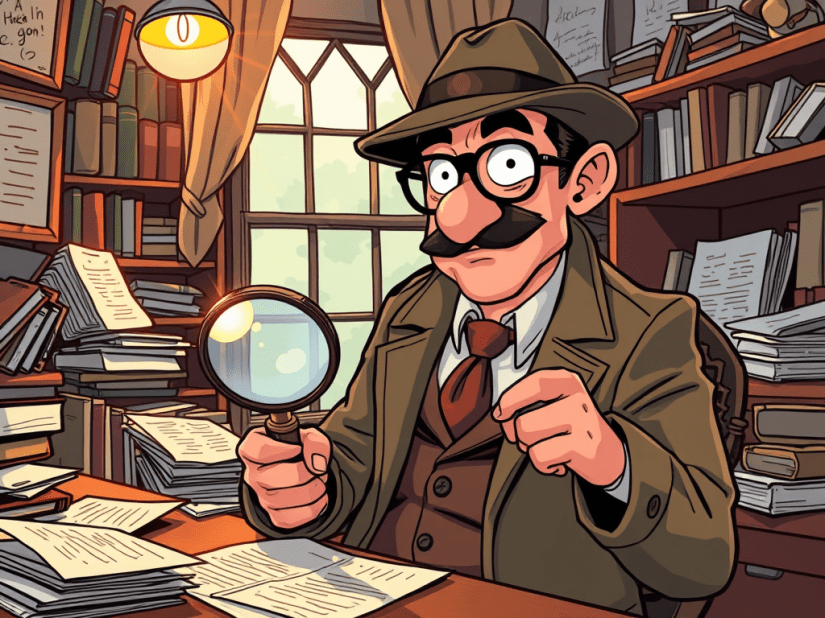
Inspector Septimus Summer-Garden shuffled down the lane as if the day itself needed to be coaxed forward with a pair of well-polished boots. He wore a tweed frock coat that seemed to have absorbed more rain and gossip than actual fabric, a hat perched at a jaunty angle like a small, stubborn hedgehog, and spectacles so eternally optimistic that you could swear they believed in him more than he did in himself. The case today was simple in theory: a wheelbarrow had vanished from the allotments behind the village conservatory, and the local constabulary, which consisted of one sleepy sergeant and two cats, needed a hand to find it before the community garden grew into a scandal. Summer-Garden had travelled three miles from the city police station to assist.
Septimus approached the scene with all the confidence of a man who had once persuaded an entire bakery that he was a famed pastry inspector. The wheelbarrow in question belonged to Mrs. Petunia Puddleford, a widow who tended plants with such devotion that her begonias had tiny brass nameplates and her cabbages believed in constitutional monarchies. The wheelbarrow, however, was famous for a different reason: painted a heroic yet somehow clashing combination of canary yellow and emerald green, it could be seen from the far end of the allotment and still wink back at you with it’s faded chrome handles.
“Evening, inspector,” called Mrs. Puddleford, stepping out with her apron stained in a pattern of seed dust and yesterday’s rain. She peered at Septimus through half-moon spectacles perched at the end of her nose, that looked like two curious sparrows peering from a hedge.
“Good Mrs. Puddleford,” he replied with a bow that caused his spectacles to dance a little jig. “I understand we have a… voluntary, ventful mystery on our hands.”
She sighed.
“The wheelbarrow was here this morning. I fetched the watering cans, and when I returned, it had vanished. Strange as a missing lemon in a lemonade stand, Inspector.”
Septimus scribbled in a notebook that looked as though it had survived a small war of pencils and tea stains. The pages smelled faintly of rosemary and optimism. He read aloud:
“Wheelbarrow, yellow and green, with chrome handles. Last seen near plot number seven, shade of elderberry.” He paused. “Plot seven? That is a garden of whispering hosts and rebellious tomatoes.”
“Or perhaps a thief with a love for efficient horticulture,” muttered a voice from behind him. It belonged to Mr. Harold Finch, a retired tailor who believed every problem could be stitched into a neat seam and then pressed flat. He wore a green apron with the motto: “If it isn’t nailed down, it’s probably in the shed.”
Septimus turned, eyes wide behind his spectacles.
“Harold! Good to see you. Tell me, did you by any chance hear anything suspicious, perhaps the creak of a lever, or the soft rustle of gardening gloves?”
Harold lowered his voice to a conspiratorial whisper.
“Only that the elder tree near plot five has been humming a tune that sounds suspiciously like ‘Wheelbarrow Polka.’ And if you ask me, that is not a natural tree song.”
Septimus exhaled, which caused his bow tie to flutter like a flag in a gentle breeze. He studied the garden as though it were a theatre stage, every plant a prop, every shed a potential alibi. He started at the elder tree, which did indeed hum when the breeze favored its branches. The hum had a rhythm, a stubborn, plucky rhythm, the kind of rhythm that makes a detective believe in both the impossible and the improbable. He consulted a series of “improbably logical” deductions he kept in a leather-case bound by a string that rarely made it to the knot. He began with a lineup of suspects: the elder tree (a suspect by virtue of music), Mrs. Puddleford’s mischievous neighbour, young Milo with the bicycle that squealed when he pedaled too hard, and the Weather Vane that claimed to be a “witness to the winds.” The elder tree, when asked politely if it had seen the wheelbarrow, did not respond; trees, Septimus knew, were excellent at silence. The Weather Vane merely whirred and claimed it had “heard nothing but the wind and the gossip of the clouds.” Milo, the neighbor’s nephew, was found practicing wheel spins on a homemade scooter, which, in Septimus’s opinion, was not exactly the same as a wheelbarrow.
The key breakthrough, if you could call it that, came when Septimus spotted a faint skid mark in the soft earth near plot seven. He knelt, admired the mud as if it were a work of modern sculpture, and noted a splatter of green paint on a nearby brick. He followed the trampled blade of grass to a small, nearly forgotten shed behind a row of cauliflower. Inside, to his great relief and mild dismay, stood the missing wheelbarrow. It was propped against the wall, the chrome handles catching the late afternoon sun, a soft gleam like a lighthouse for wayward tools. The wheelbarrow wore a sticker plastered by a child’s hand: “Property of the Gardener’s Guild” (with a heart in the corner). But the wheelbarrow appeared to have been used quite recently; the inside had soil from several plots and a faint scent of rosemary, the Puddleford way of reminding everyone who tended the beds that life needed a little fragrance. Septimus’s eyes widened behind his spectacles.
“Aha. The wheelbarrow has not run away; it has been temporarily displaced.”
He looked around. In the corner, a small, muddy footprint led to a battered garden hat that belonged to Mr. Finch. Under a shelf, a tin of seed packets bore the label: “Milo’s Mischief Mix.” The pieces fell into place with a soft clink, like coins in a child’s piggy bank. He emerged from the shed with the wheelbarrow in tow, triumphant and a touch breathless. The crowd gathered by Mrs. Puddleford’s impromptu call to “gather and witness the great reveal”, parted to let him pass.
“Now, now,” he announced, addressing the assemblage with the gravity of a man about to reveal the true purpose of a hedgehog. “The wheelbarrow has not been stolen by a thief. It has been… temporarily relocated for the safety and efficiency of our gardens.”
Mrs. Puddleford gasped, then chuckled softly.
“Are you saying someone borrowed it, Inspector? Borrowed is a fancy word for ‘took without asking,’ is it not?”
Septimus cleared his throat.
“Borrowed, yes, but with intent to return. It seems that a particular plant arrangement, let us call it The Great Tomato Mosaic, required the barrow’s services for a brief transportation of compost, mulch, and a particularly stubborn manure ball that refused to roll on its own.” He glowed with the rare moment of confidence that can only come from a good explanation and a small victory.
Harold Finch raised an eyebrow.
“That sounds like planning, Inspector. Planning that would require a wheelbarrow to be present at all times.”
Septimus nodded vigorously.
“A sound observation, Harold. The wheelbarrow needed for The Great Tomato Mosaic was temporarily out of service, because, now get this, the mosaic itself would not have been possible without the wheelbarrow’s help. It functioned as a moving canvas.”
The children gasped. A few gardeners tittered. Milo, who had hidden behind a rhubarb stalk, shrank away. Mrs. Puddleford stepped forward, her eyes sparkling with relief and a hint of pride.
“So you’re saying the wheelbarrow wasn’t stolen out of malice or greed, but out of a gardener’s need to beautify? Inspector, you’ve solved the case with a flourish. And you’ve returned the wheelbarrow to its rightful owner.”
Septimus bowed again, this time with more dignity, though his bow tie remained suspiciously tangled.
“Madam, it is always the simplest things that reveal themselves when you pause long enough for the soil to speak.”
He wheeled the wheelbarrow to the centre of the gathering, and with a flourish that would have made a stage magician envious, he released the handles so the wheelbarrow could stand upright on its own, a proud instrument of horticultural destiny. As the crowd clapped, a soft, polite rhythm that sounded like wind chimes in a cottage garden, Septimus lifted the lid of the tool tray and produced a small folded note that had been tucked away at the bottom. It read: “To the gardener who believes in the power of compost, from the box of seeds that grew too big for one plot. Your wheelbarrow is a steward, not a thief.”
He looked up.
“The note was left by our aspiring artist of soil, Milo. It appears he was trying to transport a new pallette of seeds to plot six, a venture he thought would be best accomplished with the wheelbarrow as a mule.”
Milo emerged, cheeks red with embarrassment and something that could have been pride or a stubborn desire to pretend he had never done anything wrong. Septimus placed a reassuring hand on the boy’s shoulder.
“Milo, your heart is in the right place. Your method may have been a little misguided, but you have a gardener’s soul. Keep planting, and you will learn the art of moving forward without moving the world in the wrong direction.”
The village applauded as if the sun itself had decided to attend the ceremony. Even the elder tree swayed its branches, as if clapping along to the gentle rhythm of a grateful crowd. In the end, the case of the missing wheelbarrow was less a mystery and more a lesson in communal care. The wheelbarrow had journeyed not through theft, but through the busy life of a garden that cared for itself by caring for its tools. Septimus had connected the dots with his usual blend of earnestness, bluff, and a peculiar sense that every garden is a tiny theatre where every plant, tool, and person plays a role. That night, the village held a small celebration by the conservatory. Lanterns hung from trellises, casting a warm amber glow. Mrs. Puddleford plated cucumber sandwiches with such precision that the crusts were cut in perfect crescent moons, while the cats from the village constabulary lounged on warm stones, dignified and indifferent as ever. Septimus, lounging against the wheelbarrow now parked by the gate, looked quite content with himself. He had solved the case, but more importantly, he had kept the peace, and a wheelbarrow, which is to gardeners what a wand is to wizards, an instrument that is only as powerful as the person wielding it, but can do wonders in the right hands.
“Inspector,” called a voice from the crowd, this time a little kid with a hat too large for his head and a pocket full of badge stickers, “will you come and teach us how to find things that disappear into the soil?”
Septimus squinted into the horizon, the light catching his spectacles and turning them into two little stars.
“My dear gardener-in-training, the first rule of finding things is to listen to the soil. The soil will tell you where to dig and when to stop. The second rule is to keep your tools within arm’s reach, unless you want the tools to get the better of you.”
The crowd laughed, the wheelbarrow hummed softly in the quiet night, and the elder tree finally permitted a sigh of satisfaction, all the while continuing its hymn to the winds and the patient, stubborn garden.
And so life in the village regained its gentler pace. The wheelbarrow rested where it belonged, the tomatoes grew a fraction taller, and the bumbling Inspector Septimus Summer-Garden, whose overlong coat sleeves often got tangled with his own curiosity, reiterated to those who would listen that mystery, much like a good garden, thrives on a careful blend of patience, humour, and a little faith in the everyday miracles of soil and seed.
Inspector Septimus Summer-Garden stood beneath a streetlamp that hummed like an irritable bee and wore the face of a man who had forgotten where he parked his own manners. His badge hung at a jaunty angle, his hat was perched at the wrong tilt, and his notebook looked as though it had been stitched together by a pair of excitable pigeons. He took a deep, ceremonial breath that resulted in him coughing on his own suspicion.
“Right then,” he announced to the empty alley, which was not so empty as it appeared, since the alley’s resident cats stared with the cool detachment of small, furry judges. “We’ve got a mystery that requires method, perception, and a modicum of luck. Let’s begin at the beginning.”
The case had begun with a very peculiar ringing of a very ordinary morning. The city where rivers sang old songs and streetlamps kept odd hours, was not accustomed to crime that required the attention of a man who once mistook a lamppost for a suspect and interviewed it for hours. Yet here he was, standing outside the Public Library, where the windows bore the scuffs of many winters and the occasional grimace of rain. The trouble, as the constable had put it, involved a rash of broken windows. Not shattered glass with the flourish of a grand crime, but the quiet, almost polite kind that left the windowpanes with captious cracks and the owners with puzzled looks and a resume of suspicious explanations about flying hedgehogs and rogue snowflakes. The first break had occurred at Mrs. Primrose Waddle’s teashop, where a single pane on the shopfront looked as if it had politely decided to retire from service.
Septimus was told to investigate. He took a long look at the window in question, which bore a fine network of hairline cracks suggesting a tiny marching army of minuscule anvils had hammered away in the night. He peered at it with all the suspicion of a man who had once mistaken a cucumber for a suspect and had spent the afternoon interrogating it about alibis.
“It’s not a cased-crime, it’s a cracked-crime,” he muttered, and scribbled something in his notebook that looked suspiciously like a doodle of a tea kettle wearing a monocle.
His first step, as he announced to the town’s gossiping hedgehogs was to interview Mrs. Waddle. Mrs. Waddle ran the teashop with sugary efficiency and a talent for telling stories that made people feel both hungry and suspicious of pastry.
“Inspector,” she said, a polite tilt to her head, “my windows keep getting cracks in them, and I swear I do not know what to do with the concept of a flying crack. It isn’t as if a bird sits on the sill and taps its beak, though if a bird did that, I’d sell it a biscuit and a cup of tea.”
Septimus blinked.
“Cracks,” he said, as if savoring the word, “are the language of stress in glass. We must translate.”
“Or it’s a prank,” suggested a young boy who had wandered in to lick the sugar from a spoon. He wore a scarf with the city’s map on it, which is a fashion choice that only children and detectives can pull off with equal awkwardness.
“A prank?” Septimus repeated, tapping his chin with the nib of his pen, which was actually a quill he had borrowed from a historical society exhibit and had not realized was inhabited by a family of moths. The quill drooped. He wrote: Pranks?
Mrs. Waddle waved a gloved hand as if she were shooing away a particularly persistent idea.
“Oh, I don’t believe in pranks that involve breaking windows,” she said. “Pranks are for misplacing hats, not glass. Glass is expensive and polite, and it does not enjoy being broken.”
Septimus put this down as a lead, or at least as a note to himself that Mrs. Waddle considered glass “polite.” He thanked her with the gravity one reserves for a teacake that might become a suspect if it isn’t properly interrogated. Next, Septimus visited the town’s glassmaker, a robust woman named Ms. Claro who could coax a pane of glass to flex with the weather and the mood of a room. She measured the cracks, which seemed to grow or shrink according to the weather forecast she kept taped to the back of her desk like a guilty secret.
“Inspecting, are you?” she said, with a laugh that sounded like broken crystal chiming in a windstorm. “If you want to know why your windows break, you’ll need more than superstition and a hat that looks like it has misplaced its owner. You’ll need a classroom full of science and a measure of imagination.”
Septimus inched closer to the glass with the seriousness of a man who believed glass could talk if you listened hard enough. He tapped it, listening for a response. All he heard was the faintest echo of his own heartbeat and the distant hooting of a night owl that clearly approved of vandalism only when performed in a theatrical context.
“Cracks don’t just happen,” Ms. Claro continued, as if lecturing to a very slow audience. “They form from stress. Wind pressure, temperature shifts, and sometimes, if you are unlucky, a cat with a bad habit of slapping things with its paw. But here the more likely culprit is a combination of poor window maintenance and a drift of misaligned belief that windows exist to be looked at, not to be tested.”
Septimus jotted this down as a new theory: windows as an audience. He wondered if perhaps the town’s windows were watching him, judging him for a crime he had not yet solved but already felt guilty about. The case took a turn when the library’s janitor, a quiet man named Mr. Finch, reported that the broken windows did not occur at random. They appeared to concentrate around the town’s calendar of events: market days, book club nights, and the annual Lantern Parade. He swore the windows thrummed with the same rhythm as the parade drums, as if they were trying to catch a beat to dance to. Septimus, who enjoyed rhythm in a detective sense but disliked dancing in the direction of danger, took the observation as a clue. It suggested a pattern. A plan formed in his mind, half-baked as a scone and twice as sweet for its potential to mislead or delight.
That evening, Septimus stood under the lanterns along Brindlewick’s High Street, which glowed with the soft orange of a sun that forgot to set. He inspected the windows again, this time with a small instrument he had borrowed from the lighthouse keeper—a glass-tester that looked like a cross between a magnifying glass and a tiny weather vane. He tapped lightly on a pane here, pressed a thumb against a pane there, and listened for differences in the sound that windows made when they disagreed with the world.
“Cracks occur where glass fights against pressure,” he murmured, as if reciting from a very dull poetry book. Then he looked up and saw, for the first time clearly, a peculiar silhouette across the street: a figure wrapped in a cloak, moving with a measured, almost ceremonial step, as though walking to the rhythm of a long-forgotten clock. The figure disappeared as soon as Septimus blinked, but not before Septimus caught a glimmer of something metallic at the cloak’s edge. He hurried after, but the cloak turned a corner and ended up in a narrow alley that opened into a small courtyard behind the town’s tailor shop. There, the metallic glint showed itself again, a key, or perhaps a key-shaped charm, dangling from a chain. The cloak had left a signature that looked suspiciously like a thief’s calling card. Septimus returned to his desk in the station, where a kettle hissed on a stove and the station’s cat whom everyone had decided to name Sir Purrsalot despite his moody temperament, lounged atop a stack of dispatches. He laid out the clues: the calendar pattern of breaks, the glinting key, the silhouette that appeared and vanished like a bad memory.
He drafted a plan. The plan was not a good plan, but it was a plan, which, in Septimus’s world, was enough to begin a grand investigation. He would borrow a window to test his theory that the windows’ “cries” (the cracks) were propelled by something inside the walls, something small, clever, and perhaps fond of pranks. The next day, with his hat at an almost comically serious tilt, Septimus returned to the library with a bucket, a mop, and a freshly sharpened sense of misdirection. He invited the librarian, Miss Larkspur, to stand by a particularly cracked pane that faced the market square. He explained that they were going to coax the window to reveal its thoughts by performing a little test: they would play a note on a violin outside the window and listen to the glass respond.
Miss Larkspur, who had a patient smile reserved for the most impossible of patrons, nodded slowly. The violin sounded, though not rather well, since Miss Larkspur’s cat, Sir Purrsalot, had taken a particular interest in a stringed instrument and kept batting at the bow like a man with a very determined moustache. The window cracked in response, a few tiny lines sprouting as if the glass itself had decided to cough from the noise.
“Interesting,” Septimus said, scribbling furiously. “The glass is malleable to sound, and perhaps to music. Or perhaps to a certain frequency that coincides with the town’s heartbeat.”
Just then, a boy ran past, chasing a dog, and knocked into the library door. The door swung open, and in slid a figure draped in that same cloak, the metallic glint now clearly visible as a key on a chain. The figure paused, then bolted for the back stairs, dropping a glove as it escaped. Septimus leaped to his feet with the grace of a mailable teapot and knocked into a shelf, sending a cascade of books fluttering down like startled birds. He recovered his balance, grabbed his notebook, and chased after. He hurried through the hallways of the library, which smelled of old parchment and the faintest trace of cinnamon, and found himself in the back room where the town’s archives were stored. There, among boxes of faded ledgers, he found a cluster of windows, each covered by a thick layer of dust and a line of cracks that seemed to radiate outward like sunbursts.
The cloaked figure had vanished again, but the glove lay on the floor, a feathery clue that anything could be a clue if you looked at it in the right light. Septimus picked up the glove, turned it over, and found stitched on the cuff a small insignia, two crossed keys, the emblem of the city’s old guild of locksmiths. A locksmith’s guild, of all things, could be involved in something this peculiar. That evening, he visited the locksmith’s workshop, a bright, bustling place filled with the chime of hammers and the smell of oil and leather. The master locksmith, a cheerful woman named Mrs. Nettle, greeted him as if he were a long-lost customer who had finally returned after misplacing his sense of direction.
“Inspector,” she said, eyeing his notebook with a mixture of amusement and professional suspicion, “you’re chasing a rumor that windows talk, aren’t you? You’ll be chasing clouds next and charging them with a crime.”
Septimus, who wasn’t sure if this was a joke or a threat, offered a polite nod. He showed her the glove and the insignia. She studied them, then shrugged in a way that suggested she knew more than she would admit.
“The guild sometimes collaborates on delicate tasks,” she said, “like installing new glass that resists the weather or threading locks that open only for the rightful owner. But a crime of breaking windows? That would require a certain kind of mischief that isn’t usually guild business.”
“Whose mischief would that be?” Septimus asked, though he already knew the answer, a suggestion that had been tapping at the edge of his thoughts like a stubborn drumbeat.
“Perhaps someone who wants to quiet city chatter,” she replied, almost under her breath, but loud enough for the window to catch it.
Mrs. Nettle glanced toward a back door, as if listening to a distant whisper of a plan forming. Then she sighed and handed Septimus a small, delicate device that looked like a key, a tiny instrument with a dial.
“This is a window tester, built by a guild colleague who believed windows sometimes deserve a voice too,” she explained. “If you want to hear what a window has to say, you need to listen between the cracks.”
Septimus accepted the device with reverence, as though it were a relic from a saint’s pocket. He thanked her and left, the device ticking softly against his palm. Back at the library, he set up the device near the cracked pane and pressed a small button. The window gave a response, not a sound, but a sensation in the air, a slight vibrating that travelled through the room like a whisper. It was not telling him who broke the windows, but suggesting that the breaks were caused by a joint effort: weather, temperature, and an unseen force that preferred to operate during the lantern-parade nights. The parade. The concept clicked with Septimus as if a bell had just fallen from a cabinet and landed squarely in his brain. The lantern parade was the grandest event, a procession of lights that travelled the streets and filled the air with a chorus of reflections on glass. If the breaks occurred during those nights, there was a good chance that someone, or something was using the crowd’s energy to manipulate the windows.
On the night of the lantern parade, Septimus took up residence on a rooftop overlooking the square. He wore a coat two sizes too large and a hat that looked as though it had committed the sin of overconfidence. He studied the square as it bloomed with orange and gold and the soft clacking of wooden shoes on cobbles. The crowd’s laughter, music, and chatter rose like a tide, and the windows listened. Something moving, he thought, but not human. The cloaked figure reappeared, no longer a silhouette, but a clear presence: the figure moved with the rhythm of the parade, stepping from window to window and pressing something into their frames, a tool, perhaps, that tapped a tempo into the glass. The windows, in response to the tempo, cracked along the same lines, echoing and amplifying the parade’s beat. Septimus realized that the culprit was not a mastermind, but a group of pranksters who had discovered a way to synchronise their taps with the parade’s drumbeat, using a discreet device to transmit micro-vibrations through the air and into the glass for a moment of dramatic effect. The intention: to create a spectacle, to turn windows into a chorus and to make the lanterns feel all the more alive. He watched as the pranksters, three youngsters with clever hands and a glimmer of mischief moved from window to window, their cloaks flapping in the parade’s gusts. They paused as a pair of lanterns swayed, their shadows threading through the crowd like dark dancers. Then, with a nod to each other, they pressed their devices against the glass and retreated into the crowd. Septimus made his move with the clumsiness that had earned him his reputation. He slipped on a lantern’s string, nearly toppled into the fountain, and landed in a heap upon a bed of velvet hats that belonged to a vendor who swore he would sue the moon for offering such weather. He scrambled upright, chased after the trio, and managed to corner them in a narrow alley behind the tailor’s shop.
There, among the bricks and hanging laundry, he confronted them with a display of theatrical seriousness that would have done a stage actor proud. The pranksters, two brothers and a cousin, all with eyes that shone with the thrill of the chase raised their hands in mock surrender. They explained with a mixture of pride and embarrassment that they had not intended real harm; they merely wanted folk to notice the windows more, to feel alive during a city that often forgot to blink. Septimus, who believed that a detective’s job included compassion, did not arrest them on the spot. Instead, he escorted them to the city square, gathered the townspeople, and staged a small audience with the windows as honoured guests. He asked the crowd to listen to the windows and to tell him what they needed. The windows, as if they had been waiting for an opportunity to express themselves, offered a chorus of creaks and sighs, a symphony of time passing and glass sighing at the weight of the world.
In that moment, Septimus realised what the evidence had been telling him all along: the broken windows were not the crime; they were a clue to the city’s need to be seen, to be heard, to feel part of something larger than the daily grind. The lantern parade, the guild, the old clock tower, the library’s whispered stories, all of these were threads in a tapestry, and the broken windows were the needle that threaded them together. He called a meeting the next day in the square, where he stood atop a crate and addressed the crowd with the earnestness of a man who had discovered a map that led to a bakery and decided a treasure lay there. He explained the prank, the device, and the reason the windows had cracked in unison with the parade’s rhythm. He proposed a plan that would both honor the windows and prevent harm: a collaborative project to repair and strengthen the city’s windows and to celebrate them as part of living history rather than as fragile victims.
The guild master and Mrs. Nettle agreed to lead a window-restoration festival, a week of workshops where villagers could learn to repair, reinforce, and decorate glass with safety and flair. The pranksters would help, not by breaking windows, but by designing performances that used sound, light, and music to make the glass “perform” without causing damage. The town would borrow a lesson from the windows: that pressure can crack, but collaboration and care can repair and even beautify. Septimus’s report, which he read aloud with the solemn pride of a man who had spent more time with a pencil than a moral compass, concluded with a flourish that surprised even him. He recommended that the city install wind-and-temperature monitoring near the most fragile panes, train a small corps of window-keepers to watch for unusual stress signatures, and host an annual Glass Festival, where the windows would be celebrated as living witnesses to the community’s history.
The case of the broken windows, Septimus concluded, was not a crime to be solved by punishment, but a chorus to be understood and harmonized with. The town, which had always claimed to be ordinary, discovered that it possessed a kind of poetry hidden in plain sight: glass that sang, a parade that listened, and a detective who, while bumbling, could still connect the dots when they dangled like bells on a winter’s night. September rolled in with a soft grin, as if the town had finally admitted to him that it enjoyed his peculiar methods. He walked along the market square, now lined with lanterns that blinked politely at him, like a chorus of tiny, polite witnesses. He paused outside Mrs. Primrose Waddle’s teashop, which now boasted a sign that read: The Listening Glass, where every pane has a tale to tell.
He entered, as if entering a friend’s drawing room rather than a crime scene, and ordered a cup of tea that tasted faintly of lemon and old stories. The teashop’s windows glowed with a warm light that seemed to exhale sighs of relief. Mrs. Waddle poured a second cup for him, as if she had anticipated his thirst for truth.
“Inspector,” she said, with the soft humour that had first drawn him to her door, “did you catch the culprit?”
Septimus sipped the tea, let the steam fog his glasses just enough to blur his own expression into something thoughtful and slightly ridiculous.
“The culprit,” he began, “was fear, perhaps, fear of being unseen. The windows were crying out for attention, and the city finally listened.”
Mrs. Waddle nodded, satisfied, as if the answer satisfied a long hunger.
“Then may I suggest,” she added, “that we keep listening? The city may be ordinary, but it’s never dull when a window speaks back.”
Septimus smiled, the kind of smile that looked as if it might topple a shelf if he permitted gravity the indulgence. He closed his notebook and tucked it away, as though locking away a confession that was not a crime but a confession nonetheless. And so, the case of the broken windows ended not with a capture or a confession, but with a new tradition: a town that learned to listen to its own glass, to hear its stories, and to treat its windows not as fragile inconveniences but as partners in a shared life. Inspector Septimus Summer-Garden, the bumbling man who could not always tell a clue from a kite string but who could always hear a chorus in a crack, walked home beneath a sky that felt, for once, perfectly well-lit. He paused at the corner where the lanterns pressed their orange light into the night and looked up at the now-silent, content windows with a kind of quiet triumph. The case had taught him something invaluable: mysteries are often not about catching a criminal, but about catching a moment, one in which a community discovers it can be better together than apart.


 Lazarus Carpenter - Author