The Tale of Mi Mo Tao

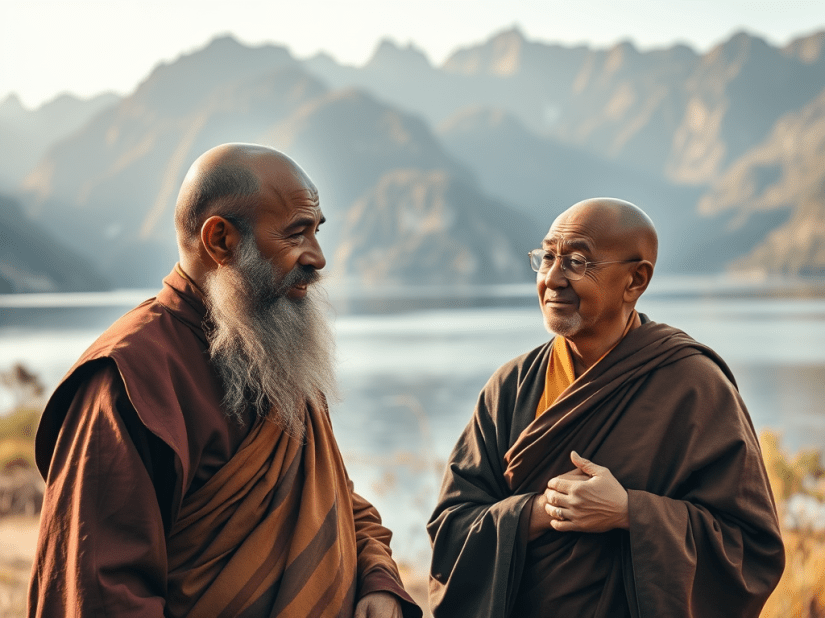
In the serene heights of Tibet, where the air was crisp and the mountains seemed to touch the heavens, lived an ageing monk named Mi Mo Tao. His days were spent in quiet contemplation within the ancient walls of a monastery, a sanctuary built from stone and prayer, where the whispers of the wind carried the wisdom of ages. Mi Mo Tao had dedicated his life to the pursuit of enlightenment, yet as he approached the twilight of his years, a shadow loomed over his heart. Long ago, he had known love—a deep, abiding love for a woman named Lian. They had met in the valleys below the monastery, where wildflowers danced under the sun. Lian was a spirit as free as the wind and as vibrant as the blossoms that surrounded her. They shared dreams and laughter, but their paths diverged when Mi Mo Tao chose the path of the monk, surrendering worldly attachments in search of spiritual truth.

Years passed, and Lian married another, starting a family of her own. Though Mi Mo Tao had found solace in meditation, the ache of unfulfilled love lingered in his heart. Every time he closed his eyes, he could see her smile, hear her laughter, and feel the warmth of her presence. The memories, once a source of joy, became a bittersweet reminder of what he had forsaken.

One autumn evening, as the sun dipped behind the mountains, casting a golden hue over the monastery, Mi Mo Tao sat in meditation. The wind carried a familiar melody, a song that Lian used to sing. It stirred something deep within him, awakening feelings he thought he had buried long ago. Overwhelmed, he opened his eyes and gazed out at the horizon, where the sky met the earth in a breathtaking embrace. In that moment of vulnerability, Mi Mo Tao felt the weight of his sadness transform. He realised that love was not something to be abandoned but instead integrated into his being. Love, he understood, was a teacher, illuminating the path to compassion and understanding. It was not merely a fleeting emotion but a profound connection that transcended time and space. Inspired, he began to write. With each stroke of his brush, he poured his heart onto parchment, weaving tales of love and loss, of joy and sorrow. He wrote of Lian, not as a source of pain but as a reminder of the beauty that love brings, even in its absence. His words resonated with the other monks, who gathered to listen, finding solace in his stories. They began to see their own struggles reflected in his tales, and together they discovered the healing power of vulnerability and shared experience.

As the days turned into months, Mi Mo Tao’s heart lightened. He spoke openly of love, encouraging his fellow monks to embrace their feelings rather than shy away from them. They practised compassion, not just for others, but for themselves, understanding that their own hearts were worthy of love and care. One day, while walking through the valley, Mi Mo Tao encountered an elderly woman weeping by a stream. He approached her gently, offering his presence, and she shared her story of loss and regret. In her sorrow, he recognised a glimpse of his own past. He listened intently, and as he did, a sense of peace washed over him. It was in these moments of connection that he truly grasped the essence of enlightenment—not in the absence of pain, but in the acceptance of it.

Years later, when Mi Mo Tao’s time drew near, he sat in the same spot where he had once felt the weight of his unfulfilled love. The mountains stood as witnesses to his journey, and as he closed his eyes for the last time, he felt Lian’s spirit beside him, not as a ghost of the past, but as a radiant presence of love. In that final moment, he understood: love, in all its forms, was the path to enlightenment. The monastery, once a place of solitary reflection, became a beacon of love and compassion, where monks shared their stories and embraced their humanity. Mi Mo Tao’s legacy lived on, not just in his teachings but in the hearts of those who learned that true enlightenment lies in embracing love, both joyful and sorrowful, and in the connections we forge along the way. 

The Devotees

WIND

Once upon a time, in a small village nestled in the heart of a lush valley, there lived a man named Constantine. Constantine was known throughout the village for his peculiar fascination with the wind. From a young age, he had been captivated by the invisible force that swept through the land, whispering secrets and tales of distant lands. Constantine would spend hours on end sitting atop a hill, his eyes closed, face turned upwards, and arms extended as if embracing an old friend. He would relish in the gentle caress of the breeze against his skin, feeling an inexplicable connection to the wind’s ever-changing rhythm. It was as if he could hear the wind’s voice, carrying with it messages only he could comprehend.

The villagers found Constantine’s devotion to the wind quite puzzling. They couldn’t fathom why he would choose to spend his days in such a manner, disconnected from the mundane affairs of their lives. Some whispered that he was eccentric or perhaps even mad, but Constantine paid no heed to their judgments. His heart and soul were intertwined with the wind, and that was all that mattered to him. One day, a renowned traveller arrived in the village. His tales of far-off lands and exotic adventures sparked the villagers’ curiosity, and they gathered around him, eager to listen. Constantine, always thirsty for knowledge and new experiences, joined the crowd, hoping to catch a glimpse of the world beyond his beloved valley.

As the traveller began to recount his stories, Constantine’s attention was immediately drawn to a particular tale. It spoke of a distant land where people worshipped the wind as a deity, believing it to be a divine messenger connecting them to the gods. Their lives revolved around the wind’s whispers, and they built magnificent temples atop the highest mountains to pay homage to its power. Constantine’s heart leapt with joy and recognition. It was as if the traveller had unveiled the missing piece of a puzzle he had been trying to solve his entire life.

Without hesitation, he approached the traveller, his eyes gleaming with excitement.

“Sir, please tell me more about this land where the wind is revered. I have spent my days worshipping the wind, feeling its presence in the deepest corners of my being. It is as if the wind has chosen me as its devotee,” Constantine exclaimed.

The traveller, intrigued by Constantine’s genuine enthusiasm, smiled warmly and shared further details about the land. He described how the wind’s whispers guided the people’s decisions, how they danced and sang in celebration of its arrival, and how they found solace and inspiration in its ever-changing nature. Constantine’s heart swelled with a newfound purpose. He made up his mind to embark on a journey to this far-off land, to bask in the presence of his cherished wind, and to become a part of the community that shared his devotion. With each passing day, Constantine’s excitement grew. He bid farewell to his village and ventured into the unknown, driven by his unwavering faith in the wind. His journey was long and arduous, filled with trials and tribulations, but he pressed on, fuelled by the thought of finally finding his place in the world.

Months later, Constantine arrived at the land where the wind was worshipped. The sight before him was awe-inspiring. Countless temples adorned the mountaintops, their magnificent structures reaching towards the heavens. People dressed in vibrant robes moved gracefully, their movements mirroring the ebb and flow of the wind. Constantine’s heart swelled with a sense of belonging as he stepped foot into this sacred land. Word of the wind’s devoted traveller quickly spread throughout the community. The villagers, intrigued by Constantine’s unwavering dedication to the wind, welcomed him with open arms. They saw in him a kindred spirit, someone who understood the profound connection between humanity and the unseen forces of nature. Constantine immersed himself in the rituals and practices of the wind worshippers. He learned to read the wind’s subtle cues, deciphering its messages and interpreting its intentions.

He danced with the villagers, twirling and spinning to the wind’s melodic symphony, feeling its energy flow through his veins. In time, Constantine became a revered figure within the community. His knowledge and love for the wind inspired others to deepen their own relationship with this mystical force. Together, they celebrated the wind’s presence, organizing grand festivals and ceremonies to honour its benevolence. As years passed, Constantine grew older, yet his devotion to the wind never wavered. He became a wise mentor, passing down his wisdom and teachings to the younger generation. He taught them to respect and cherish the wind, to listen to its whispers with open hearts and minds.

One tranquil evening, as Constantine sat atop a mountain peak, his eyes closed and his body swaying in harmony with the wind, he felt a deep sense of fulfilment. He had found his purpose in life, his true calling as the wind’s devotee. The wind, in turn, had bestowed upon him a life rich with meaning and connection. In the twilight of his days, Constantine passed away peacefully, surrounded by the gentle caress of the wind he had worshipped all his life. The villagers mourned his loss but knew that his spirit would forever be carried on the wind’s breath, spreading his love and reverence for the unseen forces that interweave with our lives.

And so, the story of the man who worshipped the wind became a legend, whispered from generation to generation. A reminder that there is beauty and wisdom in embracing the intangible, in finding solace and inspiration in the elements that surround us. Constantine’s legacy lived on, a testament to the power of devotion and the profound connection between humanity and the world that lies beyond our grasp, the ever-mysterious, ever-enchanting wind.

Abstract from ‘The Devotees’ written by Lazarus Carpenter and illustrated by Gill Brooks

The Rope

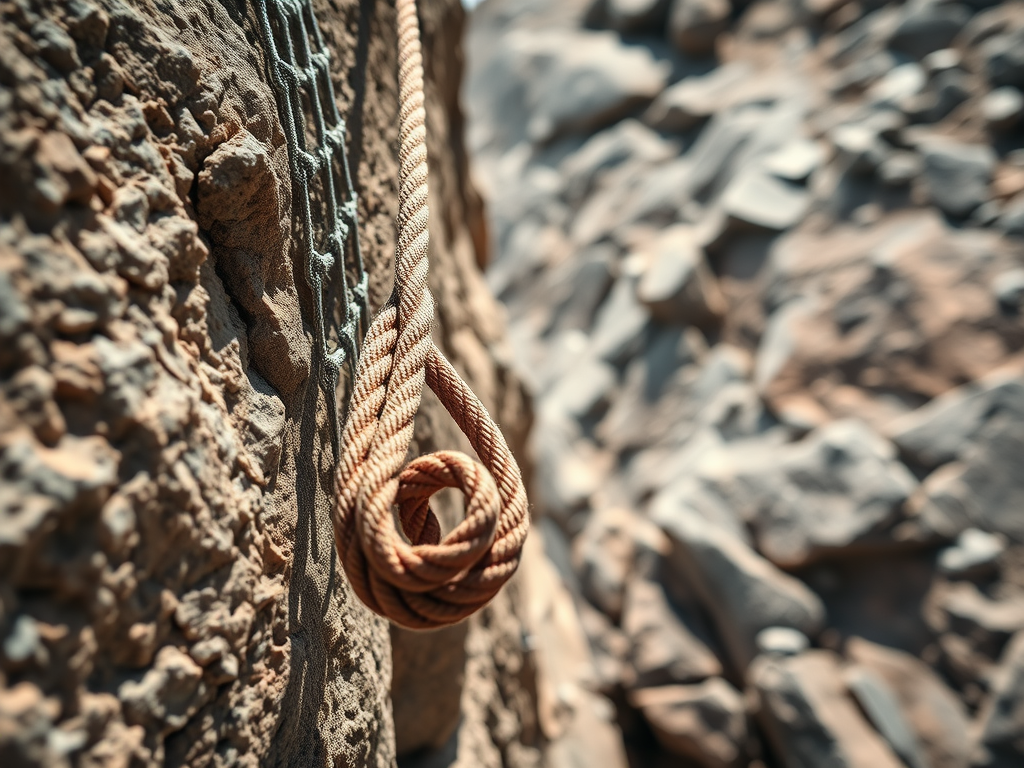
On a frigid day near the summit of K2, four climbers—Anna, Marco, Sarah, and Tom—were making their ascent up a perilous icy wall. The air was thin, and the biting wind howled around them, but their spirits were high. They had trained for months and were determined to conquer the mountain. As they neared a treacherous overhang, Anna, the most experienced of the group, led the way. Suddenly, her foot slipped on a patch of ice, sending her tumbling backwards. In a split second, her fall yanked on the ropes, pulling Marco and Sarah off balance. They all dangled precariously, suspended in the deadly expanse between the rock face and the abyss below. Panic erupted as Tom, the last climber, struggled to maintain his grip. He could feel the strain on the ropes intensifying, threatening to snap under the weight of three climbers. They had trained for moments like this, but nothing could prepare them for the gut-wrenching decision they now faced.

“Tom! You have to cut the rope!” Marco shouted, his voice strained. “It’s the only way to save yourself!”

“No!” Anna cried, her voice filled with desperation. “There must be another way! We can hold on!”

But they all knew the truth. The ropes were fraying, and the longer they stayed suspended, the less chance anyone would survive. Tom’s heart raced. He looked at each of his friends, seeing the fear and determination in their eyes.

“We can’t all make it!” Sarah shouted, tears streaming down her face. “You have to choose!”

The weight of the decision crushed Tom. He felt the cold metal of the knife in his hand, heavy with the burden of choice. He looked at Anna, who had always been his mentor and friend. Then at Marco, whose laughter echoed in his memories, and finally at Sarah, whose dreams of reaching the summit were so close yet now so distant.

“Please, Tom!” Marco urged. “Save yourself!”

At that moment, Tom realized their bonds were deeper than the ropes that bound them. He took a breath, fighting back tears.

“I can’t do it,” he said, trembling. “I can’t choose.”

But the mountain was unforgiving. With the rope straining and their dire situation growing, Tom knew he had to act.

“I’ll cut the rope,” he said finally, his voice resolute yet sorrowful.

He reached for Anna’s rope first, knowing she had the best chance of making it to safety.

“Tom, no!” Anna screamed, but he pressed on, his heart breaking as he made the cut.

With a final cry, the rope fell away, and Anna disappeared from view. In a moment of silence, the remaining three felt the weight lift. Tom had chosen to save the two who remained. He secured the remaining rope and pulled Marco and Sarah up to safety, his heart heavy with grief. As they reached the summit, the wind howled in mourning. Tom looked out over the vast expanse, the beauty of the world below overshadowed by the loss of his friend. They had conquered K2, but at a cost that would haunt him forever. In the years that followed, Tom would climb again, but he would always carry the memory of that day—the day he had to choose life and let go, a choice that would forever define him.