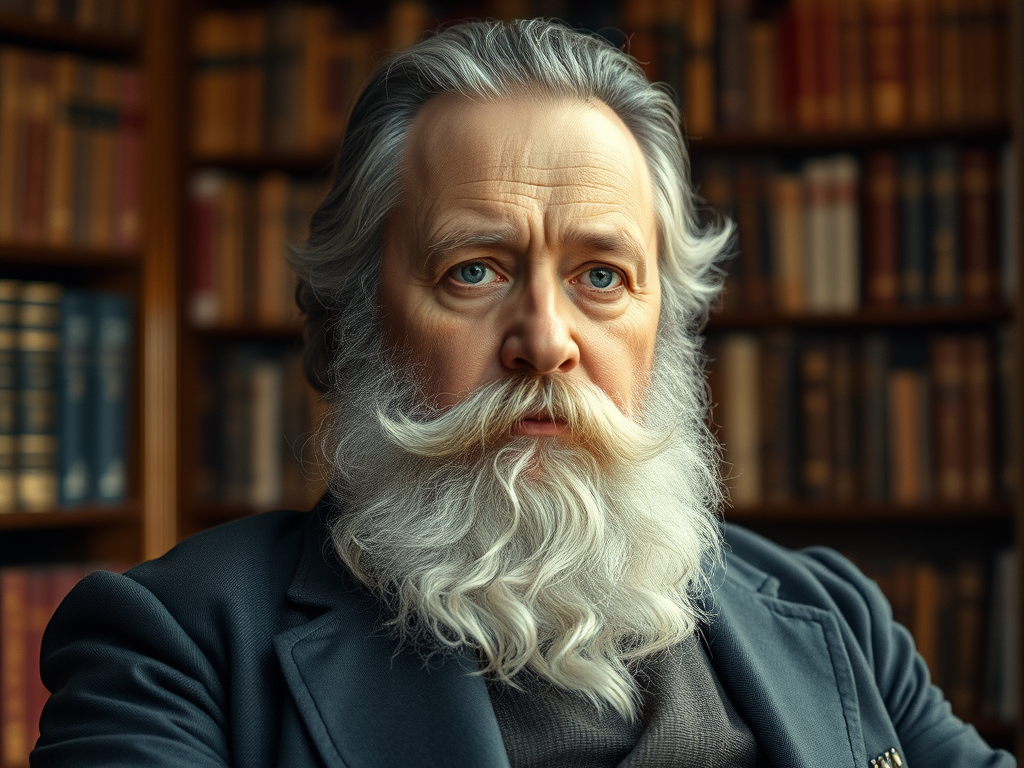
Alexandre Dumas

Alexandre Dumas, also known as Alexandre Dumas père (father), was a French writer born on July 24, 1802, in Villers-Cotterêts, France. He is best known for his historical novels, including “The Three Musketeers” and “The Count of Monte Cristo.” Dumas’ father, Thomas-Alexandre Dumas, was a general in the French Revolutionary Army and the highest-ranking person of African descent in a European army at that time. Alexandre Dumas grew up in poverty after his father died in 1806 and was largely self-educated.

Dumas began his writing career as a playwright and then turned to writing novels. His works often featured themes of adventure, romance, and historical events. Some of his most famous novels were written in collaboration with other writers, including Auguste Maquet. Dumas was known for his extravagant lifestyle and spending large sums of money, which led to financial difficulties later in his life. Despite his financial troubles, he continued to write prolifically until his death on December 5, 1870, in Puys, France.

Alexandre Dumas’ works have had a lasting impact on literature and popular culture, with many of his novels adapted into films, television shows, and stage productions. He remains one of the most widely read French authors in the world. 

A Tale for Christmas – The letter

Once upon a time, a dense forest blanketed in snow stood in the heart of a winter wonderland. The trees were adorned with glistening icicles, and the ground was covered in a pristine layer of white. On a chilly Christmas Eve, as the snowflakes gently fell from the sky, a young girl named Lily was taking a walk through the forest. She loved the peace and serenity of the winter landscape and the way the snowflakes sparkled in the sunlight. As she wandered deeper into the forest, Lily noticed something unusual lying in the snow ahead. It was a weathered envelope, slightly crumpled and partially buried in the powdery snow. Curious, she picked it up and brushed off the snow to reveal an old-fashioned letter inside. The letter, addressed to Santa Claus and written in a child’s careful handwriting, began with

“Dear Santa, I hope you are well…” and went on to list a series of heartfelt wishes and dreams for Christmas.

The words on the page were filled with innocence, hope, and a touch of sadness. Moved by the letter, Lily knew she had to do something to help fulfil the wishes of the child who had written it. She decided to take the letter home, carefully preserving it from the cold and dampness of the forest. That night, as snowflakes continued to fall outside her window, Lily penned a letter of her own to Santa Claus. She shared the story of finding the lost letter in the forest and asked Santa to help make the wishes come true. With a flicker of hope, she placed both letters by the fireplace and went to bed, dreaming of Christmas magic.

On Christmas morning, Lily awoke to a wondrous sight. Underneath the twinkling tree, she found a pile of beautifully wrapped gifts, each bearing the name of the child who had written the letter she saw in the snow. Tears of joy rose in her eyes as she realized that Santa had indeed heard their wishes and brought them to life. From that day on, Lily believed in the power of Christmas magic and the importance of spreading kindness and joy to others. As she looked out at the snowy forest, she knew that miracles could happen even in the most unexpected places, especially during the most magical time of the year. 

Victor Hugo

Victor Hugo (1802-1885) was a renowned French poet, novelist, and playwright who played a significant role in the Romantic literary movement. His works often explored themes of love, politics, and social injustice. Hugo was born on February 26, 1802, in Besançon, France. His father was a general in Napoleon’s army, and his mother was a royalist and supporter of the Bourbon monarchy. He showed early literary talent and published his first book of poetry at age twenty. Hugo married Adèle Foucher in 1822, and they had five children together.

Notable Works:
Les Misérables (1862)
One of Hugo’s most famous works, The Life of Jean Valjean, is a sprawling novel that follows the lives of several characters, including the ex-convict Jean Valjean, against the backdrop of social and political upheaval in 19th-century France.

The Hunchback of Notre Dame (1831)
This novel tells the story of Quasimodo, the hunchbacked bell ringer of Notre-Dame Cathedral in Paris, and Esmeralda, a beautiful gypsy girl. The book explores themes of love, fate, and social injustice.

Les Contemplations (1856)
   This collection of poetry is considered one of Hugo’s masterpieces. It reflects his personal experiences, including the death of his daughter, Léopoldine.

Victor Hugo was also known for his political activism. He was a staunch supporter of republicanism and opposed Napoleon III’s authoritarian rule. Due to his political beliefs, he was exiled from France in 1851 and spent over 15 years in various countries, including Belgium and the Channel Islands. Returning to France in 1870 after Napoleon III fell from power, he continued to write and be involved in politics until his death on May 22, 1885, in Paris.

Victor Hugo’s works have had a lasting impact on literature and continue to be studied and celebrated today. He is regarded as one of the greatest French writers, known for his lyrical style, social commentary, and passionate storytelling. Hugo’s life and work exemplify his commitment to art, justice, and human rights, making him a towering figure in French literature and culture. 

Image by AI

Alexander – Guardian, Protector of Humanity

Once upon a time, in a world much like our own but with a touch of magic woven into its fabric, there lived a man named Alexander. Alexander was blessed with an extraordinary gift – he could remember every detail of every moment he had ever experienced. His memory was a vast and intricate tapestry, a living archive of his existence. However, this gift soon turned into a curse for Alexander. The burden of remembering every joy, every sorrow, every triumph, and every failure became too heavy for him to bear. The pain of reliving past traumas and heartaches was a constant companion, a shadow that followed him wherever he went. Despite his suffering, Alexander’s remarkable memory made him indispensable to mankind. His unparalleled ability to recall information made him a living library, a repository of knowledge unprecedented in the history of the world. People came from far and wide to seek his counsel, learn from his wisdom, and benefit from his extraordinary gift.

As the years passed, Alexander became a legend, a figure shrouded in mystery and myth. Some believed he was immortal, that his memory was a divine gift bestowed upon him by the gods. Others whispered that he was a sorcerer of magic and power beyond mortal comprehension. But as time marched on, Alexander’s burden grew heavier. The weight of his memories threatened to crush and consume him from within. And so, he decided to change the course of history. On a cold winter’s night, as the world slept, Alexander walked alone to the edge of a cliff overlooking the vast expanse of the earth below. With a heavy heart and tears in his eyes, he gazed out into the darkness and made his final choice. He closed his eyes, took a deep breath, and let himself fall.

But a strange and wondrous thing happened as he plummeted towards the earth below. The world around him shimmered and shifted, and Alexander found himself suspended in mid-air, frozen in time. It was then that he understood the truth of his gift. His memory was not a curse but a blessing. His ability to remember every moment and detail was the key to mankind’s survival. Without him, the world would be lost, adrift in a sea of chaos and uncertainty. And so, Alexander made a solemn vow to himself and to the world. He would carry the burden of his memories, no matter how painful or heavy. For as long as he lived, mankind would thrive, secure in the knowledge that there was one among them who could never forget. So Alexander became a guardian, a protector of humanity, a beacon of hope in a world filled with darkness. Though his burden was great, his spirit was stronger still, a testament to the power of memory, the resilience of the human heart, and the enduring strength of the human spirit. 

Image by AI

Hans Christian Andersen

Hans Christian Andersen (1805–1875) was a Danish author and poet best known for his fairy tales. He was born to a poor family on April 2, 1805, in Odense, Denmark. Despite his humble beginnings, Andersen’s works have become beloved classics and have been translated into many languages. His fairy tales include “The Little Mermaid,” “The Ugly Duckling,” “The Emperor’s New Clothes,” “The Princess and the Pea,” and many more. His stories often had moral lessons and themes of perseverance, kindness, and the triumph of good over evil.

Andersen’s talent was recognized early on, and he received a grant to attend school. He pursued a career in writing and theatre, but his fairy tales brought him the most fame and success. Andersen travelled extensively in Europe throughout his life, befriending notable figures such as Charles Dickens and Victor Hugo. He also faced personal challenges and setbacks, including unrequited love and health issues. Hans Christian Andersen passed away on August 4, 1875, in Copenhagen, Denmark. He left behind a legacy of timeless stories that continue to enchant readers of all ages around the world.