LAZARUS’S BLA BLA BLOG

The Ghost of K2

Once upon a time, there lived a passionate mountaineer named Alex who had an insatiable love for climbing. From a young age, he was drawn to the towering peaks, feeling a magnetic pull to the heights only the mountains could offer. Alex spent his life chasing summits, driven by an unquenchable thirst for adventure and the thrill of conquering new peaks. For forty-five years, he traversed the globe, scaling the world’s most challenging mountains. From the snow-capped peaks of the Himalayas to the rugged terrain of the Andes, he left no summit unconquered. His determination and skill earned him a reputation as one of the greatest mountaineers of his time, with countless stories of his daring ascents circulating among the climbing community.

However, Alex’s fate took a mysterious turn on his eleventh expedition to K2, the formidable second-highest mountain in the world. As he and his team ascended the mountain’s treacherous slopes, a sudden storm descended, engulfing them in a swirling chaos of snow and wind. Despite his experience and resilience, Alex and his team were separated in the blizzard, and he was never seen again. Rumours began circulating among the local Sherpas and climbers that Alex’s spirit still roamed the slopes of K2, his presence felt in the eerie mist that often shrouded the mountain. Some claimed to catch glimpses of a lone figure moving through the fog, a spectral mountaineer searching for the summit that had eluded him in life. Over the years, tales of Alex’s ghostly apparition grew, with climbers sharing stories of encounters with the phantom mountaineer on the slopes of K2. Some saw him beckoning them onward, while others felt his presence as a warning to respect the power of the mountains.

Today, the legend of Alex, the mountaineer who could never stop climbing, lives on in the mist-shrouded slopes of K2. His spirit is said to watch over those who dare to challenge the mountain, a reminder of the thin line between triumph and tragedy in the world of high-altitude adventure.

Image by AI

John Steinbeck

John Steinbeck was an American author best known for his novels, which vividly portrayed the social and economic issues of the Great Depression. John Ernst Steinbeck Jr. was born in Salinas, California, on February 27, 1902. He grew up in a rural setting and developed a love for the land and its people, which would later influence his writing. Steinbeck attended Stanford University intermittently between 1919 and 1925 but did not graduate. He left college to pursue his writing career.

Steinbeck’s writing career started with the publication of his first novel, “Cup of Gold,” in 1929. However, he gained widespread recognition with his book “Tortilla Flat” in 1935, followed by “Of Mice and Men” in 1937 and “The Grapes of Wrath” in 1939, which won the Pulitzer Prize for Fiction. His works often focused on the struggles of the working class, the impact of the Great Depression, and the search for the American Dream. His writing was known for its social consciousness and empathy for the underprivileged. He continued to write prolifically, producing works such as “East of Eden” (1952) and “Travels with Charley” (1962). In 1962, he was awarded the Nobel Prize in Literature.

Steinbeck was married three times and had two sons. He lived in various places in the United States, including California and New York, and travelled extensively for both work and pleasure. John Steinbeck is considered one of the greatest American writers of the 20th century. His works continue to be studied in schools and universities worldwide for their insights into American society and the human condition. Steinbeck died on December 20, 1968, in New York City at 66. He left behind a rich literary legacy that inspires readers and writers today. Steinbeck’s impact on American literature and his ability to capture the struggles and aspirations of ordinary people have solidified his place as a significant figure in literary history. 

Image by AI

Marcus of Doria, the man who could never be King.

Once upon a time, a man named Marcus lived in the prosperous kingdom of Doria. Marcus was a kind and noble soul known throughout the land for his courage, wisdom, and unwavering dedication to the kingdom. He was a skilled warrior, a trusted advisor, and a beloved friend to all who knew him. Marcus was born into a noble family with a long lineage of kings and queens. However, fate had a different path in store for him. Despite his royal blood, Marcus would never ascend to the throne. The kingdom’s laws dictated that only the firstborn son of the reigning monarch could inherit the crown, and Marcus was not that son.

Many in the kingdom saw this as a significant loss. Marcus possessed all the qualities of a great leader, integrity, compassion, and strength of character. He deeply understood the people’s needs and envisioned a brighter future for Doria. But despite his qualifications, he could never be king. Instead, Marcus dedicated his life to serving the kingdom in other ways. He became a trusted advisor to the king, offering counsel and guidance in times of peace and war. He led the kingdom’s armies to victory in battles against invaders and defended the realm against threats from within and without.

Marcus’s loyalty and selflessness endeared him to the people of Doria even more than if he had worn the crown. He was a beacon of hope in times of darkness and a pillar of strength in times of uncertainty. The kingdom flourished under his leadership even though he would never be king. In the end, Marcus’s legacy was not one of titles or crowns but of love and service. He showed the people of Doria that true greatness is not measured by the position one holds, but by the impact one has on the lives of others. And so, despite his lineage, Marcus would always be remembered as a king in the hearts of the people he served. 

Image by AI

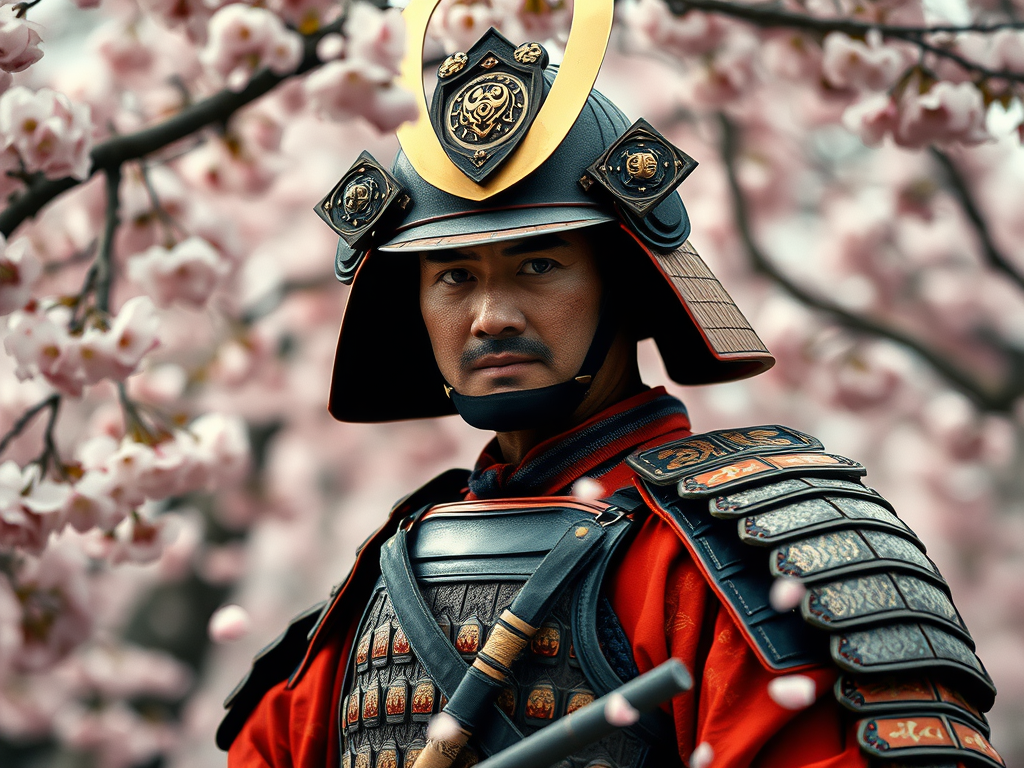
James Clavell

James Clavell, born Charles Edmund Dumaresq Clavell, was a highly acclaimed British-American author, screenwriter, director, and World War II veteran. He was born on October 10, 1921, in Sydney, Australia, and passed away on September 6, 1994, in Vevey, Switzerland. Clavell’s diverse career included writing novels, screenplays, and directing films. He is perhaps best known for his epic series of historical novels, the Asian Saga. The Asian Saga comprises six novels: “Shōgun” (1975), “Tai-Pan” (1966), “Gai-Jin” (1993), “King Rat” (1962), “Noble House” (1981), and “Whirlwind” (1986).

One of his most famous works, “Shōgun,” set in feudal Japan, has been adapted into a successful television miniseries. The novel explores the clash of cultures between East and West through the story of an English navigator who becomes involved in the political intrigues of samurai-era Japan. Clavell’s writing is known for its meticulous research, detailed historical settings, and complex characters. His works often delve into power, honour, loyalty, and cultural clashes. His ability to craft intricate plots and rich character development has endeared him to readers worldwide. Aside from his literary achievements, Clavell also had a successful career in filmmaking. He directed films such as “To Sir, with Love” (1967) and “The Last Valley” (1971), further showcasing his storytelling prowess across different mediums.

James Clavell’s legacy endures through his timeless novels, which continue to captivate readers with their vivid storytelling and exploration of historical and cultural themes. His contributions to literature and cinema have left a lasting impact on storytelling.

Image by AI

The legend of the Eternal Flame

Once upon a time, in a world not so different from our own, there existed a mystical candle that never went out. This candle, known as the Eternal Flame, was said to be imbued with ancient magic that kept it burning endlessly, no matter the circumstances. The legend of the Eternal Flame spread far and wide, and people from distant lands would travel to witness its mesmerizing glow. The candle was enshrined in a grand temple at the heart of a bustling city, where it stood as a symbol of hope and stability for all who beheld it.

However, with great power comes great responsibility, and the keepers of the Eternal Flame knew that its light must never be extinguished. An ancient prophecy foretold that if the flame were to ever go out, the world as we know it would come to a catastrophic end. Generations passed, and the candle continued to burn brightly, watched over by a dedicated line of guardians who ensured its eternal flame never wavered. They built elaborate mechanisms and intricate rituals to protect the flame, knowing that the fate of the world rested upon its enduring light.

As time passed, the city prospered under the watchful gaze of the Eternal Flame. People lived in peace and harmony, their lives intertwined with the magic of the candle that never went out. But with peace often comes complacency, and some began to take the flame for granted, forgetting the dire consequences of its extinction. One fateful night, a great storm descended upon the city, its howling winds threatening to snuff out the Eternal Flame once and for all. The guardians sprang into action, battling the elements with all their might to protect the candle and preserve the world from impending doom. As the storm raged on, the city held its breath, fearing the worst. But against all odds, the Eternal Flame continued to burn, its light flickering but never faltering. The storm eventually passed, leaving the city intact and the flame aglow.

The people of the city rejoiced, realizing the true significance of the Eternal Flame and the sacrifices made to protect it. They vowed never to forget the lesson learned that day that even the most minor light could hold the power to shape the world’s destiny. And so, the Eternal Flame continued to burn, a beacon of hope and resilience in a world where darkness always threatened to creep in. Its light served as a reminder to all who beheld it that the world would endure as long as there was hope, for the candle that never went out held the key to a future filled with endless possibilities.

Image by AI