Mary Shelley

Mary Shelley, born Mary Wollstonecraft Godwin on August 30, 1797, in London, England, had a life filled with tragedy, creativity, and literary accomplishment. Mary was the daughter of the feminist writer Mary Wollstonecraft and the political philosopher William Godwin. Her mother died shortly after her birth, and Mary was brought up by her father and stepmother. In 1814, at 16, Mary met the poet Percy Bysshe Shelley, who was married then. They fell in love and eloped to Europe in 1814 with Mary’s stepsister, Claire Clairmont. During the summer of 1816, Mary, Percy, Claire, and Lord Byron spent time together in Geneva, Switzerland. During this time, Mary conceived the idea for her most famous work, “Frankenstein.” The novel was published anonymously in 1818.

Mary experienced significant personal tragedies throughout her life. She lost several children to illness or premature death, and Percy Shelley drowned in a boating accident in 1822. Despite the challenges she faced, Mary Shelley continued to write and publish works of fiction. She also edited and promoted her late husband’s poetry. Mary Shelley died in London on February 1, 1851, at 53. Mary Shelley’s legacy endures through her groundbreaking novel “Frankenstein,” which continues to captivate readers and inspire adaptations in various forms of media. She is celebrated as a pioneering figure in the science fiction genre and a vital voice of the Romantic era. 

Image by AI
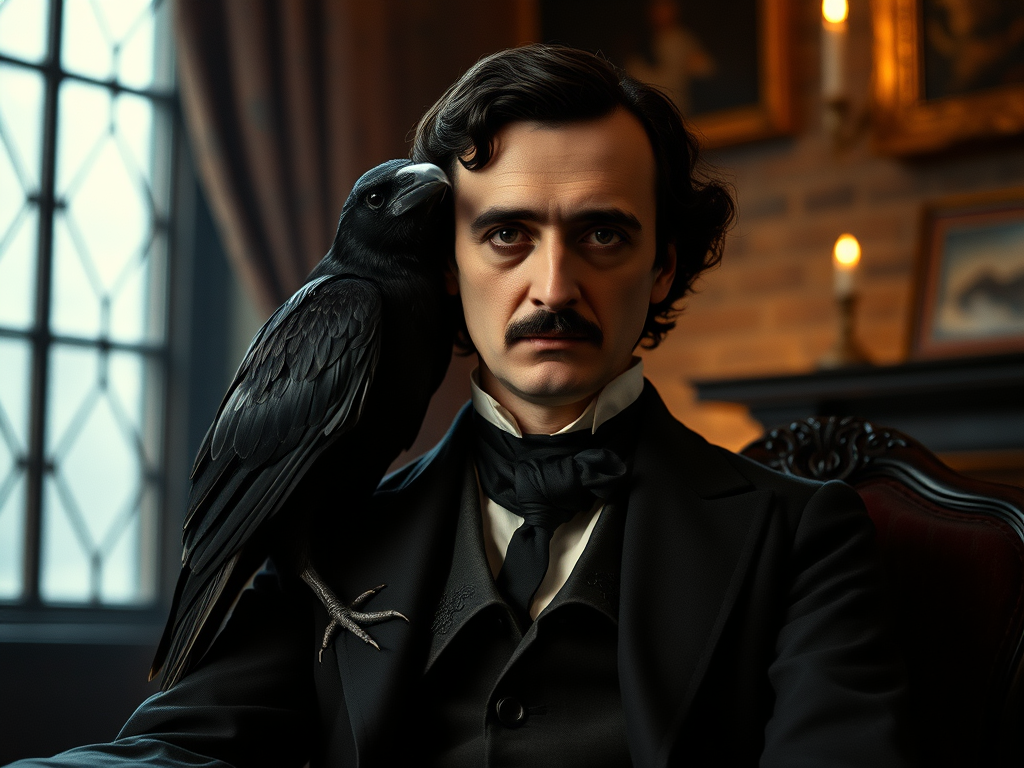
Edgar Allan Poe

Edgar Allan Poe was an American writer, poet, editor, and literary critic best known for his macabre and Gothic tales and poems. He was born on January 19, 1809, in Boston, Massachusetts. His parents were actors, but his father abandoned the family early on, and his mother died when Poe was only three years old. He was then taken in by John and Frances Allan, a wealthy Richmond family. Poe attended the University of Virginia but had to drop out due to financial difficulties. He later enrolled at the United States Military Academy at West Point but was expelled for neglecting his duties. Edgar began his literary career as a writer and editor for various magazines and newspapers. He is best known for his poems and short stories, particularly his mystery and macabre tales. Some of his most famous works include “The Tell-Tale Heart,” “The Raven,” “The Fall of the House of Usher,” and “The Masque of the Red Death.”

Poe’s personal life was marked by tragedy and hardship. He struggled with poverty, alcoholism, and depression throughout his life. He also experienced the death of several loved ones, including his wife, Virginia Clemm, who died of tuberculosis at a young age. Edgar Allan Poe died under mysterious circumstances on October 7, 1849, in Baltimore, Maryland. The exact cause of his death remains unknown, with theories ranging from alcohol poisoning to murder. Despite facing many challenges during his lifetime, Poe is now considered one of the most significant figures in American literature. His works have profoundly influenced the development of various literary genres, including detective fiction and horror. Poe’s dark and atmospheric writing style continues to captivate readers to this day. Overall, Edgar Allan Poe’s life was marked by brilliance and tragedy, and his works continue to be celebrated for their haunting beauty and psychological depth. 

Image by AI

George R. R. Martin

George R. R. Martin, born George Raymond Richard Martin on September 20, 1948, is an American novelist and short story writer known for his contributions to the fantasy and science fiction genres. His most famous work is the epic fantasy series “A Song of Ice and Fire,” which has captured the imagination of readers worldwide and was adapted into the acclaimed television series “Game of Thrones” by HBO.

Martin was born in Bayonne, New Jersey, and from a young age, he showed a keen interest in writing and storytelling. After attending Northwestern University, where he studied journalism, he began his career as a writer, selling short stories to various science fiction and fantasy publications. His early works established him as a talented and imaginative writer within the genre. In 1996, Martin published the first book in his “A Song of Ice and Fire” series, titled “A Game of Thrones.” This novel marked the beginning of a sprawling and complex narrative set in the fictional continents of Westeros and Essos, filled with intricate plots, morally ambiguous characters, and a richly detailed world. The series has been praised for its realism, political intrigue, and exploration of themes such as power, honour, and betrayal.

As the series gained popularity, Martin became a household name in the world of fantasy literature. Fans eagerly awaited each new instalment in the series, but the gap between book releases lengthened as the story grew in scope and complexity. This led to frustration among some readers who eagerly anticipated the saga’s completion with the final two books, “The Winds of Winter” and “A Dream of Spring.” Aside from his work on “A Song of Ice and Fire,” Martin has authored numerous other novels, novellas, and short stories, showcasing his versatility. He has also worked in television, serving as a screenwriter and producer on various projects and collaborating with other creators in the industry.

George R. R. Martin’s impact on the fantasy genre is profound, with his storytelling prowess and world-building skills earning him a place among the most influential authors of his generation. His work has inspired a new wave of fantasy writers and has left an indelible mark on popular culture. Despite the challenges of completing his magnum opus, Martin’s legacy as a master storyteller remains secure. 

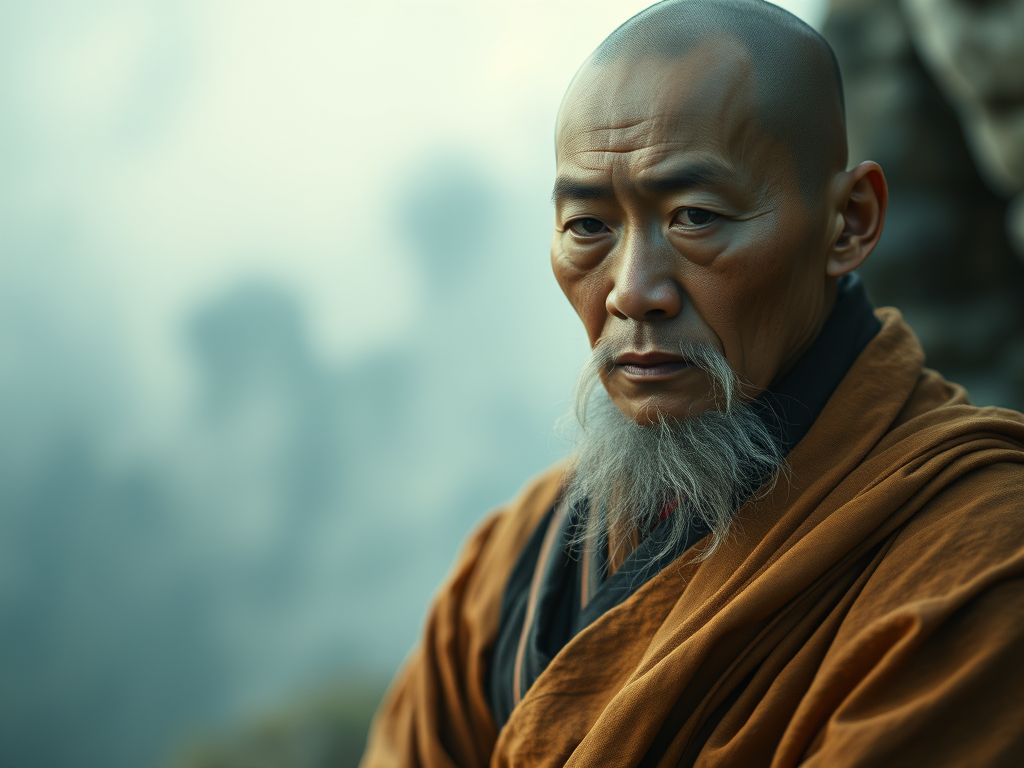
Brother Kaito

Once upon a time, a monk named Brother Kaito lived in a secluded monastery nestled deep within the misty mountains. Brother Kaito was a devout and humble man known for his wisdom, kindness, and unwavering faith in his order’s teachings. A terrible storm swept through the mountains one fateful winter night, unleashing its fury upon the monastery. As the wind howled and the thunder roared, a lightning bolt struck the ancient oak tree near the monastery, splitting it in two. The monks huddled together in prayer, seeking solace and protection from the raging tempest. In the midst of the chaos, Brother Kaito volunteered to go outside and secure the monastery’s gates, which had been flung open by the force of the storm. With a lantern in hand, he ventured out into the darkness, his robes billowing in the wind.

As Brother Kaito reached the gates and began to close them, another bolt of lightning struck the ground, illuminating the night sky with a blinding light. In that moment of intense brightness, a strange and otherworldly presence enveloped Brother Kaito, causing his form to flicker and fade like a wisp of smoke. When the light subsided, the monks rushed outside to find Brother Kaito standing before them, his features distorted and ethereal. He spoke to them in a voice that echoed from beyond the grave, telling them that he had become a ghost bound to the monastery by a powerful force unleashed by the storm. Despite his ghostly form, Brother Kaito remained committed to his duties as a monk, continuing to offer guidance and wisdom to his fellow brothers. His presence brought both comfort and awe to the monastery, as tales of the monk who became a ghost spread far and wide.

Years passed, and the monastery flourished under Brother Kaito’s spectral watch. His teachings and legacy endured, inspiring generations of monks to follow in his footsteps. And so, the tale of the monk who became a ghost became a cherished legend, a testament to the enduring power of faith, compassion, and the unbreakable bond between the living and the spirit world.

Image by AI

Isaac Newton

Isaac Newton, one of the most influential scientists in history, was also deeply interested in theological and eschatological matters. Alongside his groundbreaking scientific work, Newton dedicated much of his life to studying and interpreting biblical prophecies of the end times.

In his work “Observations on the Prophecies of Daniel and the Apocalypse of St. John,” Newton explored various aspects of eschatology, seeking to understand the timeline and events leading up to the end of the world as described in the Bible. He believed that specific prophecies in the books of Daniel and Revelation provided insights into the future and the culmination of human history. Newton’s views on the end times centred around the idea of a final, apocalyptic battle between good and evil, the rise of an influential world leader who would exert control over much of the world, and the eventual establishment of a new order under divine rule. He also speculated on the restoration of Israel as a nation and its significance in unfolding end-time events.

While Newton’s theories on the end times were highly speculative and not widely accepted by mainstream theologians, they offer a glimpse into his religious beliefs and the intersection of science, theology, and prophecy in his worldview. Newton’s interest in eschatology reflected his deep curiosity about the mysteries of the universe and his desire to uncover hidden truths, whether in the realm of science or spirituality. Overall, Newton’s exploration of the end times adds another layer to our understanding of this remarkable figure, showcasing his multifaceted intellectual pursuits and the complexity of his thought beyond his well-known scientific achievements. 

Image by AI