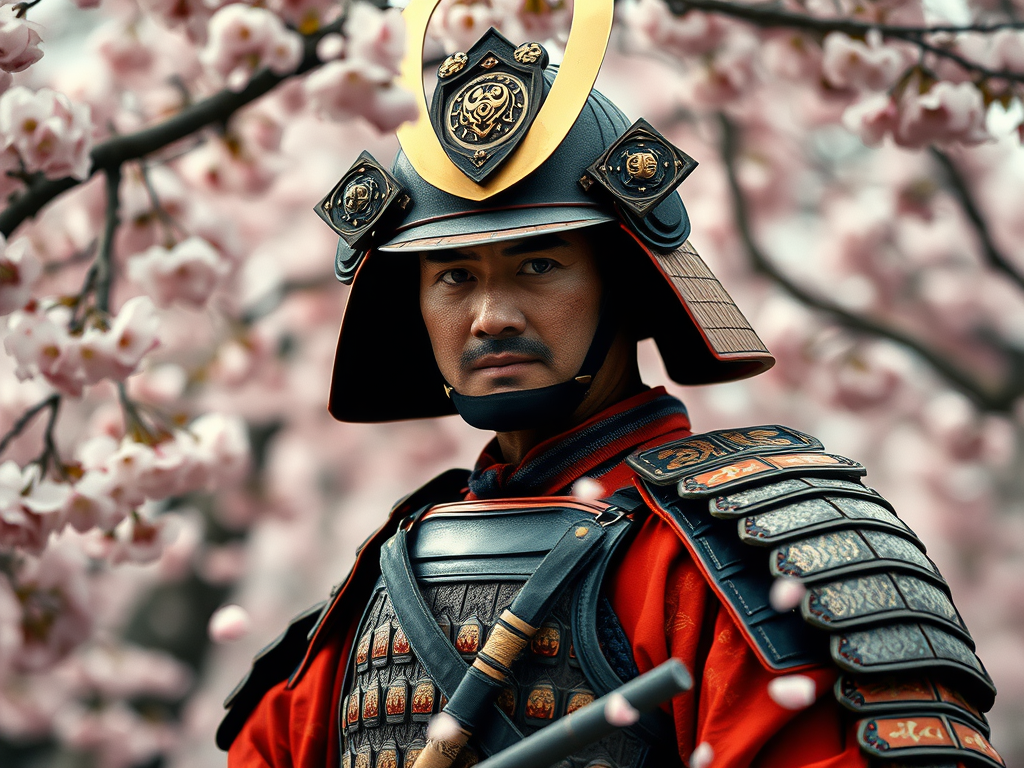
James Clavell

James Clavell, born Charles Edmund Dumaresq Clavell, was a highly acclaimed British-American author, screenwriter, director, and World War II veteran. He was born on October 10, 1921, in Sydney, Australia, and passed away on September 6, 1994, in Vevey, Switzerland. Clavell’s diverse career included writing novels, screenplays, and directing films. He is perhaps best known for his epic series of historical novels, the Asian Saga. The Asian Saga comprises six novels: “Shōgun” (1975), “Tai-Pan” (1966), “Gai-Jin” (1993), “King Rat” (1962), “Noble House” (1981), and “Whirlwind” (1986).

One of his most famous works, “Shōgun,” set in feudal Japan, has been adapted into a successful television miniseries. The novel explores the clash of cultures between East and West through the story of an English navigator who becomes involved in the political intrigues of samurai-era Japan. Clavell’s writing is known for its meticulous research, detailed historical settings, and complex characters. His works often delve into power, honour, loyalty, and cultural clashes. His ability to craft intricate plots and rich character development has endeared him to readers worldwide. Aside from his literary achievements, Clavell also had a successful career in filmmaking. He directed films such as “To Sir, with Love” (1967) and “The Last Valley” (1971), further showcasing his storytelling prowess across different mediums.

James Clavell’s legacy endures through his timeless novels, which continue to captivate readers with their vivid storytelling and exploration of historical and cultural themes. His contributions to literature and cinema have left a lasting impact on storytelling.

Image by AI

The legend of the Eternal Flame

Once upon a time, in a world not so different from our own, there existed a mystical candle that never went out. This candle, known as the Eternal Flame, was said to be imbued with ancient magic that kept it burning endlessly, no matter the circumstances. The legend of the Eternal Flame spread far and wide, and people from distant lands would travel to witness its mesmerizing glow. The candle was enshrined in a grand temple at the heart of a bustling city, where it stood as a symbol of hope and stability for all who beheld it.

However, with great power comes great responsibility, and the keepers of the Eternal Flame knew that its light must never be extinguished. An ancient prophecy foretold that if the flame were to ever go out, the world as we know it would come to a catastrophic end. Generations passed, and the candle continued to burn brightly, watched over by a dedicated line of guardians who ensured its eternal flame never wavered. They built elaborate mechanisms and intricate rituals to protect the flame, knowing that the fate of the world rested upon its enduring light.

As time passed, the city prospered under the watchful gaze of the Eternal Flame. People lived in peace and harmony, their lives intertwined with the magic of the candle that never went out. But with peace often comes complacency, and some began to take the flame for granted, forgetting the dire consequences of its extinction. One fateful night, a great storm descended upon the city, its howling winds threatening to snuff out the Eternal Flame once and for all. The guardians sprang into action, battling the elements with all their might to protect the candle and preserve the world from impending doom. As the storm raged on, the city held its breath, fearing the worst. But against all odds, the Eternal Flame continued to burn, its light flickering but never faltering. The storm eventually passed, leaving the city intact and the flame aglow.

The people of the city rejoiced, realizing the true significance of the Eternal Flame and the sacrifices made to protect it. They vowed never to forget the lesson learned that day that even the most minor light could hold the power to shape the world’s destiny. And so, the Eternal Flame continued to burn, a beacon of hope and resilience in a world where darkness always threatened to creep in. Its light served as a reminder to all who beheld it that the world would endure as long as there was hope, for the candle that never went out held the key to a future filled with endless possibilities.

Image by AI

John Bunyan

John Bunyan, born in 1628 and passing away in 1688, was an English writer and Puritan preacher best known for his work “The Pilgrim’s Progress,” one of English literature’s most famous religious allegories. Bunyan’s life was marked by religious fervour and persecution. He was born in Elstow, Bedfordshire, England, to a poor tinker (a mender of pots and pans). In his early twenties, he experienced a religious conversion and became a preacher in the Puritan tradition. However, his non-conformist beliefs imprisoned him several times for preaching without a license from the Church of England.

During one of these imprisonments, Bunyan wrote his most famous work, “The Pilgrim’s Progress.” The book, published in 1678, tells the allegorical story of Christian, a man on a journey from the City of Destruction to the Celestial City, symbolizing the believer’s journey through life to heaven. “The Pilgrim’s Progress” was a huge success and has been translated into numerous languages. It remains a classic of Christian literature and is considered one of the greatest works of religious fiction. Bunyan’s other works include spiritual autobiographies, sermons, and theological writings. Despite facing persecution and imprisonment, he continued to preach and write, leaving a lasting impact on English literature and religious thought. 

Image by AI

The Elephant who forgot!

An elephant named Ellie lived in the heart of a lush, vibrant jungle. Ellie was known far and wide for her incredible memory. She could remember the location of every watering hole, every fruit tree, and every hidden path in the jungle. Her memory was a source of pride for her, and the other animals often came to her for guidance and advice. One day, a strange phenomenon occurred in the jungle. Ellie woke up with a peculiar feeling of fuzziness in her mind. She initially shrugged it off, thinking it was just a passing moment of forgetfulness. However, as the day went on, Ellie found herself forgetting simple things – where she had left her favourite tree to scratch her back, the way to the river where she liked to bathe, and even the names of some of her closest friends in the jungle.

The news of Ellie, the elephant who could not remember, spread quickly through the jungle. The animals were shocked and afraid. If Ellie, with her legendary memory, could forget, what hope was there for the rest of them? The jungle shook with fear as uncertainty loomed over them. Without Ellie’s guidance, the animals felt lost and vulnerable. They gathered near the Great Banyan Tree, the ancient meeting place of the jungle, to discuss what to do. As the animals debated and worried, a wise old owl spoke up.

“Perhaps Ellie’s forgetfulness is a test for us all,” he said. “Instead of relying on her memory, we must unite as a community to overcome this challenge.”

Inspired by the owl’s words, the animals supported Ellie and each other during this difficult time. They helped Ellie remember what she had forgotten and worked together to navigate the jungle and keep each other safe. As days turned into weeks, Ellie’s memory slowly began to return. The jungle settled back into its usual rhythm, but this time with a more profound sense of unity and cooperation among the animals.

Ellie never forgot the time when she, the elephant who did forget, brought the jungle together in a way that had never been seen before. The memory of that time reminded all the animals that even in moments of fear and uncertainty, they could overcome anything by standing together as one. 

Images by AI

Herman Hesse

Herman Hesse was a German-Swiss author and painter best known for his fiction exploring spirituality, self-discovery, and the search for meaning in life. He was born on July 2, 1877, in Calw, Germany, and passed away on August 9, 1962, in Montagnola, Switzerland. Hesse’s early life was marked by struggles with his parents’ expectations and the rigid educational system of the time. Before committing to a career as a writer, he worked various jobs, including as a bookseller and a mechanic.

His literary career took off with the publication of his novel “Peter Camenzind” in 1904, but he gained international recognition with the novels “Demian” (1919), “Siddhartha” (1922), and “Steppenwolf” (1927). These works explore themes of individualism, self-realization, and the conflict between the demands of society and the desires of the individual. Hesse’s interest in Eastern philosophy and spirituality, particularly Buddhism and Hinduism, heavily influenced his writing. His works often reflect his own personal struggles with identity, inner conflict, and the search for meaning in a rapidly changing world.

He was awarded the Nobel Prize in Literature in 1946 for his “inspired writings which, while growing in boldness and penetration, exemplify the classical humanitarian ideals and high qualities of style.” Throughout his life, Hesse struggled with depression and underwent psychoanalysis. He also faced criticism for his perceived pessimism and perceived escapism in his works. Despite this, his novels remain widely read and have inspired generations of readers around the world. 

Image by AI