Lazarus Carpenter
I have lived in Wales for over twenty five years. Born in North Yorkshire, I am now an author, actor, musician and song writer, previously being a therapist, trainer and researcher, specialising in mental health. He was educated in Middlesbrough, Sheffield and Cambridge. With a fascination for Welsh History, I create worlds within worlds; magical, haunting, spirituality permeating sound moral codes of life. I live quietly with Debbie Eve (also my illustrator and our dog, Noodle in a small cottage surrounded by the beauty of the Brecon Beacons in the Valleys of South Wales.
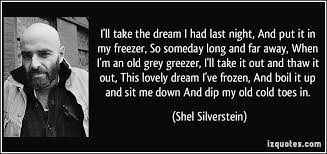
Shel Silverstein was an American poet, songwriter, cartoonist, and author best known for his children’s books and whimsical poetry. He was born on September 25, 1930, in Chicago, Illinois, and showed an early interest in art and writing. Silverstein attended the School of the Art Institute of Chicago and began his career as a cartoonist, contributing to magazines like “Playboy.”
His most famous works include “The Giving Tree,” “Where the Sidewalk Ends,” and “A Light in the Attic.” These books are celebrated for their playful language, imaginative illustrations, and underlying themes of love, loss, and the joys of childhood.
In addition to his children’s literature, Silverstein wrote songs for notable artists, including “A Boy Named Sue,” famously performed by Johnny Cash. His unique style and ability to connect with children and adults have left a lasting legacy.
Shel Silverstein passed away on May 10, 1999, but his work continues to be cherished by readers of all ages. His blend of humour, insight, and profound simplicity makes his poetry and stories timeless.
Once upon a time, in a quaint little town, there lived a man named Harold who had a peculiar talent for being late. No matter the occasion—birthdays, weddings, or important meetings—Harold always seemed to arrive just after the moment had passed. Friends and family often joked that he was on a different schedule, one that ticked a little slower than everyone else’s. As a child, Harold’s tardiness was endearing. His parents would chuckle as he stumbled into the classroom, breathless and flushed, always missing the morning bell by a few minutes. In his teenage years, he was perpetually late for dates, leaving girls waiting with a mix of exasperation and amusement. “Better late than never,” he would say with a sheepish grin, and somehow, they never held it against him for long.
As an adult, Harold’s reputation only grew. He missed job interviews and deadlines, and his friends learned to adjust their plans around him. “Let’s just tell Harold an hour earlier,” they would whisper, a strategy that often backfired when he still managed to arrive late. Yet, despite the frustration he caused, his charm and good-natured spirit kept him surrounded by loved ones. One day, Harold received news that he had a serious illness. Determined to live life to the fullest, he decided to throw a party to celebrate his life. He meticulously planned every detail, inviting everyone he had ever known. But, true to form, he miscalculated the time it would take to prepare. The party was supposed to start at 4 PM, but he arrived at 5:30, just as the last guests were leaving.
“Harold, we were just about to leave!” they exclaimed, laughing at the irony.
But Harold, ever the optimist, simply shrugged and said,
“Well, at least I made it for the cake!”
And they all stayed a little longer, sharing stories and laughter, grateful for the time they had. Months passed, and Harold’s condition worsened. He was in and out of the hospital, but even there, he was late for his own treatments. The nurses would chuckle, “We’ve got to set an alarm for you, Harold!” He would laugh along, making friends with everyone he met, turning each medical appointment into a lighthearted gathering. Finally, the day came when Harold’s time came to an end. He passed away quietly, leaving behind a legacy of laughter and love. When the day of his funeral arrived, friends and family gathered in the church, reminiscing about their favourite Harold stories. But true to form, Harold was late even for this final event. As the clock ticked on, people began to murmur. Just then, the church doors swung open with a loud creak, and Harold, or rather, his spirit, walked in. He floated in, grinning widely as if he had just walked in from a party.
“Sorry I’m late!” he shouted, and laughter erupted in the sombre room.
At that moment, everyone understood that Harold had never indeed been late. He had always arrived just when he was meant to, filling every moment with joy, love, and laughter. And so, they celebrated his life and the wonderful chaos he brought into theirs, proving that sometimes, being late is the best way to make a grand entrance.
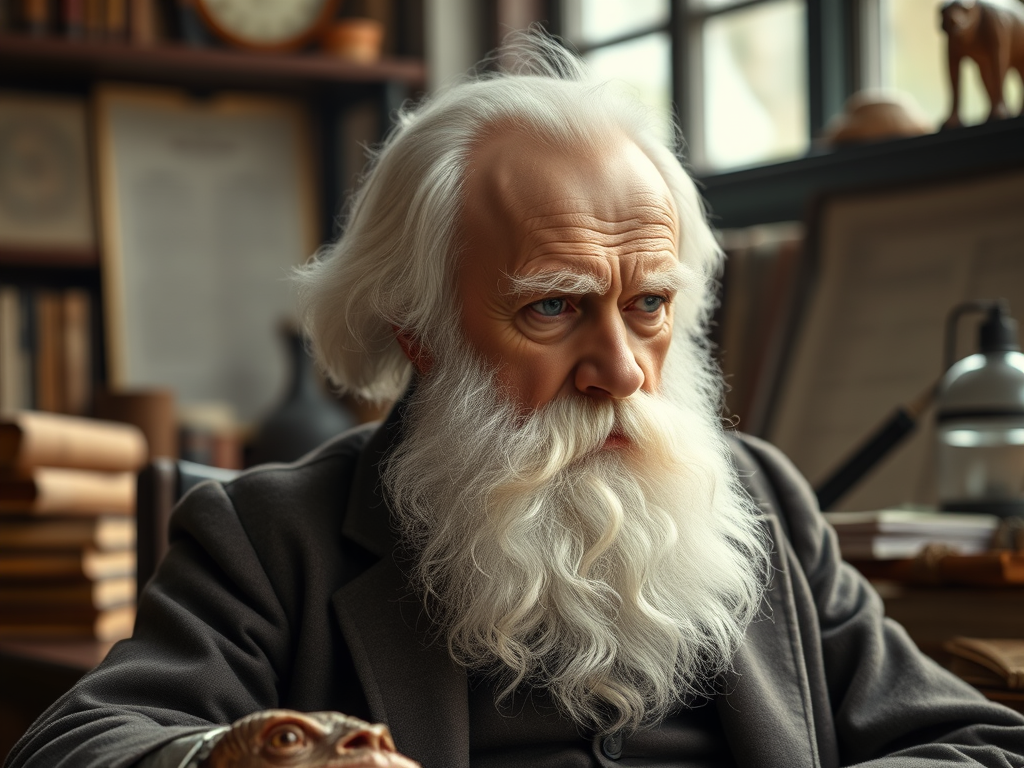
Charles Darwin was an English naturalist, geologist, and biologist best known for his contributions to understanding evolution. His most famous work, “On the Origin of Species,” published in 1859, introduced the concept of natural selection as a mechanism for evolution. Darwin’s observations during his voyage on the HMS Beagle, particularly in the Galápagos Islands, led him to develop his theories on the diversity of life and the common descent of species. Darwin proposed that individuals with traits better suited to their environments are more likely to survive and reproduce, passing those traits on to future generations. He argued that species evolve over time through gradual changes rather than static or unchanging. Darwin’s ideas challenged traditional views of creation and profoundly impacted various fields, including biology, genetics, anthropology, and philosophy. His work laid the foundation for modern evolutionary biology, influencing scientific thought and research.
Once upon a time, in a small town nestled between rolling hills, a boy named Beckett was utterly obsessed with trains. From the moment he could walk, he would rush to the window each time he heard the distant sound of a locomotive whistle. His room was a treasure trove of model trains, posters of famous engines, and books filled with stories about railways from around the world. Every Saturday, Beckett’s father would take him to the local train station, where the boy would watch in awe as massive freight trains thundered by, pulling long lines of colourful cars. He marvelled at the rhythmic clatter of wheels on tracks and how the trains seemed to breathe life into the landscape. The station became a sanctuary for him, where time stood still as he immersed himself in the world of trains.
One day, while exploring the station, Beckett stumbled upon an old man named Mr. Jenkins, the retired conductor of the very train that had captured his heart. With a twinkle in his eye, Mr. Jenkins shared stories of his adventures on the rails, tales of epic journeys through mountains, across rivers, and into bustling cities. Inspired, Beckett listened intently, imagining himself as a conductor, guiding his train through the vast unknown. As weeks turned into months, Beckett’s fascination grew. He began sketching designs for his train, a magnificent steam engine that would one day traverse the land. He drew intricate plans, detailing every aspect, from the shimmering brass whistle to the plush velvet seats inside. His passion was infectious, and soon, his friends joined him in building a miniature railway in his backyard.
With his father’s help, they transformed the space into a vibrant train yard with tracks, stations, and tiny trees. Beckett and his friends would spend hours playing, racing their models, and pretending to be conductors and passengers on grand adventures. A peculiar sight caught Beckett’s eye as they played one fateful day. Unlike anything he had seen, a real train rolled slowly into the station. It was a vintage steam locomotive, its surface glistening in the sun, with billowing clouds of steam rising into the sky. Beckett’s heart raced. He could hardly believe his eyes. As if sensing his awe, a friendly conductor stepped down from the train and beckoned Beckett over.
“Would you like to look inside?” he asked warmly.
Beckett could hardly contain his excitement as he climbed aboard. The cabin was filled with intricate levers, dials, and the intoxicating smell of coal and oil. The conductor shared the secrets of running the train, and Beckett felt he was living his dream. Afterwards, the conductor handed him a small, shiny whistle.
“This is for you, young man. Keep it close, and always remember the magic of the rails.”
From that day forward, Beckett carried the whistle everywhere, a reminder of the adventure he had experienced. As he grew older, his passion for trains only deepened. He studied engineering and eventually became a conductor, travelling the routes he had dreamed about as a child. Years later, he returned to that small station, now a man in uniform, ready to guide a new generation of train enthusiasts. Looking out at the children playing in the yard, he smiled, knowing that the magic of trains still lived somewhere in their hearts. With a blow of his whistle, he invited them to join him on a new adventure, just like the one that had ignited his journey many years ago.


 Lazarus Carpenter - Author