Kaya – Dark Tales from the Outback Abstract

Once, in the remote Australian outback, there lived an aborigine named Kaya. He was a skilled tracker and hunter who roamed the vast, desolate lands with an air of quiet confidence. Kaya had always felt a deep connection to the spirits of the land, and his people often spoke of the ancient stories that warned of the dangers lurking in the wilderness. One moonless night, Kaya set out on a hunting expedition, guided only by the faint glow of the stars. His senses were sharp, and he moved through the rugged terrain with the ease of a shadow.

As he ventured deeper into the heart of the outback, a strange unease settled over him. The usual sounds of the night were absent, and an eerie silence enveloped the land. Suddenly, a piercing scream shattered the stillness, causing Kaya to halt in his tracks. The hair on the back of his neck stood on end as he tried to locate the source of the chilling cry. Following the sound, he stumbled upon a clearing where he saw a lone kangaroo, its eyes wide with terror as it desperately tried to escape an unseen force.

Kaya watched in horror as the kangaroo was dragged into the darkness by an unseen entity, its screams fading into the night. The aborigine felt a chill run down his spine, for he knew that the spirit world held many dark and malevolent forces. He knew he had stumbled upon something sinister, something beyond his understanding. Determined to uncover the truth, Kaya embarked on a quest to seek guidance from the wise elders of his tribe.

They revealed to him the ancient legend of a vengeful spirit that had been unleashed upon the land, seeking to wreak havoc on the living. The elders warned Kaya that the spirit had taken the form of a monstrous kangaroo driven by an insatiable thirst for blood. Armed with the knowledge passed down by his ancestors, Kaya set out to confront the malevolent spirit. Armed with ancient symbols and blessed talismans, he ventured back into the wilderness. As he delved deeper into the treacherous terrain, the air grew thick with an otherworldly presence, and the ground seemed to tremble beneath his feet.

Finally, he came face to face with the monstrous kangaroo, its eyes glowing with an unholy light. The creature lunged at Kaya with supernatural speed and ferocity, but the aborigine stood his ground, wielding the protective symbols and chanting the sacred incantations. A fierce battle ensued as Kaya fought to banish the vengeful spirit from the mortal realm. The very fabric of reality seemed to warp and twist around them, and the night itself seemed to hold its breath as the two clashed in a struggle that transcended the physical world. In the end, with a final burst of mystical energy, Kaya managed to seal the spirit away, restoring peace to the land.

As the first light of dawn broke over the horizon, the outback was once again filled with the sounds of life, and Kaya knew he had fulfilled his duty as a guardian of his people. From that day on, the legend of Kaya and the malevolent kangaroo spirit became a cautionary tale, a reminder of the ancient forces that still linger in the wild places of the world. And though the memory of that fateful encounter would always haunt him, Kaya continued to roam the outback with a newfound sense of purpose and a deep respect for the mysteries of the land.

Over time, Kaya’s reputation as a protector and a keeper of ancient wisdom spread far and wide, and he became a revered figure among his people. Years passed, and Kaya’s hair turned grey, but his spirit remained unyielding. He passed down the knowledge he had gained to the younger generations, teaching them to honour the delicate balance between the physical and spiritual realms. His story became a part of the oral tradition, woven into the tapestry of his people’s history as a testament to the enduring power of courage and wisdom.

As the seasons changed and the land continued to whisper its secrets, Kaya’s name became synonymous with resilience and reverence for the natural world. His legacy endured, and the memory of his heroic encounter with the malevolent kangaroo spirit lived on as a reminder of the dangers that lay hidden in the heart of the outback. The tale of Kaya and the vengeful spirit served as a timeless lesson, teaching the importance of humility and the need to safeguard the delicate harmony between humanity and the ancient forces that dwelled in the shadows. It became a parable of the enduring strength of the human spirit and the profound connection that binds all living things.

And so, in the vast expanse of the Australian outback, Kaya’s story echoed through the ages, a testament to the enduring power of the human spirit in the face of the unknown. And though the world continued to change, the legend of Kaya and the malevolent kangaroo spirit remained etched in the very fabric of the land, a testament to the enduring legacy of a humble aborigine who had stood against the darkness and triumphed.

Émile Zola

Émile Zola was a prominent French novelist and playwright, born on April 2, 1840, in Paris and died on September 29, 1902. He is best known for his significant contributions to the literary movement known as Naturalism, which sought to depict life and society with a scientific approach, focusing on the influence of the environment and heredity on human behaviour.

Zola’s literary career began in the 1860s, and he gained fame for his series of novels called “Les Rougon-Macquart,” which explores the lives of a single family under the Second Empire in France. Notable works include “Germinal,” which addresses the struggles of coal miners, and “Nana,” which examines the world of a Parisian courtesan.

Beyond his novels, Zola was also an outspoken political figure. He famously defended Alfred Dreyfus, a Jewish army officer wrongfully convicted of treason, in his open letter “J’accuse…!” published in 1898. This act of courage made him a key figure in the fight against anti-Semitism and injustice in France.

Zola’s literary legacy is marked by his detailed realism and social commentary, influencing writers and movements well beyond his time. His works remain significant in the study of literature and social issues. 

The Wizard Who Chased Time

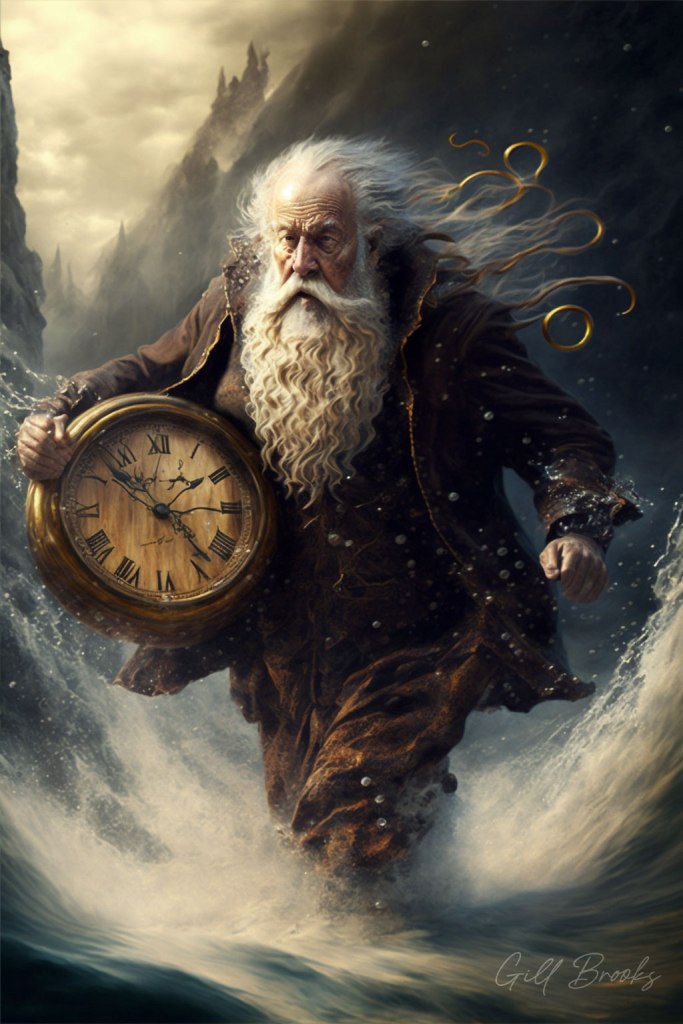
Once upon a time, in a small village nestled between rolling hills and lush green meadows, lived a wizard named Doctor John. Unlike ordinary wizards who were content with casting spells and brewing potions, Doctor John possessed an insatiable curiosity about the mysteries of time. From a young age, he had been fascinated by the concept of time and its ever-elusive nature. He often found himself pondering questions such as,

“Where does time go?” and “Can we ever catch up with time?”

These thoughts consumed his mind day and night, leaving him with an unquenchable desire to chase after time itself. One sunny morning, while strolling through the village, Doctor John stumbled upon an ancient book hidden in the depths of a dusty old bookstore.

The book was bound in weathered leather and emanated an aura of magic. As he opened its pages, a burst of shimmering light enveloped him, transporting him to a realm where time was tangible. In this enchanted world, time manifested as a radiant, glowing entity, dancing and swirling in the air. His eyes widened with awe as he watched the magical spectacle unfold before him. Determined to chase time and uncover its secrets, he embarked on an exhilarating quest. Doctor John soon discovered that chasing time was no easy feat. Time darted and weaved through the forest, slipping through his fingers like sand. Undeterred, he summoned his magical abilities and conjured a magnificent timepiece to aid him in his pursuit.

With each swoop and swirl, he tried to close the gap between himself and time. As he ventured deeper into the mystical forest, he encountered a mischievous fairy named Luna. She had heard of his quest and decided to join him on his adventure. Together, they traversed treacherous terrains, battled formidable creatures, and solved riddles left by ancient guardians. His determination and Luna’s cleverness formed an unstoppable duo. During their journey, Doctor John and Luna encountered various villagers whose lives were directly influenced by time. They met an elderly woman who yearned for more time to spend with her loved ones, a young artist who wished to capture the essence of time in her paintings, and a group of children who dreamed of slowing down time to savour every moment of their youth. Moved by these encounters, he realized that the beauty of time lay not in capturing it, but in cherishing the moments it offered. He understood that time was not something to be chased but something to be embraced.

With this newfound wisdom, Doctor John knew his quest had transformed into a mission to help others appreciate the value of time. Returning to the village, he used his magical powers to create a magnificent clock tower in the heart of the community. The clock tower became a symbol of time’s preciousness, reminding everyone to make the most of each passing second. Now an old man, he shared his experiences and the lessons learned, inspiring the villagers to live each day to the fullest. And so, the tale of the wizard who chased time turned into a story of wisdom and enlightenment. Doctor John’s quest may not have led him to physically catch time, but it led him to a deeper understanding of its significance. From that day forward, he dedicated himself to helping others cherish every moment, teaching them that the true magic of time lies within their hearts.

Book cover and images by http://www.gillsplace.com

Peter Kropotkin

Peter Kropotkin (1842-1921) was a Russian revolutionary, geographer, and anarchist philosopher best known for advocating anarcho-communism. Born into a noble family, Kropotkin initially pursued a career in the Russian military and later in geography and natural sciences. His experiences in Siberia, where he conducted extensive geological and biological research, led him to develop ideas about mutual aid, which he argued was a natural principle of evolution. Kropotkin’s seminal works, such as “Mutual Aid: A Factor of Evolution,” challenged the prevailing notion of survival of the fittest, emphasizing cooperation over competition as a driving force in nature.

Kropotkin became involved in revolutionary activities and was imprisoned for his beliefs. After his release, he lived in exile in Europe, writing influential texts advocating for a society based on voluntary cooperation and the abolition of the state. His major works include “The Conquest of Bread” and “Fields, Factories and Workshops.” Throughout his life, Kropotkin remained committed to social justice and environmentalism, promoting anarchist principles and influencing various movements and thinkers. He returned to Russia after the 1917 Revolution but became disillusioned with the Bolshevik regime’s authoritarianism. Kropotkin’s legacy endures in anarchist thought and movements advocating for decentralized, egalitarian societies. 

Henri Bergson

Henri Bergson (1859–1941) was a French philosopher known for his influential ideas on time, consciousness, and creativity. His works challenged the prevailing mechanistic view of the universe and emphasized the importance of intuition and experience over rationalism.

In “Time and Free Will” (1889), he distinguished between “measurable time” (quantitative) and “lived time” (qualitative), introducing the concept of “duration” (durée) to describe how individuals experience time subjectively.

In “Creative Evolution” (1907), Bergson argued against Darwinian evolution’s purely mechanistic interpretation. He introduced the idea of an élan vital, a vital force driving evolution and creativity, emphasizing the spontaneity and unpredictability of life.

Bergson believed that traditional philosophical methods relied too heavily on intellect and abstract reasoning, which could miss the essence of life. He advocated for intuition as a means to grasp reality more fully. His ideas profoundly influenced various fields, including literature, psychology, and the arts. His thoughts on time and consciousness paved the way for existentialist and phenomenological philosophies.

Bergson received the Nobel Prize in Literature in 1927, recognizing his rich philosophical contributions. His work continues to inspire discussions on the nature of time, consciousness, and the dynamic quality of life.