Lazarus Carpenter
I have lived in Wales for over twenty five years. Born in North Yorkshire, I am now an author, actor, musician and song writer, previously being a therapist, trainer and researcher, specialising in mental health. He was educated in Middlesbrough, Sheffield and Cambridge. With a fascination for Welsh History, I create worlds within worlds; magical, haunting, spirituality permeating sound moral codes of life. I live quietly with Debbie Eve (also my illustrator and our dog, Noodle in a small cottage surrounded by the beauty of the Brecon Beacons in the Valleys of South Wales.
As we gather to celebrate this joyful season, let us reflect on the true spirit of Christmas— love, compassion, and unity. In a world often divided by differences, may we remember that our shared humanity transcends borders, beliefs, and backgrounds. This Christmas, let us embrace peace and equality for all. Let us extend our hands to those in need, fostering understanding and kindness in our communities. As we light our candles and decorate our trees, let us illuminate the path toward a more just and harmonious world. May this season inspire us to advocate for the voiceless, stand against injustice, and work tirelessly for a future where everyone has the opportunity to thrive. Together, let us weave a tapestry of hope where every thread represents the dignity and worth of every individual. Let us give our grandchildren hope for their future.
Wishing you all a Merry Christmas filled with love and a New Year brimming with possibility for peace and equality everywhere.
Uri Geller is an Israeli-British illusionist, magician, and self-proclaimed psychic known for his spoon-bending tricks and mind-reading abilities. Born on December 20, 1946, in Tel Aviv, Israel, Geller gained fame in the 1970s and 1980s, captivating audiences with his performances that often blurred the lines between magic and mysticism. Geller’s rise to prominence began after he appeared on television, showcasing his unique abilities, which he claimed resulted from psychic powers. His most famous act involves bending spoons and other metal objects, which he often attributes to telekinesis. While many have been sceptical of his claims, arguing that his feats can be replicated through sleight of hand and illusion, Geller maintains that he possesses genuine psychic abilities.
Throughout his career, Geller has been involved in various media, including television shows, books, and public appearances. He has also faced criticism and controversy, particularly from sceptics and magicians who argue that his performances are misleading. Despite this, Geller has maintained a loyal following and has continued to perform and engage with audiences worldwide. In addition to his entertainment career, Geller has claimed to have worked with various scientific institutions and has been involved in research related to psychic phenomena. His life and career have often sparked debates about the nature of reality, belief, and the limits of human potential. Uri Geller has claimed that he was involved with the CIA during the 1970s in a program exploring psychic phenomena for potential applications in espionage and intelligence gathering. This program, often referred to as “Project Stargate,” investigated the use of psychics for remote viewing and other paranormal abilities.
Geller’s association with the CIA became a topic of interest, notably when he demonstrated his abilities to various military and intelligence personnel. He stated that he was asked to participate in tests to see if his supposed psychic skills could be harnessed for intelligence. However, the specifics of his involvement and the outcomes of those tests remain a subject of debate and scepticism. While Geller has often spoken about these experiences, it’s important to note that many in the scientific community remain critical of claims regarding psychic abilities, and there has been considerable scepticism regarding the validity and replicability of Geller’s feats. The discussions around his alleged CIA connections continue to contribute to the intrigue surrounding his persona as a psychic entertainer.
Robert Tressell was born Robert Noonan in 1870 in Dublin, Ireland. He moved to England with his family during his childhood. His father was a military man, and Tressell grew up in a working-class environment, influencing his later views on labor and politics. Tressell trained as a painter and decorator, a trade that exposed him to the hardships of the working class. His experiences in the workforce deeply informed his writing, as he witnessed firsthand the exploitation and struggles of laborers. Tressell was influenced by the socialist movements of his time, particularly ideas related to workers’ rights and social justice. His political beliefs shaped his worldview and became central themes in his writing.
“The Ragged-Trousered Philanthropists” The novel follows a group of painters and decorators in the fictional town of Mugsborough. The protagonist, Frank Owen, engages in discussions about socialism and the exploitation of workers. Through a series of events, the book explores themes of class struggle, the nature of work, and the illusion of charity. Tressell critiques the capitalist system that benefits the wealthy at the expense of the working class. The novel emphasizes the need for workers to recognize their shared struggles and unite for better conditions. Tressell challenges the notion that charity alone can solve systemic issues, advocating instead for structural change. Tressell’s writing is characterized by its vivid descriptions, humour, and deep empathy for his characters. He employs a mix of narrative and dialogue to bring his ideas to life. “The Ragged-Trousered Philanthropists” was published after Tressell’s death in 1914, having been completed in 1910. Several publishers initially rejected it, but it gained recognition over time, becoming a seminal work in socialist literature.
The novel has inspired various adaptations and remains a key text in discussions of labour rights, socialism, and working-class literature. It is often included in educational syllabi and has influenced generations of writers and activists. Tressell’s work is celebrated for its unflinching portrayal of social issues and continues to resonate with contemporary discussions about inequality and workers’ rights. Robert Tressell’s life and work offer a poignant insight into the struggles of the working class during the early 20th century. His legacy endures through his compelling narrative that combines social critique with a call for solidarity among workers.
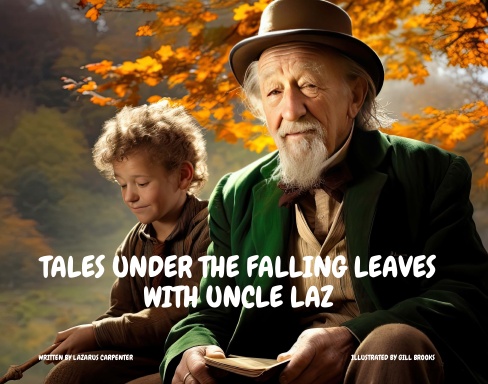
This short story is taken from -Tales from Under the Falling Leaves (Short Stories for Long Nights) with Uncle Laz.
Once upon a time, in a land veiled in whimsy and wonder, there stood a peculiar institution known as the School of Unrealistic Hopefulness. Nestled amidst rolling hills and adorned with vibrant flowers, this school was unlike any other. Its purpose was to cultivate and nurture the boundless dreams and aspirations of young hearts, teaching them to embrace the power of hope and imagination. The school’s esteemed headmaster, Professor Ambrose, was a tall and sprightly man with a twinkle in his eyes. He firmly believed that ordinary dreams could evolve into extraordinary realities. Under his guidance, the students were encouraged to dream big, to dare to imagine the seemingly impossible.
At the School of Unrealistic Hopefulness, every day was a new adventure. The students, an eclectic mix of wide-eyed dreamers, were eager to embark on their journey of discovery. Each morning, they would gather in the enchanting walled courtyard garden, where whispers of inspiration swirled through the air. The first lesson of the day was taught by Professor Amelia, a kind-hearted soul with a penchant for creativity. She taught the students to paint their dreams upon the canvas of the world. With brushes in hand and colours ablaze, the young dreamers would bring their fantasies to life, creating a tapestry of vibrant possibilities.
Next came Professor Felix, an eccentric inventor who believed that the boundaries of reality were meant to be shattered. In his workshop, the students tinkered with gears, wires, and various contraptions. They crafted flying machines, time-travelling devices, and teleportation gadgets, fuelled by their unwavering belief in the extraordinary.
Then, there was Professor Celeste, a wise scholar who revelled in the mysteries of the universe. She guided the students through celestial journeys, teaching them about the stars, planets, and galaxies. Under her tutelage, they learned to see beyond the confines of Earth and dream of exploring distant worlds.
Throughout the day, the students were immersed in an atmosphere of wonder and possibility. They delved into stories of mythical creatures, composed symphonies of hope, and danced to the rhythm of their dreams. The school’s corridors echoed with laughter as friendships were forged and aspirations intertwined. However, the School of Unrealistic Hopefulness was not without its challenges. Doubt occasionally crept into the hearts of the students, threatening to dampen their spirits. But Professor Ambrose, with his unwavering optimism, reminded them that every setback was an opportunity for growth. He taught them to embrace failure as a stepping stone toward success.
As time passed, the students of the School of Unrealistic Hopefulness grew in both wisdom and courage. They carried their dreams like beacons, lighting a path toward a future brimming with possibilities. Some became renowned artists, their works inspiring generations. Others pioneered scientific breakthroughs that defied logic. And a few ventured into uncharted territories, embracing the unknown with open arms. Years later, a former student of the school, now a successful entrepreneur, stood before a crowd of aspiring dreamers. With a twinkle in their eye and an infectious smile, they shared their journey from the School of Unrealistic Hopefulness to the realm of tangible achievements. Their story ignited a spark in the hearts of those who listened, reminding them that dreams, no matter how fantastical, could indeed become reality.
And so, the School of Unrealistic Hopefulness continued to thrive and flourish, its legacy carried forward by new generations of dreamers. The school became a beacon of inspiration, drawing students from far and wide who sought to nurture their imaginative spirits and challenge the limits of what was deemed possible. Over time, the graduates of the School of Unrealistic Hopefulness formed a vibrant network of visionaries united by their shared experiences and unwavering belief in the power of dreams. They collaborated on ambitious projects, pushing the boundaries of innovation in art, science, and technology. Their collective efforts brought about astonishing advancements that transformed the world in ways no one could have imagined. The impact of the School of Unrealistic Hopefulness extended far beyond its enchanting campus.
Its alumni scattered across the globe, spreading the seeds of hope and inspiration wherever they went. They became advocates for change, inspiring others to embrace their own aspirations and pursue their wildest dreams. The School of Unrealistic Hopefulness became a symbol of resilience and determination, reminding society that it is through audacious dreams and unwavering optimism that true progress is achieved. Its name echoed through the annals of history, forever etched in the hearts of those who dared to dream. In the end, the School of Unrealistic Hopefulness stood as a testament to the extraordinary power of human imagination. It taught its students that while the world may present challenges and obstacles, it is through hope, courage, and a refusal to accept limitations that dreams are transformed into reality. And so, dear reader, let the story of the School of Unrealistic Hopefulness inspire you to embrace your own dreams, no matter how grand or unconventional they may seem. For within the realm of imagination lies the key to unlocking a future of endless possibilities.


 Lazarus Carpenter - Author