
The Triplets

Once upon a time, there lived three identical triplets named Tom, Tim, and Toby. They were inseparable and mischievous, known throughout the village for their clever jokes and playful tricks. Whether it was swapping clothes, pretending to be each other, or pulling harmless pranks on villagers, they loved to keep everyone on their toes. Their favourite game was to deceive outsiders with their identical appearances. They would often stand together, fooling travellers and merchants, claiming to be the “triplet trio” and spinning amusing stories about their adventures. Their antics brought laughter to the village until one day, their jokes went too far.

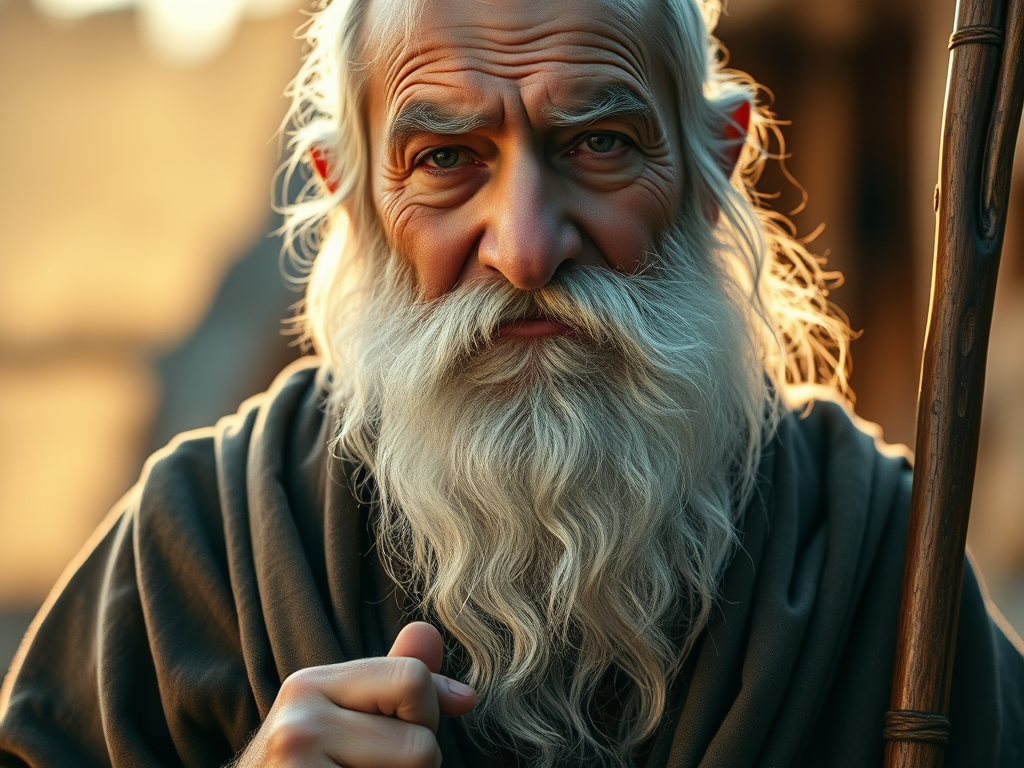
One afternoon, a wandering old wizard named Eldrin arrived in the village. Rumours of his wisdom and magical powers had spread far and wide, and villagers gathered to hear his tales. Curious about the triplets, Eldrin approached them and asked,

“Young ones, what mischief do you play today?”

Tom grinned mischievously.

“Oh, sir, we’re just having fun! We love to trick people and make them laugh.”

Eldrin’s eyes twinkled with a mixture of amusement and concern.

“Fun is good, but remember, deception can sometimes lead to confusion and hurt feelings. Tell me, what do you truly value?”

The triplets shrugged and laughed, dismissing his words. But Eldrin, sensing their playful spirit was also a bit reckless, decided to teach them a lesson. That evening, as the village settled into sleep, Eldrin approached the triplets’ home. Using his magic, he cast a spell that made each of them appear as a different person: Tom as a humble farmer, Tim as a wise old scholar, and Toby as a shy merchant. When the triplets awoke the next morning, they were bewildered to find themselves in unfamiliar clothes, with villagers treating them differently.

“Who are you?” asked a confused villager, eyeing the “farmer” who looked nothing like Tom.

The triplets tried to convince everyone of their true identities, but their appearances and voices had changed. They felt helpless and embarrassed, realising how confusing and upsetting their tricks could be when taken too far. Eldrin appeared before them, smiling gently.

“You see, my children, tricks are fun but should never come at the expense of trust. Today, you experienced what it’s like to be misunderstood and deceived — not as a joke, but as a lesson.”

The triplets nodded solemnly, understanding the wisdom in his words. They apologised to the villagers and promised to use their cleverness for good rather than mischief. Eldrin then reversed his spell, returning them to their true selves. From that day on, Tom, Tim, and Toby still loved jokes and laughter, but they learned to be kind and honest in their fun. Their tricks became playful rather than deceptive, and the villagers appreciated their newfound maturity. And so, the triplets grew wiser, carrying with them the lesson that true friendship and trust are the greatest treasures of all.
The Light of Unity

Once upon a time, in a world torn apart by hatred and injustice, lived a man named Enoch. He was a scholar and a healer, not just of bodies but of souls. Witnessing the endless cycle of violence and division, Enoch felt a deep ache in his heart, an urgent desire to heal the wounds of society. He dedicated years to studying human nature, history, and the roots of conflict. He observed that hatred often stemmed from fear, misunderstanding, and a lack of empathy for others. Injustice thrived when people refused to listen or empathise.

One day, Enoch had a revelation. He believed that if he could create a technique to foster genuine understanding and compassion, he could eradicate hatred and injustice at their core. He called his method “The Mirror of the Soul.”

The technique involved a profound but straightforward process:

Reflection: People are guided to see their own feelings and biases clearly, like looking into a mirror. They acknowledge their fears, prejudices, and pain without judgment.

Empathy Building: They then imagine stepping into the life of the person they despise or fear. This isn’t just sympathy but a deep empathetic immersion, understanding the struggles, hopes, and fears of the other.

Dialogue and Sharing: The process encourages open dialogue, where people share their stories and listen with genuine intent. Through storytelling, barriers melt away, replaced by shared humanity.

Visualising Unity: Finally, students visualise a future where they and others work together, embracing differences and building a community rooted in respect and kindness.

Enoch travelled across nations, teaching this technique in war-torn villages, segregated cities, and oppressed communities. Slowly, stories emerged of enemies who became friends, divisions turned into collaborations, and hatred gave way to understanding. One remarkable example was in a city divided by centuries of conflict. After implementing Enoch’s method, the community held a festival celebrating their diversity. Old grievances were replaced with new bonds of friendship, and a sense of justice and peace began to blossom.

Years later, Enoch’s technique became a global movement. Schools, governments, and organisations adopted it to heal divisions, promote justice, and cultivate compassion. His vision proved true: that the most powerful weapon against hatred and injustice is not force or punishment, but understanding and love. His simple yet profound technique became a beacon of hope, illuminating the path toward a more compassionate world. And so, in the end, Enoch’s most incredible creation was not just a method but the realisation that every human heart holds the seed of kindness, waiting to be awakened. 

Tale of Unrequited Love

A young woman named Elara lived in a quiet town. She was known for her gentle spirit, kind eyes, and an unwavering hope that someday, her heart’s quietest wish would come true. Elara had loved quietly from afar. Her heart belonged to Daniel, a talented artist who spent days capturing the world on canvas. She admired him from a distance, watching him paint in his studio, listening to his stories about colours and dreams, and secretly wishing she could be part of his world. Years passed, and her affection only deepened. She would leave little notes in his mailbox—simple words of encouragement, sketches, or flowers she picked from her garden. Daniel, however, remained unaware of her feelings, lost in his own pursuits and unaware of the depth of her love.

One day, Daniel announced he was leaving the town to pursue an opportunity in a distant city. The news hit Elara like a gust of cold wind. She felt a pang of sadness but masked it with a smile, wishing him well. She gave him a small, wrapped package on his last day—a final token of affection. He opened it to find a delicate painting of the town’s river at sunset, with a note that read,

“May your journey be as beautiful as this moment.”

Tears welled in her eyes as she watched him leave, knowing she would always love him from afar. Years later, Elara often sat by the river, reminiscing about her unspoken love. Though she never shared her feelings with Daniel, she found solace in the quiet beauty of her life, cherishing the hope that someday, love would find its way to her, even if it was not the way she had imagined.

The Tale of the Friendly Ghost of Ravenshire Castle

Once upon a time, an ancient castle called Ravenshire stood perched atop a misty hill. Legend had it that the castle was haunted by a ghost named Sir Whisp, who was infamous for frightening every visitor who dared to step inside. Sir Whisp’s spectral form was tall and translucent, often glowing faintly in the darkness, and he would bellow loudly,

“Get out! Leave this place! This is my home, not yours!” startling even the bravest souls.

For centuries, visitors were terrified of Ravenshire. No one ever stayed long enough to enjoy its grand halls or explore its history; they only wanted to escape the ghostly shouts and eerie whispers.

One day, a young traveller named Oliver arrived at the castle. Unlike others, Oliver was not afraid of ghosts. He had read stories of spirits and believed that they only wanted to be understood. When Sir Whisp appeared and roared, Oliver simply looked at him calmly and said,

“Hello there. Why do you scare people?”

The ghost was taken aback. No one had ever spoken kindly to him before.

“I frighten people because I am lonely,” Sir Whisp replied. “Long ago, I was a noble knight, but now I am trapped here, unseen and unheard. My only way to be noticed is to shout and scare.”

Oliver listened thoughtfully and then said,

“If you want to be seen and heard, why not try speaking softly or sharing your story? Maybe people would listen and learn about you.”

For the first time, Sir Whisp paused. He realised that his loudness only pushed visitors away and deepened his loneliness. From that day, he decided to change his ways. The next visitor who entered Ravenshire found the ghost not shouting loudly but softly whispering,

“Welcome, traveller.”

He told stories of the castle’s history and his own past as a brave knight. Visitors found the ghost’s new gentle demeanour more charming than frightening. They began to enjoy their visits, listening to Sir Whisp’s tales and marvelling at the castle’s mysteries. Thanks to Oliver’s kindness and understanding, the ghost’s appearance softened, and Ravenshire became a place where stories and spirits could coexist peacefully. And so, the ghostly goings-on turned from frightful to friendly, filling the castle with a new kind of magic, one born of compassion and empathy.

The Tale of Duallus: The Man with Two Heads

Once upon a time, in a land where magic and mystery intertwined, lived a man named Duallus. Unlike any other, Duallus had a single body but bore two heads, each crowned with a distinct mind, personality, and voice. Though physically united, his two minds often argued, debated, and sometimes even quarrelled, yet they shared a common purpose: to explore the world and weave stories from its wonders.

His first head, called Eryth, was quick-witted, adventurous, and fiery. Eryth loved daring deeds, tales of heroism, and the thrill of the unknown. His voice was loud and passionate, always eager to jump into the next adventure. His other head, named Lyra, was gentle, contemplative, and wise. Lyra enjoyed quiet reflections, stories of love and loss, and the beauty of nature. Her voice was soft and soothing, often pondering the deeper meaning behind every tale. Despite their differences, Duallus was a master storyteller, blending Eryth’s excitement with Lyra’s insight to enchant all who listened.

Driven by a desire to share stories from distant lands, Duallus set out on a grand journey. He travelled across mountains and deserts, through bustling markets and silent forests, collecting tales from every corner of the world. In each town, he would stand before eager crowds, his two heads exchanging stories in turn. Sometimes, Eryth would recount daring adventures, facing dragons, conquering tyrants, or exploring hidden caves. Then Lyra would share gentle stories of love, forgiveness, and the harmony of nature. The townspeople marvelled at the sight of Duallus, for his two heads often debated in lively banter, creating a richer, more layered narration. Children would listen wide-eyed as Eryth’s voice roared with excitement, only to be soothed by Lyra’s calm reflections.

But not all was easy for Duallus. Sometimes, his two heads would argue fiercely, each convinced their story was the true one. Yet, he learned to listen to both, understanding that truth often had many sides. One day, in a village nestled between mountains, a wise old storyteller approached him.

“Your two minds are like the sun and the moon,” he said. “Together, they illuminate the world in different ways. Embrace your duality, for it makes your stories unique.”

Inspired, Duallus continued travelling, weaving the voices of his two heads into tales that celebrated diversity, understanding, and the beauty of different perspectives. Over time, Duallus became a legend himself, a symbol of harmony amid diversity. His stories sparked conversations, challenged prejudices, and reminded all that sometimes, understanding comes from listening to both sides. And so, the man with two heads, two personalities, and one body became a storyteller not just of tales, but of life itself, where every story, every voice, and every mind had a place in the grand tapestry of the world.