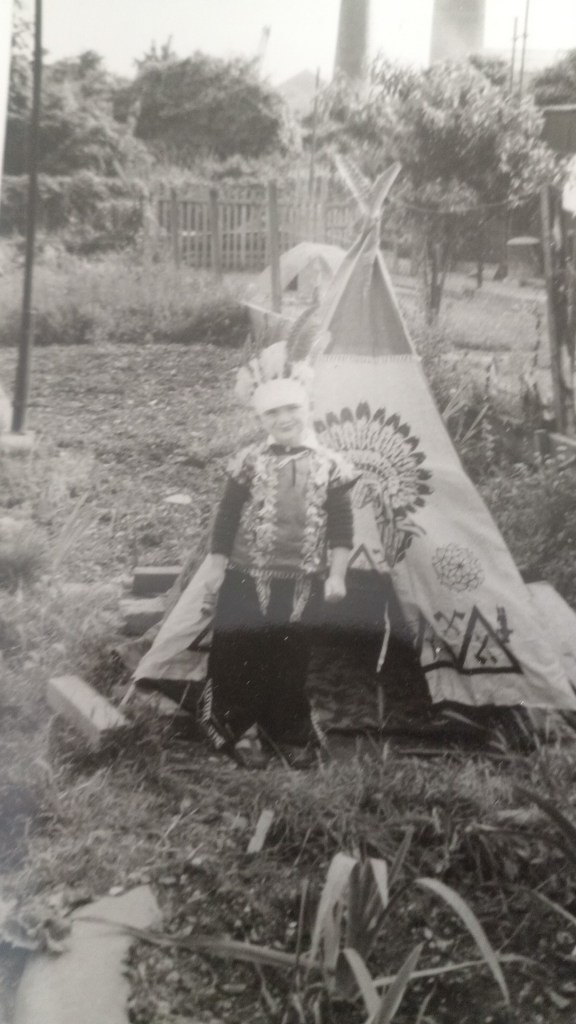
Once upon a time, a little boy named Mark lived in a small town nestled between rolling hills and endless forests. Mark was a dreamer, and every day after school, he would rush to the back garden of his home, where an old, forgotten tent he had decorated, mimicking a Teepee, stood. To Mark, this tent was not just a piece of fabric; it was a magnificent wigwam, and he was a brave red Indian living in harmony with nature. In his imagination, Mark would gather sticks and leaves, carving tools and toys, pretend to hunt and fish, and listen to the whispers of the wind as if they were the voices of his ancestors. He learned the names of plants and animals and took to heart the stories of respect and gratitude he imagined his tribe would have shared. His heart swelled with pride as he envisioned himself as a protector of the earth, a guardian of traditions long past.
One day, while exploring the forest near his home, Mark stumbled upon a litter-filled clearing—plastic bottles, wrappers, and old toys. The beauty of the place was marred, and he felt a pang of sadness. Mark remembered the stories he had created about his ancestors, who revered the land and lived in balance with it. Determined to make a change, he ran home, filled with an urgency he couldn’t quite explain. That evening, Mark gathered his friends and shared his vision.
“Let’s clean up the forest! We can be like my tribe, taking care of the land.”
His friends were intrigued; together, they formed a team armed with garbage bags and boundless energy. They spent the weekend picking up trash, returning the forest to its natural beauty. As they worked, Mark shared stories of the Red Indians and how they honoured nature and worked together for the good of all. Word spread through the town of Ystradgynlais about the children’s efforts. Inspired by Mark’s passion, adults began to join in. Families organized community clean-ups, and soon the little boy who played in a wigwam became a leader, rallying everyone to protect their environment. The town began to hold monthly events, planting trees and creating community gardens, fostering a sense of unity and stewardship.
Years passed, and Mark grew older, but his vision remained steadfast. He became an advocate for environmental education, teaching others about the importance of caring for the planet. His childhood dreams of being a red Indian morphed into a mission to honour the traditions of Indigenous peoples and to ensure their teachings about the earth were shared with future generations. The small town transformed into a beacon of sustainability, attracting visitors from afar who wanted to learn from Mark’s example. What started as a boy playing in a back garden had blossomed into a movement that inspired others. Mark had changed the town, not through grand gestures, but by reminding everyone of their simple, robust connection with nature.
And so, even as he grew, Mark never forgot his roots. He would often return to the old wigwam in his backyard, sitting quietly in reflection, knowing that the spirit of the Red Indian he had played was alive in every heart he had touched. He had learned that change begins with a single step, a small act of love for the world around us, and that everyone has the power to make a difference, no matter how small they may seem.

 Lazarus Carpenter - Author