
The Last Ice Age of Thalora – A Lesson for Planet Earth

In a distant galaxy, nestled within the spiral of the Celestial Veil, lay the planet Thalora. Once a vibrant world rich with lush forests, expansive oceans, and teeming wildlife, Thalora thrived under the gentle warmth of its sun, Solara. However, the delicate balance of nature began to shift when a series of catastrophic events changed the climate forever. It started with a slight warming of the planet, attributed to increased volcanic activity that released vast amounts of greenhouse gases into the atmosphere. The inhabitants, known as the Thalorans, were initially thrilled by the warmer temperatures, enjoying bountiful harvests and longer growing seasons. They celebrated the vibrancy of their land, believing they had entered an era of prosperity.

But as years passed, the warming intensified, leading to dramatic changes. Glaciers that had long stood sentinel over the northern regions began to melt alarmingly, releasing freshwater into the oceans. This disrupted ocean currents, causing erratic weather patterns and extreme storms. The once-crystal-clear skies darkened with heavy clouds, and the rain became relentless. Then came the tipping point. A sudden and massive volcanic eruption on the continent of Zephyr triggered a chain reaction. Ash and sulfuric gases filled the atmosphere, blocking sunlight and causing temperatures to plummet. Within months, the world that had known warmth was thrown into chaos. The Thalorans watched in horror as their lush forests turned to barren wastelands and the oceans froze.

As the temperature dropped, the Thalorans sought refuge in the remaining warmer areas of the planet, but resources became scarce. Food shortages led to conflict among tribes, and the once-united people were divided. Legends of a “Great Thaw” began to circulate, tales of when the sun would return, and the ice would melt, restoring their world. A wise elder named Arin emerged among the chaos, urging unity among the tribes. He believed they could survive the ice age if they pooled their knowledge and resources. Arin proposed a daring venture: to journey to the Great Mountain, an ancient site said to hold the secrets of Thalora’s climate. The journey was treacherous, filled with blizzards and ice crevices that tested their resolve. But the Thalorans persevered, united by hope and the desire to save their world. Upon reaching the Great Mountain, they discovered ancient carvings that told the story of Thalora’s cycles—warmth and cold, life and death. They learned that the planet had undergone similar transformations in the past and that balance could be restored.

Inspired by this knowledge, the Thalorans devised a plan. They would create controlled fires to generate warmth and develop methods to cultivate crops in harsh conditions. They also focused on conserving water and nurturing the remaining patches of forest, encouraging regrowth. Slowly, their efforts began to pay off. As they worked together, the ice started receding, revealing fertile land again. The Thalorans celebrated the return of sunlight and warmth, but they had learned a crucial lesson: the importance of respecting nature’s balance.

With the Great Thaw finally upon them, the Thalorans vowed never to forget the lessons of the past. They established a council dedicated to guarding the planet’s health, ensuring that the mistakes that led to the ice age would not be repeated. Thus, Thalora emerged from its ice age, a testament to resilience and unity. The Thalorans thrived once again, but they did so with a newfound respect for their environment, understanding that the warmth they once took for granted could easily turn to frost. And so, the cycle of life continued a reminder of the delicate balance that holds the universe together. 

Lazarus Carpenter (2025)
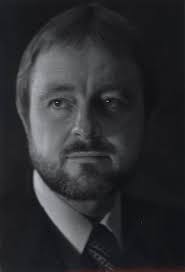
Ingo Douglas Swann

Ingo Swann, born in 1934, was a prominent figure in the field of remote viewing and is best known for his involvement with the U.S. government’s psychic research programs, notably the Stargate Project. Swann was born in the United States and had a varied career before becoming involved in remote viewing. He was interested in art and literature and was known for his creative abilities.
– Introduction to Remote Viewing: In the 1970s, Swann began exploring psychic phenomena and eventually became involved in remote viewing, which involves mentally accessing information about distant or unseen targets.
– Stargate Project: He played a significant role in the Stargate Project, a secret U.S. government initiative investigating the potential use of psychic abilities for military and intelligence purposes. Swann’s work helped develop remote viewing protocols and techniques.
– Training and Development: Swann contributed to creating structured remote viewing methodologies, which included training programs for participants to enhance their abilities.
– Demonstrations: He participated in numerous public demonstrations of remote viewing, showcasing his ability to describe distant locations, objects, and events without prior knowledge.
– Writing and Teaching: Swann authored several books and articles on remote viewing, sharing his insights and experiences. He also taught remote viewing techniques to others, further popularizing the practice.

Swann believed in the interconnectedness of consciousness and the potential for humans to access information beyond conventional sensory perception. His work has influenced both the field of parapsychology and the broader interest in psychic phenomena. He is often regarded as a pioneer in the field of remote viewing. Swann continued to be active in the field until his later years, participating in workshops and seminars until his passing in 2013. Ingo Swann’s contributions to remote viewing and psychic research have left a lasting impact, and he remains a significant figure in discussions about the potential of human consciousness.

Carl Sagan

Carl Sagan was an influential American astronomer, astrophysicist, and science communicator, best known for his work in popularizing science and making complex concepts accessible to the public. Born on November 9, 1934, in Brooklyn, New York, Sagan developed an early interest in astronomy inspired by a visit to the 1939 New York World’s Fair. He earned his doctorate in astronomy and astrophysics from the University of Chicago in 1960. Sagan contributed significantly to our understanding of planetary science, particularly in studying Mars and the greenhouse effect on Venus. He played a crucial role in several NASA missions, including the Mariner, Viking, Voyager, and Galileo missions, helping to design experiments and analyze data.

Sagan was also a prolific writer, authoring or co-authoring more than 20 books, including the best-selling “Cosmos,” which accompanied the acclaimed television series of the same name. The series aired in 1980 and is credited with inspiring a generation to take an interest in science and space exploration. In addition to his scientific achievements, Sagan was a passionate advocate for the search for extraterrestrial intelligence (SETI) and was involved in various initiatives to promote scientific literacy. He co-founded the Planetary Society, an organization dedicated to advancing space exploration.

Sagan received numerous awards throughout his career, including the Pulitzer Prize for his book “The Dragons of Eden.” He passed away on December 20, 1996, but his legacy continues through his contributions to science and his impact on popular culture. His ability to communicate the wonders of the universe continues to inspire scientists and enthusiasts worldwide. 

Bertrand Russell

Bertrand Russell (1872-1970) was a British philosopher, logician, mathematician, historian, and social critic, best known for his analytical philosophy work and advocacy of pacifism, social reform, and nuclear disarmament.
Russell was born into an aristocratic family in Trellech, Wales. He was educated at home until age 11, then attended the prestigious Westminster School and later studied at Trinity College, Cambridge, where he excelled in mathematics and philosophy.
Russell made significant contributions to various fields:
– Logic and Mathematics: His work in logic, particularly in his co-authored book “Principia Mathematica” with Alfred North Whitehead, aimed to derive mathematics from logical foundations.
– Philosophy: He was a leading figure in developing analytic philosophy. His essay “On Denoting” is pivotal in understanding reference and meaning in language.

Political Activism
A lifelong advocate for social justice, Russell was outspoken against war and violence. He was a prominent pacifist during World War I and later protested against nuclear weapons during the Cold War. His activism led to imprisonment and significant public attention.
In his later years, Russell became a public intellectual, writing extensively on various subjects, including education, religion, and society. He received the Nobel Prize in Literature in 1950 for his varied writings.

Russell’s philosophical ideas have influenced numerous fields and are still being studied. His commitment to reason, scepticism, and humanitarianism left a lasting legacy in philosophy and social activism.
Some of his notable works include:
– “The Principles of Mathematics”
– “A History of Western Philosophy”
– “Why I Am Not a Christian”
– “The Conquest of Happiness”

Russell’s life and work reflect a profound engagement with both the intellectual and practical issues of his time, shaping modern thought and public discourse. 

Charles Darwin

Charles Darwin was an English naturalist, geologist, and biologist best known for his contributions to understanding evolution. His most famous work, “On the Origin of Species,” published in 1859, introduced the concept of natural selection as a mechanism for evolution. Darwin’s observations during his voyage on the HMS Beagle, particularly in the Galápagos Islands, led him to develop his theories on the diversity of life and the common descent of species. Darwin proposed that individuals with traits better suited to their environments are more likely to survive and reproduce, passing those traits on to future generations. He argued that species evolve over time through gradual changes rather than static or unchanging. Darwin’s ideas challenged traditional views of creation and profoundly impacted various fields, including biology, genetics, anthropology, and philosophy. His work laid the foundation for modern evolutionary biology, influencing scientific thought and research.