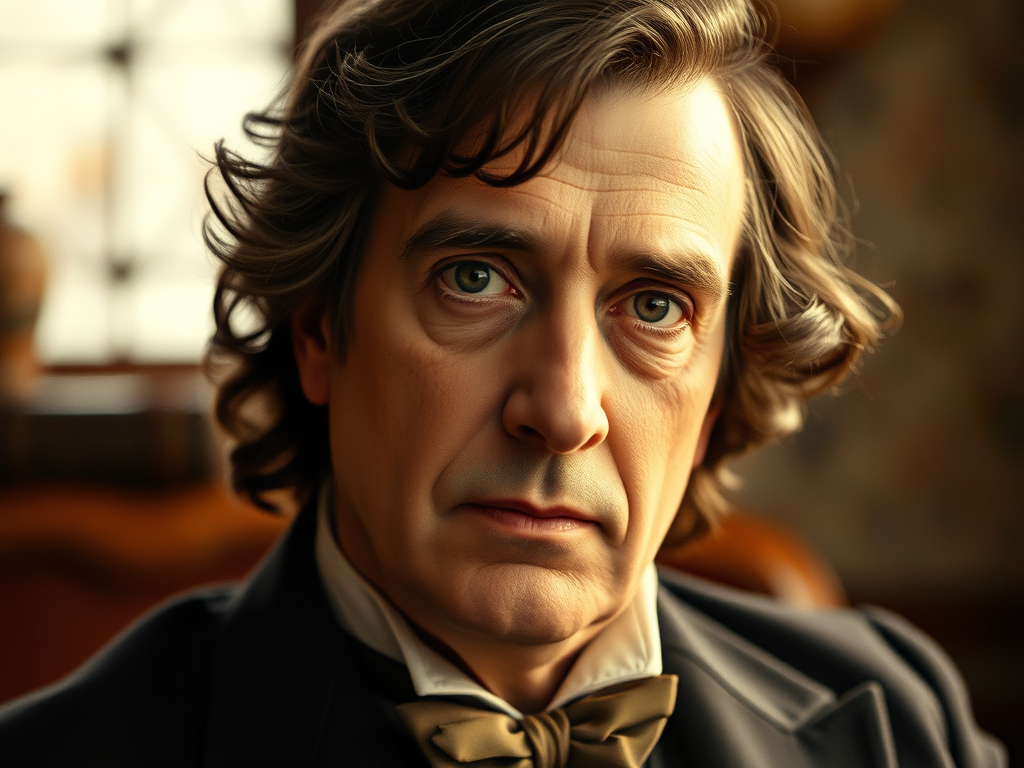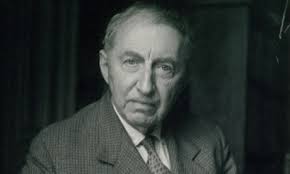
E.M. Forster

E.M. Forster was an English novelist and essayist renowned for his insightful exploration of class, sexuality, and human connection. Born on January 1, 1879, in London, Forster grew up in a middle-class family and was educated at Tonbridge School and King’s College, Cambridge. Forster’s literary career began with his first novel, “Where Angels Fear to Tread” (1905), but he gained significant recognition with “A Room with a View” (1908), which delves into themes of love and social conventions. His most famous works include “Howards End” (1910) and “A Passage to India” (1924), the latter of which examines British colonialism and race relations in India.

Throughout his life, Forster was known for his progressive views on sexuality and social issues, which he often reflected in his writing. He was openly gay, a fact that influenced his works, though he published much of his writing at a time when such topics were often considered taboo. In addition to his novels, Forster wrote essays and worked as a critic, contributing to various literary journals. He also had a brief career as a screenwriter in Hollywood.

Forster’s later years were marked by a retreat from public life, and he spent much of his time in his home in Somerset. He passed away on June 7, 1970. His legacy endures, and his works are celebrated for their humanism and emotional depth.

Carl Sagan

Carl Sagan was an influential American astronomer, astrophysicist, and science communicator, best known for his work in popularizing science and making complex concepts accessible to the public. Born on November 9, 1934, in Brooklyn, New York, Sagan developed an early interest in astronomy inspired by a visit to the 1939 New York World’s Fair. He earned his doctorate in astronomy and astrophysics from the University of Chicago in 1960. Sagan contributed significantly to our understanding of planetary science, particularly in studying Mars and the greenhouse effect on Venus. He played a crucial role in several NASA missions, including the Mariner, Viking, Voyager, and Galileo missions, helping to design experiments and analyze data.

Sagan was also a prolific writer, authoring or co-authoring more than 20 books, including the best-selling “Cosmos,” which accompanied the acclaimed television series of the same name. The series aired in 1980 and is credited with inspiring a generation to take an interest in science and space exploration. In addition to his scientific achievements, Sagan was a passionate advocate for the search for extraterrestrial intelligence (SETI) and was involved in various initiatives to promote scientific literacy. He co-founded the Planetary Society, an organization dedicated to advancing space exploration.

Sagan received numerous awards throughout his career, including the Pulitzer Prize for his book “The Dragons of Eden.” He passed away on December 20, 1996, but his legacy continues through his contributions to science and his impact on popular culture. His ability to communicate the wonders of the universe continues to inspire scientists and enthusiasts worldwide. 

Mark Twain

Mark Twain, whose real name was Samuel Langhorne Clemens, was an American writer, humorist, entrepreneur, publisher, and lecturer. He was born on November 30, 1835, and passed away on April 21, 1910. Mark Twain is best known for his novel “The Adventures of Tom Sawyer” and its sequel “Adventures of Huckleberry Finn,” both of which are considered classics of American literature.

Twain’s writing style was characterized by humour, social commentary, and a keen eye for the human condition. He often used satire to critique societal norms and conventions of his time. His work has had a lasting impact on American literature and continues to be studied and celebrated today. In addition to his literary work, Twain was also known for his wit and wisdom and his quotes on a wide range of topics. Some of his famous quotes include:

“The two most important days in your life are the day you are born, and the day you find out why,”

and

“Twenty years from now, you will be more disappointed by the things that you didn’t do than by the ones you did do.”

Mark Twain’s legacy as a writer and cultural icon endures today, and he is widely regarded as one of the greatest American writers of all time. 

Robert Louis Stevenson

Robert Louis Stevenson was a Scottish novelist, poet, and travel writer who lived from 1850 to 1894. Stevenson is best known for his fiction, including “Treasure Island,” “Strange Case of Dr Jekyll and Mr Hyde,” and “Kidnapped.” Robert Louis Stevenson was born in Edinburgh, Scotland on November 13, 1850. He came from a family of lighthouse engineers and was expected to follow in his father’s footsteps. Stevenson studied law at the University of Edinburgh but did not pursue a career in law. Instead, he devoted himself to writing and travel. He began his writing career as an essayist and travel writer. Some of his early works include “Travels with a Donkey in the CĂ©vennes” and “An Inland Voyage.” However, he gained worldwide fame with his novels, including “Treasure Island” (1883) and “Strange Case of Dr Jekyll and Mr Hyde” (1886). Stevenson suffered from poor health throughout his life, including respiratory problems. He travelled extensively in search of a more suitable climate, eventually settling in Samoa in the South Pacific.

Stevenson spent the last years of his life in Samoa, where he became involved in local politics and wrote about his experiences in the Pacific. He died on December 3, 1894, at the age of 44. Robert Louis Stevenson is considered one of the greatest writers of the 19th century. His novels have inspired numerous adaptations in various forms of media, and his works continue to be widely read and studied today. His adventurous spirit, vivid imagination, and storytelling prowess have cemented his place in literary history as a master of the adventure and suspense genres. 

Image created by AI

Oscar Wilde

Oscar Wilde, born on October 16, 1854, in Dublin, Ireland, was a prominent playwright, poet, and author in the late 19th century. Known for his wit, flamboyant style, and sharp satire, Wilde became one of the most successful playwrights of his time. His notable works include “The Picture of Dorian Gray,” his only novel, as well as plays such as “Lady Windermere’s Fan,” “A Woman of No Importance,” “An Ideal Husband,” and his most famous play, “The Importance of Being Earnest.”

Despite his literary success, Wilde is remembered for his tumultuous personal life. He was known for his flamboyant dress and extravagant lifestyle, as well as his involvement in a scandal that led to his imprisonment. In 1895, Wilde was put on trial for “gross indecency” due to his homosexual relationships, which were illegal at the time in England. He was found guilty and sentenced to two years of hard labour. After his release from prison, Wilde lived in exile in France, where he wrote less and struggled financially. Oscar Wilde died on November 30, 1900, aged 46, in Paris, France. Despite the challenges he faced in his later years, Wilde’s works continue to be celebrated for their wit, humour, and social commentary, and he remains an iconic figure in literature and LGBTQ+ history.

Image by AI