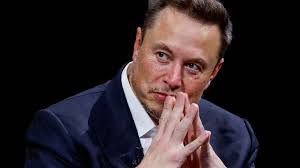
Keir Starmer’s concerns about Elon Musk stem from several interconnected issues related to social media, misinformation, and democratic integrity. When Musk acquired Twitter (now known as X), he implemented significant changes to the platform’s content moderation policies. These changes included reducing the workforce responsible for managing harmful content, which raised alarms about the potential increase in the spread of misinformation and hate speech.
Starmer and other critics argue that social media platforms, like X under Musk’s leadership, play a crucial role in shaping public discourse. Without adequate safeguards, these platforms can become vehicles for spreading false information, which can distort public perception and undermine trust in democratic institutions. This is particularly worrisome during election periods, where misinformation can influence voter behavior and election outcomes.
Moreover, Musk’s approach to free speech, which he often champions as a justification for his decisions, is seen by some as overly permissive, allowing harmful content to proliferate under the guise of protecting open dialogue. Starmer’s concerns reflect broader apprehensions about the responsibilities of tech giants to ensure that their platforms do not contribute to societal harm.
In addition to misinformation, there are worries about how Musk’s influence and personal views might shape platform policies in ways that could affect political dialogue. This situation highlights the broader debate over the power held by tech moguls and their platforms in the digital age, and the need for regulatory frameworks to ensure accountability and protect democratic values.
The relationship between Donald Trump and Elon Musk has generated significant discussion, particularly regarding the perceived dangers of their influence on global affairs. Some key points highlight these concerns for me: Both Trump and Musk are influential figures in their respective domains—politics and technology. Their partnership could lead to a concentration of power undermining democratic processes and accountability. Trump’s ability to sway public opinion through social media and Musk’s control over platforms like Twitter (now X) raises concerns about misinformation and the manipulation of narratives, potentially leading to societal polarization. Musk’s ventures in technology and space could be heavily influenced by Trump’s policies, which may prioritize specific industries or companies, leading to unequal economic opportunities and stifling competition.
Their relationship could affect international relations, particularly if policies favouring their interests lead to tensions with other countries. For example, Musk’s ambitions in space exploration and mineral exploitation on Earth and Trump’s nationalist approach could clash with global cooperation efforts. The merging of business interests and political influence can lead to ethical dilemmas, including conflicts of interest, where decisions may favour personal gains over the public good. While Musk is known for advocating sustainable technologies, Trump’s administration often rolled back environmental regulations. Their alliance may complicate efforts to address climate change effectively.
Their combined influence could challenge regulatory frameworks designed to oversee technology and business practices, potentially leading to abuses of power or harmful practices. The relationship between Trump and Musk poses potential risks that could impact the U.S. and global politics and economies.
Let us have a quick look at a forensic profile of both and further understand their individual make-up and what makes them tick.
Trump exhibits traits commonly associated with narcissism, including a strong sense of self-importance, a preoccupation with success, and a lack of empathy. He often seeks admiration and has a tendency to dominate conversations. His decision-making style is characterised by impulsivity and spontaneous comments on social media or public statements that seem unfiltered. Trump frequently engages in confrontational behaviour, especially towards critics and opponents. This could suggest a higher tolerance for conflict and a tendency to respond aggressively to perceived slights. He demonstrates a strong desire for control over his environment and the people around him, often leading to authoritative and sometimes authoritarian behaviour.
Trump’s communication style is characterised by simplicity, repetition, and emotional appeal, often employing hyperbole and slogans that resonate with his base. He tends to react defensively to criticism, resorting to personal attacks or dismissive comments about his critics, indicating a sensitivity to perceived threats to his self-image. There may be a significant difference between his public persona, which is often larger-than-life, and his private behaviours, which may include moments of insecurity or doubt.
Trump often frames discussions in terms of “us vs. them,” fostering a strong sense of loyalty among his supporters while vilifying opponents. Despite (or because of) his contentious style, Trump possesses a certain charisma that allows him to command attention and influence a substantial following. Some psychological assessments suggest that individuals with narcissistic tendencies may engage in manipulative behaviours to maintain their self-image and power. Interpersonal relationships may be strained due to tendencies towards self-centeredness and lack of genuine emotional connection.
A psychological forensic profile of Donald Trump reflects a complex interplay of traits and behaviours, with significant implications for his leadership style and interactions with others. Understanding these aspects can provide insight into his decision-making processes and the dynamics of his public and private life.
Elon Musk was born in South Africa and moved to the U.S. for his education. His entrepreneurial spirit emerged early, leading to ventures like Zip2, X.com (which became PayPal), and later Tesla and SpaceX, known for his role in revolutionizing the automotive industry with electric vehicles, advancing space technology with reusable rockets, and promoting renewable energy through SolarCity.
Musk is often characterized as a visionary, emphasizing his ability to think outside the box and pursue ambitious goals. His willingness to invest heavily in uncertain ventures (like SpaceX in its early days) indicates a high tolerance for risk. Musk’s public persona is marked by charisma, which he leverages to inspire and mobilize teams and followers. He is known for having an intense work ethic, often working long hours and expecting similar dedication from his employees. His communication can be polarizing. He uses platforms like Twitter to engage directly with the public, often leading to controversy. While he shows passion for his projects, examples of conflict with employees and public figures can suggest challenges in emotional balance.
Musk’s actions and statements often evoke strong reactions, and he is seen as a pioneer by some and a controversial figure by others. Frequent media appearances and social media activity keep him in the public eye, contributing to a mixed reputation. His stated goal is to advance human civilization through space exploration and sustainable energy. While driven by innovation, his ventures also aim at significant financial returns, evident in the growth of Tesla and SpaceX.
Critiques often target his management style, which some describe as demanding and abrasive. His controversial tweets have led to legal and financial repercussions, reflecting impulsivity. Elon Musk’s forensic profile reveals a complex individual characterized by innovation, charisma, and a relentless pursuit of ambitious goals, tempered by controversies and challenges in personal and professional domains. Understanding his profile requires acknowledging both his achievements and the criticisms he faces.
Put these two men together, and they become a formidable power not to be underestimated. Their combined ‘lack of control’, ‘impulsive ill thought out behaviour and actions’, ‘lack of respect for others’, ‘ambition’ and ‘lust for control’ are symptoms of looming disaster for the world, or are they?
Disclaimer:My thoughts should be approached with caution and are based on observable behaviour rather than clinical diagnoses, as a comprehensive evaluation would require direct interaction and assessment by presently practising mental health professionals.
Robert Tressell was born Robert Noonan in 1870 in Dublin, Ireland. He moved to England with his family during his childhood. His father was a military man, and Tressell grew up in a working-class environment, influencing his later views on labor and politics. Tressell trained as a painter and decorator, a trade that exposed him to the hardships of the working class. His experiences in the workforce deeply informed his writing, as he witnessed firsthand the exploitation and struggles of laborers. Tressell was influenced by the socialist movements of his time, particularly ideas related to workers’ rights and social justice. His political beliefs shaped his worldview and became central themes in his writing.
“The Ragged-Trousered Philanthropists” The novel follows a group of painters and decorators in the fictional town of Mugsborough. The protagonist, Frank Owen, engages in discussions about socialism and the exploitation of workers. Through a series of events, the book explores themes of class struggle, the nature of work, and the illusion of charity. Tressell critiques the capitalist system that benefits the wealthy at the expense of the working class. The novel emphasizes the need for workers to recognize their shared struggles and unite for better conditions. Tressell challenges the notion that charity alone can solve systemic issues, advocating instead for structural change. Tressell’s writing is characterized by its vivid descriptions, humour, and deep empathy for his characters. He employs a mix of narrative and dialogue to bring his ideas to life. “The Ragged-Trousered Philanthropists” was published after Tressell’s death in 1914, having been completed in 1910. Several publishers initially rejected it, but it gained recognition over time, becoming a seminal work in socialist literature.
The novel has inspired various adaptations and remains a key text in discussions of labour rights, socialism, and working-class literature. It is often included in educational syllabi and has influenced generations of writers and activists. Tressell’s work is celebrated for its unflinching portrayal of social issues and continues to resonate with contemporary discussions about inequality and workers’ rights. Robert Tressell’s life and work offer a poignant insight into the struggles of the working class during the early 20th century. His legacy endures through his compelling narrative that combines social critique with a call for solidarity among workers.
Graham Greene was an English novelist, playwright, and critic born on October 2, 1904, in Berkhamsted, Hertfordshire. He is known for his exploration of moral ambiguity and human conflict, often set against geopolitical backgrounds.
Greene’s early life was marked by a strict upbringing, with his father being a headmaster. He attended Balliol College, Oxford, where he developed a passion for literature. His literary career began in the 1920s, and he gained fame with novels such as “Brighton Rock” (1938) and “The Heart of the Matter” (1948). These works often delve into themes of faith, guilt, and the complexities of human nature.
Throughout his career, Greene wrote over twenty novels, along with short stories, plays, and screenplays. He also worked as a journalist and was involved in various political and social causes, which influenced his writing. Greene’s experiences during World War II and his travels in Africa, Cuba, and Vietnam provided rich material for his narratives.
In addition to fiction, Greene was known for his non-fiction works and essays, often reflecting his views on politics and religion. He was also a devout Catholic, and his faith significantly shaped his worldview and literary themes.
Greene received numerous accolades for his contributions to literature, including being nominated for the Nobel Prize in Literature multiple times. He passed away on April 3, 1991, in Vevey, Switzerland, leaving behind a profound legacy that continues to influence writers and readers today. His work remains relevant for its deep psychological insight and exploration of moral dilemmas
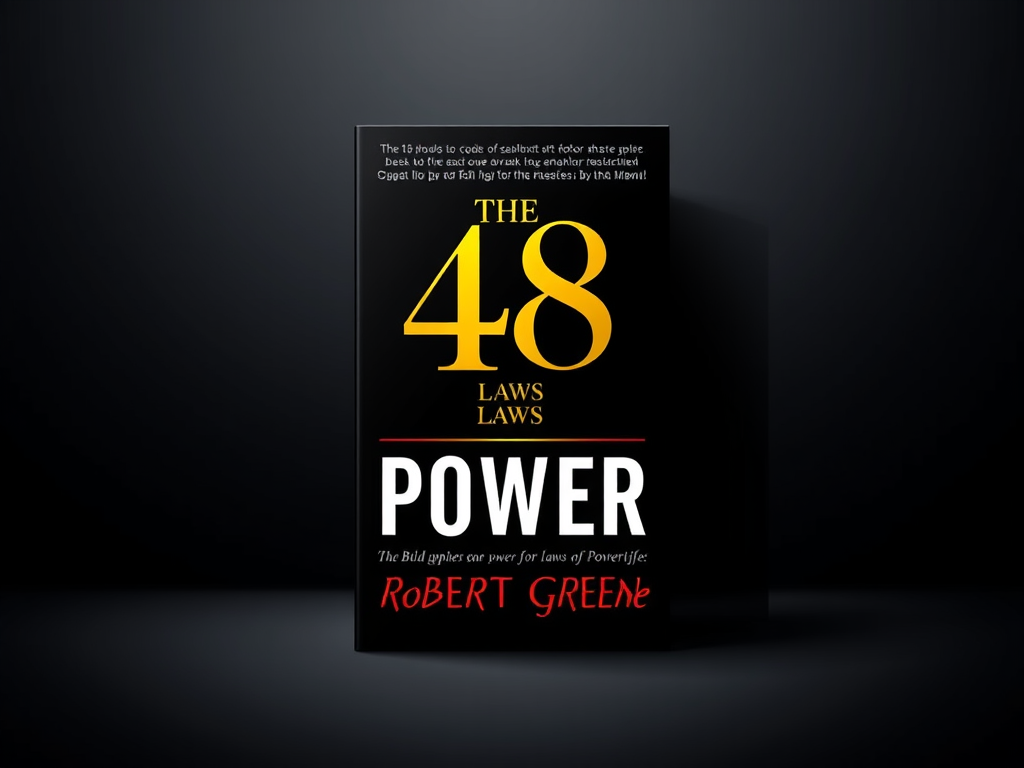
“The 48 Laws of Power” by Robert Greene is a guide to gaining and maintaining power, drawing on historical examples and philosophical insights. Here’s a summary of some key themes and a few notable laws:
1. Power Dynamics: The book emphasizes the importance of understanding power dynamics in relationships, personal or professional.
2. Manipulation and Strategy: Greene discusses the art of manipulation and the strategies individuals can use to achieve their goals, often advocating for cunning and strategic thinking.
3. Historical Examples: Each law is illustrated with historical anecdotes, showcasing figures like Machiavelli, Sun Tzu, and various monarchs and politicians who exemplified the principles.
Notable Laws:
– Law 1: Never Outshine the Master: Make those above you feel superior; in your desire to please, do not go too far in displaying your talents.
– Law 3: Conceal Your Intentions: Keep people off-balance by never revealing your true purpose.
– Law 15: Crush Your Enemy Totally: Leave no room for your opponent to recover; if you allow them to escape, they may return stronger.
– Law 33: Discover Each Man’s Thumbscrew: Find the weakness in others to gain leverage over them.
– Law 48: Assume Formlessness: Be adaptable and unpredictable to avoid being pinned down by others.
The book is a controversial but insightful exploration of power and its complexities. It encourages readers to navigate their social landscapes with awareness and strategy. I have had this book on my shelf for many years, and it serves numerous uses, including bibliomancy. In my opinion, there are two sides to the usage of the laws:
Softly, as in a positive way of thinking without harming others or oneself but using them to achieve goals. Example – The success of this book, which became a New York Times bestseller with over 1.3 million copies sold in North America alone.
Hard and Literate, as some of today’s politicians and country leaders’ attitudes and behaviours testify. This world seems overrun by people in powerful positions in whatever industries, as being ruthless in the extreme. There is room to consider that many of these laws could also be applied to rules, regulations and policies repressing the electorate globally.



 Lazarus Carpenter - Author