Charles Bukowski

Charles Bukowski was an American poet, novelist, and short story writer born on August 16, 1920, in Andernach, Germany. His family moved to Los Angeles when he was a child, and he spent most of his life there. Bukowski’s writing often drew from his experiences with poverty, relationships, and his love for alcohol, reflecting a raw and unfiltered view of life. He began writing at an early age but faced numerous rejections before gaining recognition. His big break came in the 1960s when he started publishing poetry in underground literary magazines. Bukowski’s work is characterized by its gritty realism, often focusing on the lives of the downtrodden and the working class.

His most famous novels include “Post Office,” “Factotum,” and “Women,” which depict his alter ego, Henry Chinaski, and explore themes of loneliness, love, and existential despair. Bukowski’s writing style is straightforward and colloquial, making it accessible yet profound. Bukowski wrote prolifically throughout his life, producing numerous collections of poetry and prose until his death on March 9, 1994. He remains an influential figure in American literature, celebrated for his unapologetic voice and candid exploration of the human condition. 

A Christmas Message for World Peace and Equality

As we gather to celebrate this joyful season, let us reflect on the true spirit of Christmas— love, compassion, and unity. In a world often divided by differences, may we remember that our shared humanity transcends borders, beliefs, and backgrounds. This Christmas, let us embrace peace and equality for all. Let us extend our hands to those in need, fostering understanding and kindness in our communities. As we light our candles and decorate our trees, let us illuminate the path toward a more just and harmonious world. May this season inspire us to advocate for the voiceless, stand against injustice, and work tirelessly for a future where everyone has the opportunity to thrive. Together, let us weave a tapestry of hope where every thread represents the dignity and worth of every individual. Let us give our grandchildren hope for their future.

Wishing you all a Merry Christmas filled with love and a New Year brimming with possibility for peace and equality everywhere. 

Robert Frost

Robert Frost was an American poet born in San Francisco, California, on March 26, 1874. He is widely regarded as one of the most important poets of the 20th century. Frost’s work is known for its depictions of rural New England life, its use of everyday speech, and its exploration of complex philosophical themes.

Frost’s family moved to Massachusetts after his father died in 1885, and he spent much of his youth there. He attended Harvard University briefly but left to pursue a career in farming and writing. His first book of poetry, “A Boy’s Will,” was published in 1913, followed by “North of Boston” in 1914, establishing his reputation as a leading poet. Frost received numerous accolades throughout his career, including four Pulitzer Prizes for Poetry. Some of his most famous poems include “The Road Not Taken,” “Stopping by Woods on a Snowy Evening,” and “Mending Wall.” His work often explores themes of nature, rural life, individuality, and the human condition.

Frost’s style is characterized by its conversational tone and rhythmic quality, often reflecting the speech patterns of New Englanders. He was also known for his public readings and engaging personality, which helped popularize his poetry. Frost continued to write and publish until his later years, and he passed away on January 29, 1963, in Boston, Massachusetts. His legacy endures, and he remains a central figure in American literature. 

Johann Wolfgang von Goethe

Johann Wolfgang von Goethe (1749–1832) was a German writer, statesman, and naturalist who is widely regarded as one of the greatest figures in Western literature. His works encompass poetry, drama, literature, and scientific writing and reflect his diverse interests and talents.
Born in Frankfurt am Main, Goethe showed an early affinity for the arts, particularly literature and drawing. He studied law at the University of Frankfurt and later in Leipzig, but his passion for writing soon took precedence over his legal studies. His first significant work, “The Sorrows of Young Werther” (1774), established him as a leading figure of the Sturm und Drang movement, characterized by its emphasis on emotion and individualism. The novel’s exploration of unrequited love resonated with readers and made him a literary sensation.

He later wrote “Faust,” a two-part tragic play that explores ambition, desire, and redemption. This monumental work is often considered Goethe’s masterpiece and is a cornerstone of German literature. In addition to literature, Goethe had a profound interest in science. He studied botany, colour theory, and anatomy, developing a holistic approach that contrasted with the analytical methods of his time. His work “Theory of Colours” proposed ideas about perception and the emotional effects of colour. Goethe held various public positions, including a role in the Weimar court, where he influenced cultural and political life. He maintained a lifelong correspondence with other intellectuals, including Friedrich Schiller, with whom he shared a deep friendship. His legacy extends beyond literature; his ideas about individuality, nature, and the arts have influenced countless writers, artists, and thinkers. He remains a central figure in German literature and is studied and celebrated worldwide. 

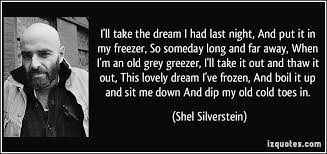
Shel Silverstein

Shel Silverstein was an American poet, songwriter, cartoonist, and author best known for his children’s books and whimsical poetry. He was born on September 25, 1930, in Chicago, Illinois, and showed an early interest in art and writing. Silverstein attended the School of the Art Institute of Chicago and began his career as a cartoonist, contributing to magazines like “Playboy.”

His most famous works include “The Giving Tree,” “Where the Sidewalk Ends,” and “A Light in the Attic.” These books are celebrated for their playful language, imaginative illustrations, and underlying themes of love, loss, and the joys of childhood.

In addition to his children’s literature, Silverstein wrote songs for notable artists, including “A Boy Named Sue,” famously performed by Johnny Cash. His unique style and ability to connect with children and adults have left a lasting legacy.

Shel Silverstein passed away on May 10, 1999, but his work continues to be cherished by readers of all ages. His blend of humour, insight, and profound simplicity makes his poetry and stories timeless.