The School of Unrealistic Hopefulness

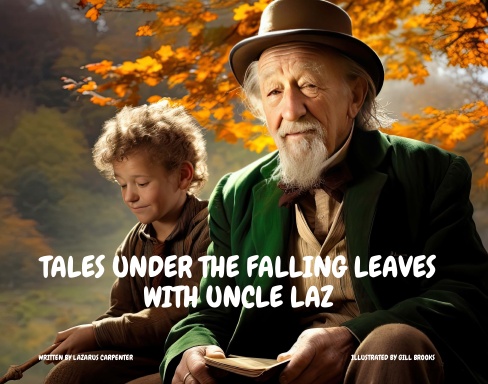
This short story is taken from -Tales from Under the Falling Leaves (Short Stories for Long Nights) with Uncle Laz.
Once upon a time, in a land veiled in whimsy and wonder, there stood a peculiar institution known as the School of Unrealistic Hopefulness. Nestled amidst rolling hills and adorned with vibrant flowers, this school was unlike any other. Its purpose was to cultivate and nurture the boundless dreams and aspirations of young hearts, teaching them to embrace the power of hope and imagination. The school’s esteemed headmaster, Professor Ambrose, was a tall and sprightly man with a twinkle in his eyes. He firmly believed that ordinary dreams could evolve into extraordinary realities. Under his guidance, the students were encouraged to dream big, to dare to imagine the seemingly impossible.

At the School of Unrealistic Hopefulness, every day was a new adventure. The students, an eclectic mix of wide-eyed dreamers, were eager to embark on their journey of discovery. Each morning, they would gather in the enchanting walled courtyard garden, where whispers of inspiration swirled through the air. The first lesson of the day was taught by Professor Amelia, a kind-hearted soul with a penchant for creativity. She taught the students to paint their dreams upon the canvas of the world. With brushes in hand and colours ablaze, the young dreamers would bring their fantasies to life, creating a tapestry of vibrant possibilities.

Next came Professor Felix, an eccentric inventor who believed that the boundaries of reality were meant to be shattered. In his workshop, the students tinkered with gears, wires, and various contraptions. They crafted flying machines, time-travelling devices, and teleportation gadgets, fuelled by their unwavering belief in the extraordinary.

Then, there was Professor Celeste, a wise scholar who revelled in the mysteries of the universe. She guided the students through celestial journeys, teaching them about the stars, planets, and galaxies. Under her tutelage, they learned to see beyond the confines of Earth and dream of exploring distant worlds.

Throughout the day, the students were immersed in an atmosphere of wonder and possibility. They delved into stories of mythical creatures, composed symphonies of hope, and danced to the rhythm of their dreams. The school’s corridors echoed with laughter as friendships were forged and aspirations intertwined. However, the School of Unrealistic Hopefulness was not without its challenges. Doubt occasionally crept into the hearts of the students, threatening to dampen their spirits. But Professor Ambrose, with his unwavering optimism, reminded them that every setback was an opportunity for growth. He taught them to embrace failure as a stepping stone toward success.

As time passed, the students of the School of Unrealistic Hopefulness grew in both wisdom and courage. They carried their dreams like beacons, lighting a path toward a future brimming with possibilities. Some became renowned artists, their works inspiring generations. Others pioneered scientific breakthroughs that defied logic. And a few ventured into uncharted territories, embracing the unknown with open arms. Years later, a former student of the school, now a successful entrepreneur, stood before a crowd of aspiring dreamers. With a twinkle in their eye and an infectious smile, they shared their journey from the School of Unrealistic Hopefulness to the realm of tangible achievements. Their story ignited a spark in the hearts of those who listened, reminding them that dreams, no matter how fantastical, could indeed become reality.
And so, the School of Unrealistic Hopefulness continued to thrive and flourish, its legacy carried forward by new generations of dreamers. The school became a beacon of inspiration, drawing students from far and wide who sought to nurture their imaginative spirits and challenge the limits of what was deemed possible. Over time, the graduates of the School of Unrealistic Hopefulness formed a vibrant network of visionaries united by their shared experiences and unwavering belief in the power of dreams. They collaborated on ambitious projects, pushing the boundaries of innovation in art, science, and technology. Their collective efforts brought about astonishing advancements that transformed the world in ways no one could have imagined. The impact of the School of Unrealistic Hopefulness extended far beyond its enchanting campus.

Its alumni scattered across the globe, spreading the seeds of hope and inspiration wherever they went. They became advocates for change, inspiring others to embrace their own aspirations and pursue their wildest dreams. The School of Unrealistic Hopefulness became a symbol of resilience and determination, reminding society that it is through audacious dreams and unwavering optimism that true progress is achieved. Its name echoed through the annals of history, forever etched in the hearts of those who dared to dream. In the end, the School of Unrealistic Hopefulness stood as a testament to the extraordinary power of human imagination. It taught its students that while the world may present challenges and obstacles, it is through hope, courage, and a refusal to accept limitations that dreams are transformed into reality. And so, dear reader, let the story of the School of Unrealistic Hopefulness inspire you to embrace your own dreams, no matter how grand or unconventional they may seem. For within the realm of imagination lies the key to unlocking a future of endless possibilities.

Images by Gill Brooks http://www.gillsplace.com

Visit Ye Olde Book Shop https://lazaruscarpenterauthor.com/

Milligan the Miser (Inspired by Christmas Carol by Charles Dickens)

Once upon a time, in a small, frostbitten town, there lived a man named Milligan the Miser. Milligan was notorious for his disdain for Christmas and children. As the holiday season approached, he would retreat to his dimly lit home every year, avoiding the festive cheer that filled the streets. He loathed the laughter of children building snowmen, the carolers singing joyfully, and the bright decorations adorning every house but his. Milligan hoarded his wealth, counting every penny like a precious gem. He believed showing generosity showed weakness and took pride in his solitude. The townsfolk whispered about him, shaking their heads at the old man who seemed to embody the very spirit of Scrooge.

One freezing Christmas Eve, as snowflakes danced outside his window, Milligan sat alone by the fire, grumbling about the holiday. Suddenly, he was jolted awake by a strange noise. It sounded like laughter, but not the kind he detested. This laughter was light and filled with joy, echoing from outside his window. Curious, he peeked outside. To his astonishment, he saw a group of children gathered in the yard across the street. They were building a snowman, their cheeks flushed with excitement. At that moment, a memory flickered in Milligan’s mind—a memory of his childhood, when he once loved Christmas when the laughter had filled his home. But as quickly as the memory appeared, it vanished, replaced by his familiar bitterness. Milligan the Miser closed the curtain, determined to return to his solitude. Yet, as he lay back down, a strange warmth enveloped him, and he drifted into a deep sleep.

That night, Milligan was visited by three spirits. The first, the Ghost of Christmas Past, showed him scenes from his youth—joyful Christmas mornings filled with laughter and love. He saw himself as a boy, running down the stairs to find gifts and family gathered around a tree, their faces glowing with happiness. Tears filled his eyes as he remembered what he had lost.

The second spirit, the Ghost of Christmas Present, revealed the joy that surrounded him. Milligan watched as families celebrated, sharing meals and laughter. He saw the children he had dismissed, their innocence and joy illuminating the dark winter night. He felt a pang of longing for the first time—a desire to be part of their happiness.

Finally, the Ghost of Christmas Yet to Come appeared, showing Milligan a bleak future. He saw himself alone, forgotten, his wealth turning to dust. The town had moved on without him, and the children’s laughter was replaced by silence. Milligan felt a deep sorrow; he realized that his miserly ways had cost him the warmth of human connection.

When he awoke, it was Christmas morning. The sun streamed through his window, and Milligan felt a spark of joy for the first time in years. He quickly dressed and rushed outside, determined to change his ways. He visited the local bakery, buying sweets and treats to share. He filled his arms with gifts and headed to the town square, where children played.

“Happy Christmas!” he called out, his voice booming with newfound cheer.

The children turned, surprised, but their faces lit up with smiles. Milligan handed out gifts, sharing the joy he had long denied himself. He laughed with them, feeling the warmth of community wrap around him like a cosy blanket. As the day unfolded, Milligan found himself surrounded by laughter and love. The townsfolk welcomed him with open arms, their hearts warmed by his transformation. No longer was he Milligan the Miser; he had become Milligan the Generous, a man who had learned the true spirit of Christmas. From that day on, Milligan embraced the holiday season, filling his home with laughter and joy. He discovered that giving brought him more happiness than hoarding ever had. And every year, as Christmas approached, he looked forward to the festivities and the children’s laughter that filled the air—reminding him of the magic of connection he had once forgotten. 

Image by AI

The Tale of William Wanderlust

Once upon a time, in a quaint village, there lived a man named William Wanderlust. William had a restless spirit, constantly yearning for the promise of tomorrow. He dreamed of grand adventures, distant lands, and a life full of excitement, yet he never seemed to find the time to pursue his dreams. Instead, he spent his days planning and wishing while his nights were filled with longing for a future that remained just out of reach. One day, driven by an insatiable urge to chase his dreams, William embarked on a journey. He wandered through lush green forests, crossed sparkling rivers, and climbed steep mountains, all the while imagining the wonders that awaited him at every turn. But as each day passed, he found himself in the same cycle: dreaming of tomorrow while doing little to shape it. As his feet trod their path, all the beauty of the now evaded him, and his thoughts remained focused on the next step.

One afternoon, as he rested by a serene lake, William encountered a wise old monk sitting quietly on the shore. The monk’s presence emanated a calm that intrigued him. William approached the monk, sharing his dreams and desires and lamenting how he never seemed to achieve anything. The monk listened patiently and then smiled gently.

“William, you are like a bird perched on a branch, always looking at the horizon. You spend so much time dreaming of flight that you forget to spread your wings.”

Confused, William asked,

“What do you mean? I want to soar into the sky of tomorrow!”

The monk replied,

“Tomorrow is a beautiful illusion, but it is today that holds the key. You can only embrace tomorrow if you take action today. What steps have you taken towards your dreams?”

William realized he had been so focused on the future that he had neglected the present. The monk continued,

“Every journey begins with a single step. If you wish to explore the world, start by exploring yourself. What do you truly desire? What small actions can you take today?”

Inspired by the monk’s wisdom, William began to reflect. He understood that he needed to set achievable goals and take small steps toward them. He started by learning new skills, meeting people along the way, and immersing himself in the beauty of the present moment. As days turned into weeks, William found himself transforming. He learned to savour each experience, whether it was the taste of fresh bread from a local baker or a conversation with a fellow traveller. He no longer felt the weight of unfulfilled dreams; instead, he felt invigorated by the progress he was making. Eventually, William understood that tomorrow would always be there, but it was today that mattered most. With each small step, he navigated through life with purpose and passion. The adventures he once only dreamed of began to unfold before him, not as distant fantasies but as tangible experiences.

Years later, William returned to the lake where he first met the monk. He sat down in the same spot, reflecting on his journey. The monk appeared once more, his eyes twinkling with wisdom. William smiled, grateful for their encounter.

“Thank you for showing me the way,” he said. “I no longer lust after tomorrow. I cherish today and all that it brings.”

The monk nodded,

“Remember, the journey is not about the destination but the experiences along the way. Continue to embrace each moment, and tomorrow will take care of itself.”

With a heart full of gratitude, William Wanderlust had finally found what he had been searching for—not just the thrill of tomorrow but the joy of living fully in the present. And so, he continued his adventures, a man transformed by the wisdom of a simple yet profound truth. 

Images by AI