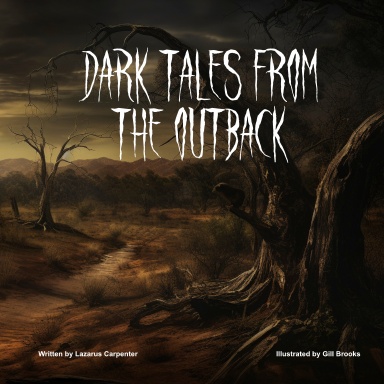
In the heart of the Australian Outback, there existed a legend whispered among the indigenous tribes: the tale of Outback’s Shadow, a monstrous kangaroo driven mad by the spirits of the land. According to legend, Outback’s Shadow was cursed for trespassing into sacred grounds, and ever since, it roamed the desolate plains, seeking vengeance on any who dared enter its domain. The story was dismissed as a mere folktale by most, but for those who lived near the Outback, it was a different matter entirely.
The small town of Dusty Creek was plagued by strange occurrences; livestock was found brutally mutilated, and eerie howls echoed through the night. People whispered that Outback’s Shadow was real, and it hungered for human flesh. One fateful evening, a group of adventurous tourists, drawn by the legend, ventured into the heart of the Outback. Among them was Sarah, a young woman with a penchant for the macabre.
As the sun dipped below the horizon, the group set up camp, oblivious to the danger lurking in the darkness. As the night wore on, the air grew thick with an otherworldly stillness. The crackling campfire is the only source of warmth and comfort in this vast expanse of wilderness. A blood-curdling screech shattered the silence, sending shivers down the spines of the campers. Terrified, they huddled together, their eyes scanning the inky blackness for any sign of movement. It was then they saw it: a pair of malevolent, glowing eyes fixated on them from the shadows. Outback’s Shadow had found its prey.
The creature emerged from the darkness, towering over the campers on hind legs, fur mottled and matted, its eyes burning with madness. Sarah and her companions recoiled in horror as Outback’s Shadow let out a guttural, unearthly growl. Driven by primal instinct, they scattered, but the kangaroo, fuelled by an insatiable bloodlust, pursued them relentlessly. One by one, it picked them off, tearing through flesh and bone with incredible savage ferocity. Sarah, her heart pounding in terror, found herself alone, the agonized screams of her friends echoing hauntingly in the night.
Desperate and on the brink of despair, Sarah stumbled upon a cave, its entrance shrouded in ominous shadows. With no other options, she sought refuge within, hoping to evade the ravenous creature stalking her. As she delved deeper into the cavern’s murky depths, she discovered a series of crude drawings etched onto the walls, depictions of a kangaroo, its eyes ablaze with malevolence, and scenes of carnage and suffering. It was then she realized the truth: Outback’s Shadow was no mere beast; it was a malevolent entity, a twisted spirit bound to the form of a kangaroo, cursed to wreak havoc upon any who dared encroach upon its domain. But before Sarah could process this revelation, she heard a guttural snarl emanating from the cave’s entrance. Outback’s Shadow had found her. In a frenzied panic, she stumbled deeper into the darkness, heart pounding deep in her chest. The walls seemed to close in around her, and the air grew thick with a palpable sense of dread. Sarah’s breath came in ragged gasps as she frantically sought a way out, but the labyrinthine passages seemed to twist and turn, leading her deeper into the heart of the cursed cavern.
The oppressive darkness enveloped her, and the walls seemed to pulse with malevolent energy. She stumbled into a chamber bathed in an eerie, ethereal glow. In the centre of the chamber, a gnarled tree stood, its twisted branches reaching toward the ceiling like skeletal fingers. As Sarah cautiously approached the tree, she noticed an ancient, weathered tome resting at its base. With trembling hands, she opened the book and began to decipher the cryptic text within its pages.
The tome spoke of an ancient ritual, a ritual that could break the curse binding Outback’s Shadow to the physical realm. Driven by a newfound sense of purpose, Sarah fervently studied the arcane instructions. The ritual required her to gather rare herbs and perform an intricate sequence of incantations at the exact stroke of midnight when the veil between the spirit world and the living world were thinnest. With the weight of the ancient tome in her hands, Sarah ventured deeper inside the cavern, determined to seek out the elusive herbs. Minutes stretched into hours as she scoured the subterranean passages, her senses honed to the slightest rustle or whisper that might lead to the ingredients she sought. As the midnight hour approached, Sarah emerged from the depths of the cave, clutching the precious herbs in her trembling hands.
With unwavering resolve, she returned to the gnarled tree and prepared to enact the ritual that could break the curse of Outback’s Shadow. The air crackled with otherworldly energy as Sarah meticulously followed the instructions, her voice infused with ancient power as she chanted sacred incantations. The very ground seemed to tremble when the ritual reached its crescendo, and the chamber became bathed in an ethereal glow. Suddenly, a bestial howl pierced the air, and Outback’s Shadow materialized before her, eyes ablaze with fury. But as the ritual neared completion, the creature’s form began to waver, its roars turning into anguished cries. With a final, resounding incantation, Sarah completed the ritual, and a blinding flash of light filled the chamber.
When the radiance subsided, Outback’s Shadow was gone, and the oppressive aura that before shrouded the cavern evaporated like mist in the morning sun. Exhausted but triumphant, Sarah emerged from the cave, the weight of the ancient tome still heavy in her hands. As the first light of dawn painted the horizon, she knew that she had broken the curse that had plagued the Outback for centuries. From that day forward, the legend of Outback’s Shadow faded into obscurity, and the cursed creature was never seen or heard from again.
Some whispered it had been banished to the spirit realm, while others believed it had found peace at last. For Sarah, the memories of that fateful night would forever linger, a testament to the inexplicable terrors lurking in the depths of the Outback. But she also carried with her the knowledge that even the most malevolent of spirits could be vanquished with courage, determination, and the enduring power of ancient magic.