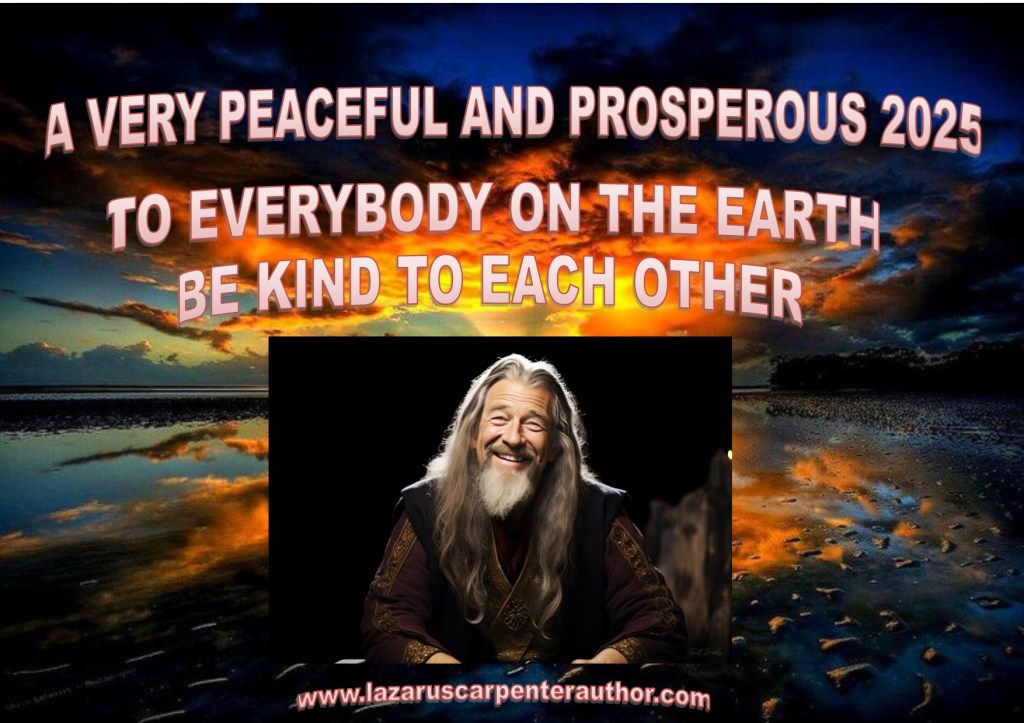
‘New Year’s Food for Thought’

As the past year disappears into the mists of time, we must all move on to pastures new and, as yet, unknown. When viewed from space, the Earth appears to be beautiful, and in essence, it is. But humankind, in reality, has changed very little for thousands of years. We are still controlled by the ‘powers that will be,’ all in the name of law and order and monetary wealth. As a species, we suffer from inherent deafness and blindness to the reality of life and dumbness to speak out and make ourselves truly heard. Yet, all over this beautiful planet, other species become extinct every day; millions are poverty-stricken, homeless, rootless and starving; wars are fought for little reason, and genocide seems to be acceptable. Big Pharma is concerned more with monetary gain than curing disease, and children suffer needlessly. Mother Earth is in turmoil, and global change is a forgone conclusion. Yet, still, war machines are created to kill and maim whilst lining the pockets of countries that should know better and be leading the world to peace rather than perpetuating mindless violence.

“Crumbs, this is depressing,” I hear you say. “Have a drink and chill; it’s New Year’s Eve!” But friends, this is the problem, global blindness, deafness and dumbness to the reality of life on this planet. Ne’er mind, they say, let us carry on flying all over the world polluting the air, ripping the guts from Mother Earth to build electric cars, poisoning the oceans with microplastics, whilst the rich look for ways to move to other planets. Not content with screwing Mother Earth, they wish to do the same elsewhere in the cosmos.

Many agree with my thoughts, but sadly, many more do not and will carry on selfishly ignoring reality. I have purposefully avoided mentioning religion as, for thousands of years, it has formed the roots of disharmony and fuelled wars and genocide and is still doing so today. I leave these philosophical arguments to those who wish to continue to promote invisible fantasy. Faith is personal, all else being the ingredients for delusion and psychoses.

And so, I sincerely wish peace to every sentient being on Mother Earth and prosperity for 2025. Let this be the prosperity of growth in responsibility for protecting each other and Mother Earth. Let peace be an end to the needless wars and genocide. Let kindness be our currency, and remember the Web of Life. What we do affects each and every one of us, Mother Earth and the more expansive universe. Happy New Year!
Salman Rushdie

Salman Rushdie is a British-Indian author and essayist best known for his novel blending magical realism with historical and political themes. He was born on June 19, 1947, in Mumbai, India. Rushdie’s most famous work, “Midnight’s Children,” won the Booker Prize in 1981 and is celebrated for its narrative style and exploration of post-colonial themes. His 1988 novel, “The Satanic Verses,” sparked significant controversy and led to a fatwa issued by Iran’s Supreme Leader Ayatollah Khomeini, calling for Rushdie’s assassination. This event forced him into hiding for several years, significantly impacting his life and work.

Rushdie has continued to write and publish notable works, including “The Ground Beneath Her Feet,” “Shalimar the Clown,” and “The Golden House.” He has received numerous awards and honours throughout his career and is an outspoken advocate for freedom of expression. In recent years, Rushdie survived a brutal stabbing attack in 2022 during a public lecture in New York, which brought renewed attention to issues of censorship and the threats faced by authors. Despite his challenges, he remains a prominent figure in literature and a powerful voice against intolerance.

Grimbold and Lirael

Once upon a time, in a vibrant forest where the sun danced through the leaves, there lived a dwarf named Grimbold and a pixie named Lirael. As children, they were inseparable, exploring hidden glades and sharing secrets among the ancient trees. Grimbold was stout and strong, with a heart as big as his beard, while Lirael was delicate and mischievous, her laughter ringing like chimes in the breeze. While playing near the enchanted brook one fateful day, a disagreement erupted over a game. Grimbold insisted on building a grand dam to catch fish, while Lirael wanted to let the water flow freely. Their argument escalated, and in a flurry of hurt feelings and sharp words, they parted ways, vowing never to speak to each other again.

Years passed, and the once-vibrant bond faded into silence. Grimbold threw himself into his work, crafting intricate tools and trinkets for the village. Lirael, on the other hand, flitted through the forest, her heart heavy with regret but too proud to reach out. The village felt the absence of their friendship; the laughter and joy they once shared were sorely missed. Then, one fateful afternoon, a dark shadow loomed over the forest. An ancient curse, long forgotten, threatened to engulf their village. The elders spoke in hushed tones, revealing that only a powerful spell, woven from the magic of earth and air, could save them. Grimbold’s strength and Lirael’s light were the keys. With the deadline of the impending disaster drawing near, Grimbold and Lirael found themselves at the same meeting. The tension in the air crackled as they exchanged glances, memories flooding back. Finally, Grimbold broke the silence.

“Lirael,” he said, his voice steady but trembling. “We need to talk.”

Lirael’s heart raced. “I know,” she replied softly, her wings shimmering with emotion. “I’ve missed you, Grimbold. I never wanted us to be apart.”

The weight of their years of silence hung between them, but the moment’s urgency pushed them to reconcile. They stepped outside, away from the watchful eyes of the villagers, and spoke of their childhood dreams, their regrets, and the bond that still lingered beneath the surface. As they renewed their friendship, they realized their differences strengthened them. Grimbold’s ingenuity and Lirael’s magic combined in a way they had never imagined. They devised a plan to harness the earth’s strength through Grimbold’s craftsmanship and Lirael’s ethereal energy.

On the night of the eclipse, when the curse was set to strike, they stood together at the edge of the village. Grimbold crafted a massive stone circle while Lirael danced above, weaving her sparkling magic into the air. As the moon cast its shadow, they combined their powers, and a radiant light burst forth, illuminating the darkness. The curse shattered, and the village was saved. The villagers rejoiced, and Grimbold and Lirael stood side by side, their hearts full. They had learned that true friendship could weather any storm, and their once-broken bond was now unbreakable. From that day forth, the dwarf and the pixie became legends in their village, not just for their bravery but for their strength in forgiveness and unity. And as the sun set behind the trees, Grimbold and Lirael knew they would never let silence come between them again.

William Butler Yeats

William Butler Yeats (1865-1939) was an Irish poet, dramatist, and one of the foremost figures of 20th-century literature. Born in Sandymount, Dublin, he was influenced by the Irish nationalist movement, folklore, and mysticism, which profoundly shaped his work. Yeats’s early poetry was heavily influenced by Romanticism and the Symbolist movement. His first collection, “The Wanderings of Oisin” (1889), reflects his interest in Irish mythology and the supernatural. As his career progressed, his style evolved, incorporating more modernist elements, particularly in his later works such as “The Tower” (1928) and “The Winding Stair” (1933).

In addition to poetry, Yeats was involved in theatre, co-founding the Abbey Theatre in Dublin in 1904, which became a crucial platform for Irish drama. His commitment to Irish identity and culture is evident in his works, and he played a significant role in the Irish Literary Revival. Yeats was also deeply interested in spiritualism and the occult, engaging with various esoteric philosophies that influenced his writing and worldview. He received the Nobel Prize in Literature in 1923, acknowledging his poetic accomplishments and contributions to literature.

His later years were marked by political involvement, particularly in Irish politics, and he served as a senator in the Irish Free State. Yeats’ poetry often reflects ageing, love, and the passage of time, culminating in some of his most famous pieces like “Sailing to Byzantium” and “The Second Coming.” Yeats’s legacy is a cornerstone of modern poetry, characterized by its lyrical beauty, rich imagery, and profound exploration of human experience. He passed away in 1939 and was buried in Drumcliff, County Sligo, Ireland, where his epitaph famously reads: “Cast a cold eye on life, on death. Horseman, pass by!” 

Reggie Ragbone

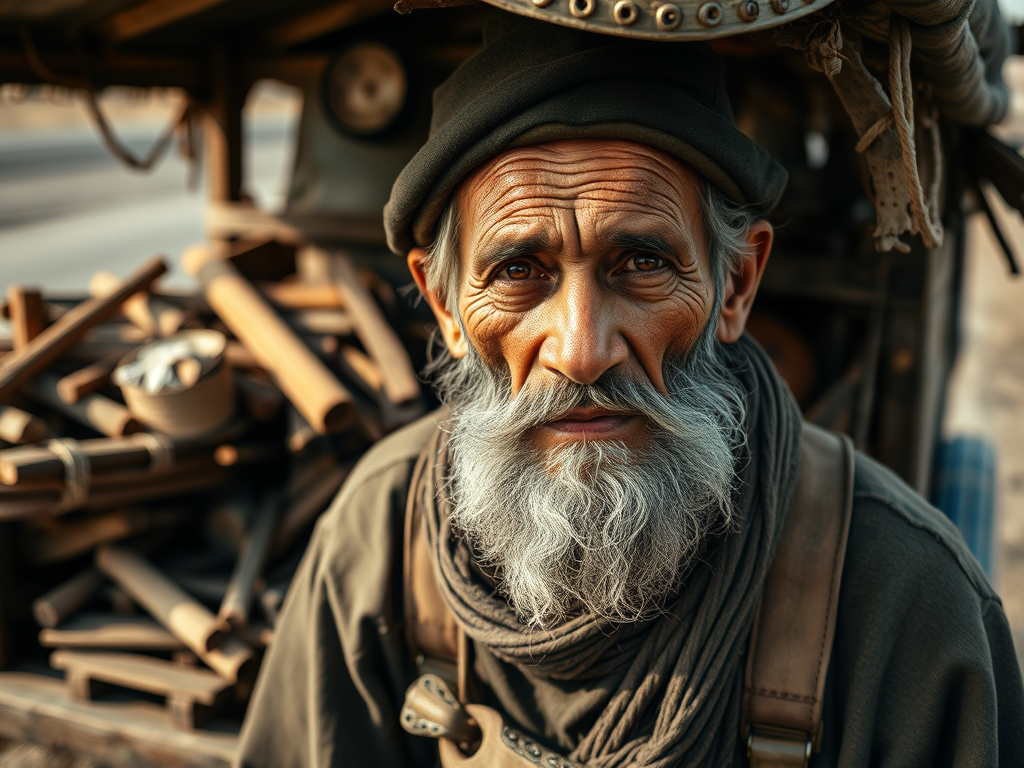
In a small, bustling town, there lived a man named Reggie Ragbone. To the untrained eye, Reggie was just an ordinary man with an extraordinary knack for turning discarded items into treasures. His home, a quaint cottage on the edge of town, was a wonderland of reclaimed materials and imaginative creations. Reggie had a peculiar philosophy: “One man’s rubbish is another man’s gold.” Every day, he would stroll through the neighbourhoods, collecting what others deemed worthless—broken furniture, leftover food, scrap metal, and forgotten toys. With each item, he saw potential, a story waiting to be rewritten.

One chilly morning, as Reggie rummaged through a pile of debris, he stumbled upon an old bicycle frame, rusty but intact. He took it home, cleaned it up, and transformed it into a beautiful garden trellis adorned with vibrant flowers. The townsfolk marvelled at his creations, but his unwavering generosity set Reggie apart. Whenever he found good food but no longer sellable—day-old bread, overripe fruit, or surplus vegetables—he would gather it all and prepare meals for those in need. He opened his door to the less fortunate, inviting them to share in his bountiful table. Reggie believed no one should go hungry, and he made it his mission to ensure everyone in town had enough to eat.

Reggie’s reputation grew, and soon, people began to bring their unwanted items to him, knowing they would find new life under his care. Children would visit his home to watch him work, their eyes wide with wonder as he crafted toys from scraps or built makeshift shelters for stray animals. Reggie became a beloved figure, a beacon of hope and creativity in a world that often overlooked the value of what was discarded. As years passed, the town transformed, inspired by Reggie’s vision. Community gardens sprouted, workshops on recycling and upcycling were established, and neighbours began to share their resources more willingly. Reggie had ignited a spark of creativity and kindness that spread like wildfire.

One day, while sorting through a pile of items, Reggie found a tattered book filled with stories of adventure and friendship. He decided to host a storytelling night, inviting everyone to gather around his fire pit. The warmth of the flames flickered against the backdrop of laughter and conversation as neighbours shared their tales and dreams. Reggie’s heart swelled with joy; he had created a home for himself and a community that thrived on sharing and sustainability. Looking around, he realized that his treasure was not merely the items he salvaged but the connections he fostered and the lives he touched. And so, Reggie Ragbone continued to live his life as a humble man with a golden heart, ensuring that nothing ever went to waste and that no one ever went hungry. In a world often focused on excess, he reminded everyone that true wealth lies in generosity, creativity, and the bonds we share.