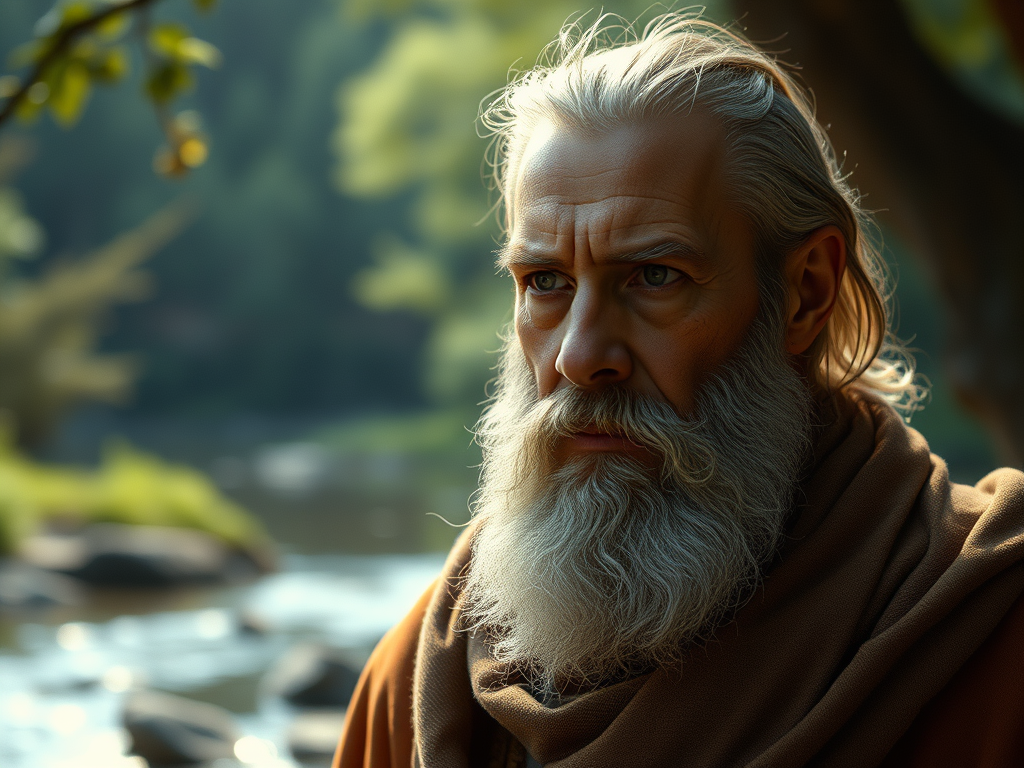
Benedict the Abbot

Once upon a time, an Abbot named Benedict lived in a remote monastery nestled deep in the misty mountains. Benedict was known far and wide for his stern demeanour and iron-fisted rule over the monastery. Under his leadership, the monks toiled day and night, their spirits crushed by his relentless demands and harsh punishments. The monks endured Benedict’s tyranny in silence for years, their hearts heavy with resentment and fear. But as time passed, whispers of rebellion circulated among the monastery walls. The monks, emboldened by their shared discontent, found strength in their unity and resolve to stand up against their oppressive leader.

One fateful night, as the full moon cast its silvery light upon the monastery, the monks gathered secretly to plan their uprising. They shared stories of Benedict’s cruelty and injustices, fueling their determination to end his reign of terror once and for all. When dawn broke over the mountains, the monastery was eerily quiet as the monks set their plan into motion. With hearts pounding and hands trembling, they marched towards the Abbot’s chambers, their voices raised in a defiant chant that echoed through the corridors. As they burst into Benedict’s chamber, the Abbot’s eyes widened in shock and disbelief. Before he could utter a word, the monks spoke as one, their voices ringing with conviction and courage. They laid bare their grievances and demanded justice, no longer willing to suffer in silence under Benedict’s oppressive rule.

At first, Benedict raged and roared, his authority challenged for the first time in his reign. But as he looked into the eyes of his once-submissive monks, now standing tall and united before him, a flicker of realization crossed his face. In that moment, he saw the error of his ways and the pain he had inflicted upon those under his care. With a heavy heart and tears in his eyes, Benedict fell to his knees before the monks, begging for their forgiveness and vowing to change his ways. Moved by his display of humility and remorse, the monks embraced their former despot with compassion and understanding.

From that day forth, Benedict shed his tyrannical ways and worked tirelessly to earn back the trust and respect of his monks. Together, they rebuilt the monastery as a place of peace, harmony, and mutual respect, where all who dwelled within its walls found solace and redemption. And so, the tale of the Abbot, a despot, came to a close, replaced by a new chapter of humility, forgiveness, and unity among those who had once rebelled against him. Peace reigned throughout the monastery.

Image by AI

Grumble the Grumpy Goblin

Once upon a time, a goblin named Grumble lived in the mystical land of Doria. Grumble was unlike any other goblin in the land. While goblins were known for their mischievous nature and love for causing trouble, Grumble was always unhappy. His face was constantly twisted into a frown, and his eyes were always filled with sadness. Grumble lived in a small cave at the edge of a Dark Forest, far away from the other goblins in the village. He spent his days wandering through the forest, grumbling to himself about how unfair life was. While the other goblins spent their days playing pranks and laughing, Grumble preferred to be alone, lost in his thoughts.

One day, as Grumble wandered through the forest, he stumbled upon a group of fairies dancing in a sunlit clearing. The fairies were laughing and singing, their wings shimmering in the sunlight. Grumble watched them from a distance, his heart heavy with envy. Why couldn’t he be as happy as they were? Why was he constantly so miserable?
As Grumble watched the fairies, a tiny fairy named Luna noticed Grumble and flew over to him.

“Why do you look so sad, little goblin?” she asked, her voice filled with kindness.

Grumble was taken aback. No one had ever shown him such kindness before.

“I am Grumble, the unhappy goblin,” he replied. “I have always been this way and fear I will never know true happiness.”

Luna smiled gently at Grumble.

“Happiness is not something that can be given to you, Grumble. It is something that comes from within. You must learn to see the beauty in the world and find joy in the small things.”

Grumble listened to Luna’s words, and for the first time in a long time, he felt a glimmer of hope in his heart. He followed Luna’s advice and began looking for beauty in the world around him. He watched the sun rise over the mountains, listened to the gentle rustling of the leaves in the wind, and marvelled at the colours of the flowers in the meadow. As days turned into weeks, Grumble’s frown began to soften, and a small smile tugged at the corners of his mouth. He found himself laughing and singing along with the birds, his heart filled with a newfound joy.

Word of the transformed goblin spread throughout Doria, and soon, goblins, fairies, and creatures from all corners of the land came to see the once unhappy Grumble now filled with happiness. Grumble had finally found his place in the world, surrounded by friends who loved him for who he was. And so, Grumble, the once unhappy goblin, learned that true happiness comes from within and that even the darkest of hearts can find light and joy in the world. From that day on, Grumble’s frown was replaced with a smile, and he lived happily ever after in the mystical land of Doria.

Image by AI

The Tear Drop

Once upon a time, in a small village nestled between rolling hills and lush forests, there was a peculiar teardrop that would not dry. This teardrop was no ordinary water droplet; it was a magical tear shed by a fairy named Lyra, known for her kindness and compassion. Lyra’s tear fell from her delicate eye one starry night when she witnessed an act of great injustice in the village. The tear shimmered in the moonlight as it touched the ground, and instead of evaporating like tears usually do, it stayed intact, glistening with an otherworldly radiance. The villagers were astounded by this mysterious tear drop that refused to dry. They tried to wipe it away, but it reformed in the same spot. Some believed it was a sign from the fairy realm, while others thought it was a curse cast upon the village. Days turned into weeks, and weeks turned into months, but the teardrop remained, a constant reminder of the sorrow that had befallen the village. The people started to avoid where the tear lay, fearing its strange power. As time passed, the villagers noticed something remarkable. The teardrop grew slowly but steadily, forming a small pool of shimmering liquid. Flowers bloomed around the pool, their petals vibrant and colourful, as if nourished by the magical tear.


One day, a young girl named Elara, who had always been drawn to the teardrop, approached it with a heart full of curiosity and empathy. She sat beside the pool and gazed into its depths, feeling a deep connection to the sorrow and beauty that it held.
As she sat there, a wondrous thing happened. The teardrop began to rise from the pool, swirling and shimmering in the air before transforming into a radiant butterfly, its wings glittering with all the colours of the rainbow. The butterfly fluttered around Elara, filling her with peace and understanding.

The villagers watched in awe as the butterfly danced through the village, spreading hope and healing wherever it went. And as it flew away into the sunset, the teardrop finally dried, leaving a sense of wonder and magic that would forever linger in the villagers’ hearts. From that day on, the village was known far and wide as a place where tears turned into beauty, sorrow gave birth to joy, and the magic of compassion and empathy could transform even the most stubborn teardrop into a symbol of hope and renewal.

Images by AI

Enoch

In the Book of Genesis, Enoch is described as the great-grandfather of Noah, who lived for 365 years. He was also the father of Methuselah and is described as a righteous man who walked with God. According to the Bible, Enoch “walked with God, and he was not, for God took him.” This implies that Enoch did not experience death in the traditional sense but was taken directly to heaven by God. This event is often interpreted as Enoch being translated into heaven without experiencing physical death. Enoch is mentioned in ancient texts like the Book of Enoch, which provides more details about his life and teachings. The Book of Enoch describes him as a prophet who received visions and revelations from God about the end times and the judgment of the wicked. He is remembered as a figure of great faith and righteousness in religious traditions, and his story continues to inspire believers to walk closely with God and live in obedience to His will.

Enochian physics is a term often used in esoteric and occult literature to refer to a theoretical system of physics associated with the teachings of Enoch, a figure from biblical and extrabiblical texts. Enochian physics is not based on mainstream scientific principles but on mystical, spiritual, or metaphysical interpretations. In the context of esoteric traditions like Hermeticism, theosophy, and certain branches of occultism, Enochian physics may refer to a theoretical framework that attempts to explain the nature of the universe, energy, consciousness, and the interplay between the physical and spiritual realms. This system of physics is sometimes associated with the alleged teachings or revelations of Enoch, as found in texts like the Book of Enoch.

It’s important to note that Enochian physics is sadly not recognized or studied within mainstream physics or science and is considered more of a speculative or philosophical concept within esoteric and mystical traditions.

Images by AI

Brother Kaito

Once upon a time, a monk named Brother Kaito lived in a secluded monastery nestled deep within the misty mountains. Brother Kaito was a devout and humble man known for his wisdom, kindness, and unwavering faith in his order’s teachings. A terrible storm swept through the mountains one fateful winter night, unleashing its fury upon the monastery. As the wind howled and the thunder roared, a lightning bolt struck the ancient oak tree near the monastery, splitting it in two. The monks huddled together in prayer, seeking solace and protection from the raging tempest. In the midst of the chaos, Brother Kaito volunteered to go outside and secure the monastery’s gates, which had been flung open by the force of the storm. With a lantern in hand, he ventured out into the darkness, his robes billowing in the wind.

As Brother Kaito reached the gates and began to close them, another bolt of lightning struck the ground, illuminating the night sky with a blinding light. In that moment of intense brightness, a strange and otherworldly presence enveloped Brother Kaito, causing his form to flicker and fade like a wisp of smoke. When the light subsided, the monks rushed outside to find Brother Kaito standing before them, his features distorted and ethereal. He spoke to them in a voice that echoed from beyond the grave, telling them that he had become a ghost bound to the monastery by a powerful force unleashed by the storm. Despite his ghostly form, Brother Kaito remained committed to his duties as a monk, continuing to offer guidance and wisdom to his fellow brothers. His presence brought both comfort and awe to the monastery, as tales of the monk who became a ghost spread far and wide.

Years passed, and the monastery flourished under Brother Kaito’s spectral watch. His teachings and legacy endured, inspiring generations of monks to follow in his footsteps. And so, the tale of the monk who became a ghost became a cherished legend, a testament to the enduring power of faith, compassion, and the unbreakable bond between the living and the spirit world.

Image by AI