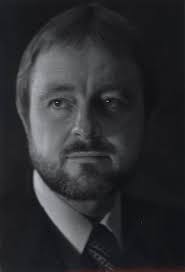
Ingo Douglas Swann

Ingo Swann, born in 1934, was a prominent figure in the field of remote viewing and is best known for his involvement with the U.S. government’s psychic research programs, notably the Stargate Project. Swann was born in the United States and had a varied career before becoming involved in remote viewing. He was interested in art and literature and was known for his creative abilities.
– Introduction to Remote Viewing: In the 1970s, Swann began exploring psychic phenomena and eventually became involved in remote viewing, which involves mentally accessing information about distant or unseen targets.
– Stargate Project: He played a significant role in the Stargate Project, a secret U.S. government initiative investigating the potential use of psychic abilities for military and intelligence purposes. Swann’s work helped develop remote viewing protocols and techniques.
– Training and Development: Swann contributed to creating structured remote viewing methodologies, which included training programs for participants to enhance their abilities.
– Demonstrations: He participated in numerous public demonstrations of remote viewing, showcasing his ability to describe distant locations, objects, and events without prior knowledge.
– Writing and Teaching: Swann authored several books and articles on remote viewing, sharing his insights and experiences. He also taught remote viewing techniques to others, further popularizing the practice.

Swann believed in the interconnectedness of consciousness and the potential for humans to access information beyond conventional sensory perception. His work has influenced both the field of parapsychology and the broader interest in psychic phenomena. He is often regarded as a pioneer in the field of remote viewing. Swann continued to be active in the field until his later years, participating in workshops and seminars until his passing in 2013. Ingo Swann’s contributions to remote viewing and psychic research have left a lasting impact, and he remains a significant figure in discussions about the potential of human consciousness.

‘Walls Have Ears’- Craig y Nos Castle

Introduction

In December of 2022, I had a dream to bring alive the story of Craig y Nos Castle,
to relate the history, its life and times but in that of a novel format. Then, the idea came to write the story from the ‘first person’ perspective as an observer of the comings and
goings of life in this Gothic mansion. What better, thought me, than to be a lump of rock
in the foundations mined from the Cribarth, overlooking Cae-Brynmelyn-Bach opposite
Pentrecribarth farm? Deep in the foundations I would be aware of everything that
happened through vibrations emanating within the walls. Thus, the title was born, ‘Walls
Have Ears’.

Craig y Nos Castle has a long history of paranormal occurrences. As a ‘trance
psychic channel’
I felt an opportunity presented itself to incorporate the words and stories of the spirits still present, combined with tales gained through actual historical facts and interviews with people who had family and work connections with the castle through the years. Thus my research began both with those alive, and those long gone to the world of spirit.

Abstract

I know not how long I have lain upon the Cribarth, here so high on this
craggy ridge amidst passing clouds looking down to the valley below. Back in the
mists of time, volcanoes roared, earthquakes cracked mountains, ice thawed, and beds
of limestone and Twrch sandstone were laid down in sedimentary layers in tropical
seas near the equator some 350 million years ago. They arrived where they are
today by continental drift, and since then, here is where I have been, and much has
passed me by. Many have trod over me through millennia, ancient Celts, Druids,
invaders from Rome and England. But I am a rock, and I remember everything
passing through time as only a rock can.
Staring down the valley below, I see a tall man whom I know to be Captain Rice
Davies Powell, distinguished, suited and whiskered, leaning on an ebony walking
cane with a hand grip of gold. He stands on a field I know as Cae-Brynmelyn-Bach
opposite Pentrecribarth farm. It is late in the Autumn of 1843, leaves falling and
floating through the air, blown by easterly winds gather beneath stone walls and
footings covering ground as a carpet of bronze.
Captain Rice Davies Powell shielded his eyes with a gloved hand, the noonday
autumnal sun momentarily blinding more than ambition. His companion was a much smaller yet rotund man in his fifties, with bushy dark hair swept back over a checkedcoat collar. He stood with a sketchpad in one hand and charcoal in the other. Thomas H Wyatt was an architect of some renown, and being far from his offices in Great Russell
Street, London, he stood looking at the empty field of Cae-Brynmelyn-Bach. A tall,

stooped, thin man with wispy, greying hair stood at Thomas Wyatt’s shoulder. His
partner, David Brandon, accompanied him travelling from their offices by rail to
Swansea and then coach and four to Pentrecribarth for a planning meeting with
Captain Powell. Both were well-known architects at this time, responsible for building numerous Gothic-style churches, public buildings and private mansions.