LAZARUS’S BLA BLA BLOG

THE ART OF STORYTELLING

PART FOUR

‘END IN SIGHT’

Dependent upon story length do you have a Novella or a Novel on your desk? Anything over forty thousand words may be considered a novel. If you have in mind a series and wish to introduce major characters some writers begin with a novella by means of launching a series. Others like myself use a novel to launch a character, Crach Ffinnant – The Prophecy being a prime example. Nevertheless, your story may be nearing the end if it’s writing or things may get in the way and for many, a common problem is ‘writers block’. Ideas and themes seem like a desert, dry and not very productive on a practical level and emotionally draining, tiresome and frustrating for the creative mind on another. So what do you do, cut an ear off? Somewhat extreme perhaps, Van Gogh must have regretted his actions as will you if you are hard on yourself.

‘Writers block’ is simply your mind saying ‘have a day off’. We should never force the creative process of storytelling and perhaps should consider using exercises to encourage intuitive writing in order to be alive within our story. If we are ‘alive’ in the story the reader will be drawn in to your words like the images of a good film.

For me I become my characters as I write about them and subsequently get to know them well in terms of personality and behaviour. I suppose we can liken it to acting, jumping from one character to the next, making it up as you go. That is ‘intuitive writing’. The best stories are often written this way around theme-work and storyline. When I invented Septimus Tupp my mind was full of a fat, idle and pretty useless gluttonous monk who would do anything to avoid work. Sadly for him it came as a great surprise in the story when he ended up face down floating in a trout pool. If you have to kill off a character, make it a memorable demise. In fiction, the universe is your oyster and as Jon Luc would say, ‘Make it so!’

My genre is historical fiction set in the 1400’s and so a certain amount of research is often needed. Nothing better in storytelling than embellishing fact with fiction. The simple point of course is, it matters not what you write, if you have a story inside you, develop it and give birth to your ideas, make them come alive. To be honest I suppose I may write in this genre because I find it more comfortable than ‘real life in the here and now’. But what storyteller does not?

So your story is written and you sit back and heave a sigh of relief.

Well just take a deep breath. Put your feet up and leave the manuscript alone for a few days, you deserve the rest, the easy bit is behind you. Now comes the heart wrenching and tear jerking, frustrations and sleepless nights. You have to read it. Reading through and noting possible changes as the pages are turned, especially grammar, fleshing out character descriptions, correcting errors, formatting and editing your manuscript. In my limited experience, this process takes as long as writing a story and is the reason why many authors fail to get in to print. Fortunately, if you are simply a storyteller and have difficulty in editing and formatting, Words Matter Publishing offers support and services, so if you have a budget contract the services you need. If like me you have little disposable income then you have to do the work to reduce the amount your publisher must do to bring you to market. If you do not have the skills now, believe me you will develop them.

Let’s just take ‘five’ and remember the reality of being a storyteller wishing to become a published author. You must strive to have in simplest form …..

A great original story told in a creative way

Characters that bring the storyline alive and are memorable

Chapters of reasonable length with thought provoking ‘first paragraphs’

Novella or Novel is determined by the length of your story

Good grammar, formatted and edited to the best of your ability  

So, you feel happy to have achieved where you are right now and so you should, to have reached this point takes skill, determination and endurance. Now we must face the reality, we are not alone, it is suggested there are a million new authors every year and that my friends is competition and an enormous market place in which to be. Will you make a million dollars from your story, will it be made into a movie? Well I wish you every success but I am happy with telling a good tale. I hope you have found this series, The Art of Storytelling to be a helpful introduction. There are thousands of writing courses out there, do it yourself manuals and publishers but if you have a story to tell. Pick up your pen or tap those keys.

May your quill never run dry!
The Art of Storytelling

‘THE PLOT THICKENS’

PART THREE

BY

LAZARUS CARPENTER

In previous parts of The Art of Storytelling, we looked at historical context and development of stories through the ages, beginnings and endings, storylines and protagonist character creation. Now we have some idea as to who the characters in our story are, what they look and act like, an all important question arises. What is the major plot enmeshed within your story. How will it be revealed and how will it serve your planned themes? Remember for the sake of argument all planning of characters and story timeline are achieved and you are beginning to write your tale. Remember also the opening page of the first chapter must magnetically attract potential readers to your words, make it meaningful and memorable. They cannot wait to turn the page to find out what happens next, this is your aim.

Do not be surprised if that first paragraph is written and re-written until satisfaction is achieved, because as sure as ‘eggs are eggs’, once you start the creative process of bringing the story alive the more you will engage. Some writers think about the reader when they are writing, what will they think and how will they react to such and such a chapter. Perhaps I am selfish, I write to tell a story and in reality it is not until perhaps at the proofing stage, I may consider the reader. It may be also associated with me often writing in the first person because I am attempting to act out and live the drama I am engaged in writing about. In all honesty I doubt if Tolkien, Stephen King, JK Rowling, CJ Sansom or any storytellers thought about readers too much because they have a tale to tell as tell it they do. I would caution obsessions with ‘what the reader might think’, you will lose your sanity. Again, I write for me and hope readers like it, success is honesty with one’s self in the first instance, do not sell out and stick to your guns as they say. It takes time to be a successful author and it is not all about money.

So in my own case as far as ‘Crach Ffinnant-The Prophecy’ is concerned the initial plot is revealed in chapter one when Crach’s old master dispatches him on a journey to London laden with sacred scrolls. Once he has arrived a ‘second apprenticeship’ begins with Master Healan an apothecary as the plot thickens when it is revealed to both Crach and Owain Glyndwr, their futures. A plot of course is building all of the time and branches into sub plots helping achieve its goal. Crach joined a travelling circus in order to get to London, he chose to become dumb because he did not speak English at that time. His experiences take on a very different slant because of this decision but it serves him well. So a key issue is the timeline of plot development. I liken it to a tree with branches and roots, plots and sub plots forming a story, your tree, your creation!

To help define your plot there are a few basic common themes.  Battling and overcoming monstrous characters, rebirth and renewal, questing, journeying and returning, rags to riches, tragedy and comedy.

Crach Ffinnant – The Prophecy is a ‘quest’ yet dips toes in all themes and I believe good stories include all of these elements but tis a matter of personal choice, not academic argument.

Keep your quill sharp!  

Originally published in Words Matter Publishing Quarterly Journal

The Art of Storytelling

PART TWO

‘THE CHARACTERS’

BY

LAZARUS CARPENTER

In the first part of this series, we tracked how storytelling has emerged through millennia and examined briefly the idea of engagement to a story by captivating the reader with opening lines, and pages designed to create interest. Now to the gritty issue of the characters in your story. Not only is an excellent plot essential for a good story, the characters must bounce off the pages as ‘real’, visualized as if it was a film a reader is watching. You have probably thought of a plot but how is it acted out, who are the players?

There are many ways to write a story but how will you write yours? How much planning and forethought will be needed? In my own case I have both written intuitively with very little planning and completed tales with so much planning it became a research project. It all depends on you and what you want to achieve. With my first book in the ‘Crach Ffinnant’ series, The Prophecy, it was mostly written intuitively with very little planning however, as the series developed, so too did the research to continue the story. The adventures of Crach Ffinnant are based loosely on historical fact as he truly was a dwarf, prophet and seer to Owain Glyndwr, the last true Prince of Wales. However, a writers dream emerges for me because here was a character who although ‘lived’, very little is known about him before he came to serve the Prince.

What a gift this was as I could imagine how his life may have been in the Middle Ages and thus, create it. There are no artist’s impressions of him either, a fantasy was born. So the best way to proceed in example is to tell my story as it happened. I had finished my first self-published book, Ballad of Penygraig and wanted to write something else. For some years I had been loosely involved in various festivals related to Owain Glyndwr, written a couple of songs about him (‘Owain Glyndwr’ and ‘Jack of Kent’) and written a children’s pantomime, ‘A Fiery Knights Tale’. In the pantomime I narrated the story as Crach Ffinnant and wrote the music. So my mind was edging towards writing about Crach Ffinnant and how it all started for him, how his life led him towards Glyndwr. I had no idea how to start, nor indeed where in terms of the story would lead and one day three years ago, I sat down and just wrote and wrote as the thoughts came to me and the tale began.

Crach is a delightful character with a good sense of humour and heaps of good qualities. But he lived in a time where often his experiences were anything other than fun, in fact just the opposite. He does not meet Glyndwr for quite some time in The Prophecy and we get to know Crach well through his adventures on the way towards his destiny, to serve Glyndwr. By the end of the first chapter Crach is established as a character and visualising him is easy, but I have not given it all away by any means and throughout the story his personality develops. We also discover why Crach must go to London and who will help him get there, but there is no character overload and descriptions are relevant to the point in the story. By the end of the first chapter the reader is familiar with Crach and his old Master.

My characters evolved more by good luck than good management but evolve they surely did and are alive and well in all three volumes of the series. Here is the rub though because as the story grew so too did the research of characters such as Glyndwr, Henry IV and others to exact as much accuracy as possible. However, at no time did I plan to write a historical book, I wanted to bring back dragons too and align with the symbolism of Glyndwr so fantasy had to develop, there was no choice and I loved every word coming out of my deranged mind.

I have always had a tendency to go where ‘angels fear to tread’ and the lack of planning in volume one testifies to this, but it worked. So make lists of what your characters look like, their personality traits, clothing, movements and actions. Who are the protagonists and how much will you say about them and where in the tale it is relevant to add detail. Think about relationships between characters and how detail can be added and where it is appropriate. It is very helpful to look at how your favourite authors describe characters to give you some ideas. But there are so many easy ways to make shortcuts nowadays and heaps of internet sites offering advice, guidance and check lists to enable ease of writing.

I think an important word here is ‘balance’. By all means use whatever methods are out there to help you but take your time and do not kill the spontaneity of your storytelling by getting bogged down in the methodology of writing.

I write because I like to tell a good story and I am a great believer in spontaneity and intuition in my storytelling. Another aspect of character formation is, it is really quite difficult not to include parts of your own personality in your characters. There is certainly a little bit of me in all my characters, even the villains. As a little exercise, invent a character, their good points and bad and then write your own, then compare and contrast. Who we are and what we have seen, the people who have influenced us in our lives and our good and bad points will in some way appear in our characters  and stories when writing fiction, it is hard not to, after all we are the ‘sum of our parts’.

Next time …… the ‘Plot’

ORIGINALLY PUBLISHED IN WORDS MATTER PUBLISHING QUARTERLY JOURNAL

The Art of Storytelling

Part One (Originally published in Words Matter Publishing Quarterly Journal)

‘ONCE UPON A TIME’

BY

LAZARUS CARPENTER

On a cave wall, gnarled fingers etched images with a fragment of flint across rock. A deer pursued by hunters brandishing spears springs out of the granite. In another image, the deer fallen pierced with spears surrounded by hunters. Yet further along the cave wall, hunters are seen carrying the fallen creature hung between them on a pole. Next we see the hunters sitting around a fire, the deer roasting on an ancient spit. The art of storytelling begins.

Stories depicted in this way were experiences of adventures recorded for all to see. A beginning, a middle and an end, a journey through time. As language developed so to an oral tradition of sharing stories between folk. All indigenous cultures without exception began in this way, the most ancient being the Aboriginals of Australia. Passing through thousands of generations, stories told around the camp fires have recorded ancient history. Many years later, as alive and vibrant as the day they were first told. The storyteller illustrating the story through engaging language entertained and captivated their audience.

With the advent of the written word, ink and scrolls of parchment, stories could be recorded to be read at any time, but were only available to the rich and educated, whilst the oral tradition continued for common folk. The oldest known manuscripts are dated around 2100 BC. But some scholars believe that these could be transcriptions of earlier Sumerian texts. Integrated versions have been found dating from around 2000-1700 BC. The most complete “standard” version written on 12 clay tablets sometime between 1500 – 1200 BC.

The ancient Egyptians had wax and wood “notebooks,” but the Romans were the first to create bound books from paper (papyrus). By the 2nd century, this type of codex was the preferred writing tool among early Christians. The Diamond Sutra is now considered the oldest known printed book, its contents are central to Indian Buddhism, and are believed to have been translated from Sanskrit to Chinese in about 400 AD. The development of printing in China in the 8th Century paved the way for this book.

In Europe the first book ever written that we know of is The Epic of Gilgamesh: a mythical retelling of an important political figure from history. Years later, in 1454, a German man called Johannes Gutenberg built his very own printing press. And thus in Europe the ‘book’ was born as the pages printed were bound together.

The plays and sonnets of William Shakespeare appeared in the Royal Court of Elizabeth I in pamphlet form. There are many great storytellers from the past, perhaps the most famous and prolific being Charles Dickens (1812-1870). He wrote more than fifteen novels, short stories, plays and many journal articles based on social commentary of Victorian England.

It is said ‘everyone has a story to tell’. So you have an idea and would like to write your story, where do I start I hear you ask? A story has five basic but important elements. These five components are: the characters, the setting, the plot, the conflict, and the resolution. These essential elements keep the story running smoothly and allow the action to develop in a logical way that the reader can follow. I feel it is crucial the opening line and first paragraph are engaging and memorable so the reader becomes hooked. You may have written an excellent story but if the reader becomes bored by the first couple of pages they may put the book down and not finish it at all. There are many excellent books with engaging beginnings and here I suggest some of my favourites for you to consider.

For example in ‘A Christmas Carol’ (1843) a novella written by Charles Dickens we read.

“Marley was dead, to begin with. There is no doubt whatever about that. The register of his burial was signed by the clergyman, the clerk, the undertaker, and the chief mourner. … Old Marley was as dead as a doornail.”

JRR Tolkien in the ‘Hobbit’ (1937)

‘In a hole in the ground there lived a hobbit. Not a nasty, dirty, wet hole, filled with the ends of worms and an oozy smell, nor yet a dry, bare, sandy hole with nothing in it to sit down on or to eat: it was a hobbit-hole, and that means comfort.’

Metamorphosis by Franz Kafka (1915)

‘As Gregor Samsa awoke one morning from uneasy dreams he found himself transformed in his bed into a gigantic insect’

Pride and Prejudice by Jane Austen (1813)

‘It is a truth universally acknowledged, that a single man in possession of a good fortune, must be in want of a wife’

1984 by George Orwell (1949)

‘It was a bright cold day in April, and the clocks were striking thirteen’

The Restaurant at the End of the Universe by Douglas Adams (1980)

‘The story so far: in the beginning, the universe was created. This has made a lot of people very angry and been widely regarded as a bad move’

Moby Dick by Herman Melville (1851)

‘Call me Ishmael’

Harry Potter by JK Rowling (1997)

 “Mr. and Mrs. Dursley of number four, Privet Drive, were proud to say that they were perfectly normal, thank you very much.”

The Prophecy by Lazarus Carpenter (2018)

‘For ten years past, I have been an apprentice to Llwyd ap Crachan Llwyd and have learned the ways of prophet and seer.’

In all of the examples we are hooked as the narrative engages our interest by introducing a theme and suggesting questions raised, yet to be answered. Have a look at novels by your favorite authors for other examples.

In the next edition of Words Matter Publishing On-Line Journal with part two of this series the ‘Art of Storytelling’, I will introduce ideas and concepts looking at the five basic elements of writing your tale: the characters, the setting, the plot, the conflict, and the resolution.

‘THRICE TOUCHED BY A SAINT’

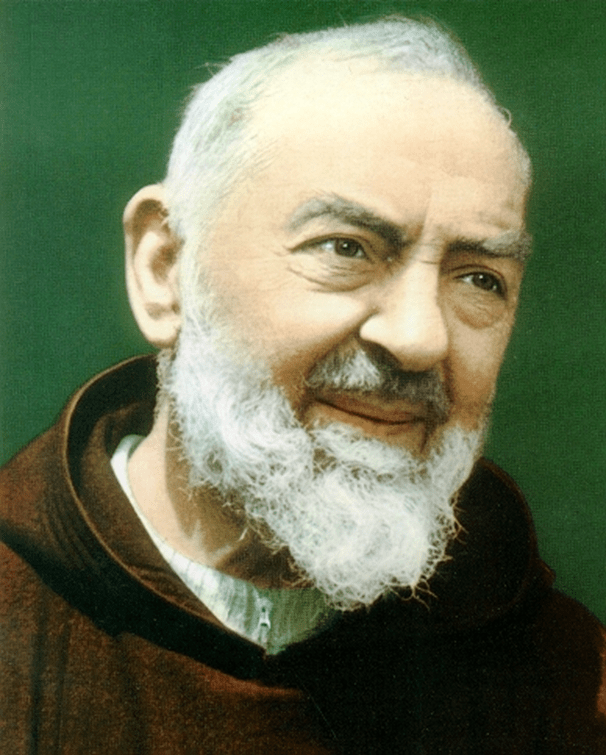
Back in 1992 my German Shepherd, Macduff nibbled at a dead fish on the beach. Later in the day he began to bleed profusely from his rear and a visit to the vets was imminent. He was admitted as an emergency and put on a drip, diagnosis, mercury poisoning. The prognosis was very poor and the vet did not think Macduff would last the night and told me to be prepared for the worst. In my wallet a picture of Saint Padre Pio with a small relic of stigmatic bandage on the back, sprung to my mind. With the vets permission I hung the photograph in the kennel. When I returned home the whole night was spent in prayer to Padre Pio asking and pleading for intercession. Next morning without any sleep behind me, the car found its own way to the surgery. As you can imagine my heart was in my mouth when I walked through the vet’s door.

‘He is still with us!’ I was told as we both walked towards the kennels.

A sigh of relief, but as we entered the kennel I saw my huge dog, a shadow of his former self. The vet told me he had lost over half of his body weight in the last twenty four hours. Nevertheless, Macduff lifted his head from a cushion and weakly barked at me. He was over the worst and the vet was speechless. Padre Pio had heard my prayer of that I was sure. After a few days of hospital care he was home and craving cucumber and toast and after six months he was back to his old self. I left my photograph of Padre Pio with the vet and he put it above the operating table.

His parting words to me were. ‘Only a miracle could have saved him, and we have witnessed one!’

Macduff lived for a further four years and passed away at the grand old age of twelve.

Moving forward to 2003 my partner at that time was diagnosed with ovarian cancer after positive smears. Again, I turned in prayer to Padre Pio but I did not tell her what I was doing, such stuff had a tendency to freak her out. So for three nights running sitting in vigil and praying to Padre Pio, I pleaded for intercession. Around ten days later, she told me strange sensations were happening in her head and visually a signature kept appearing every time she closed her eyes. So blue, gold and purple shafts of light were all around her when she closed her eyes and combined with the sight of a strange signature, she was anxious. I knew what was happening or thought I did, so I asked her if she was able to reproduce the signature. As the pen scribed across the page, my questions were answered, it was the signature of Padre Pio.

I fell to my knees in tears and told her she had been healed. Needless to say her anxiety overtook what was really happening, and it was not until the following week when she was informed by the oncologist, ‘there was no evidence of cancer’, she finally believed me.

Fast forward to February 2021, I awake in the early hours unable to breathe, and in the midst of a massive heart attack. Deb called an ambulance and fortunately it arrived very quickly and off to hospital I went. By the time I arrived, to say I was frightened is an understatement, I was petrified, especially when the doctor told me what was happening to me. It is decided a stent needs to be fitted in one of my coronary arteries, and I find myself in the theatre surrounded by machines and a lot of folk milling around. Of course by now I was a little calmer, thanks to medication to numb the pain and relax my muscles. Laying there watching a huge screen as my heart went boom de boom, I was mesmerized by the procedure. It really is quite a surreal experience watching your own heart, and various arteries working in real time as a catheter is introduced to put the stent in the damaged part of my heart. However, all seemed to be going as well as it could be and the surgeon completed the procedure and started to withdraw the cannula.

Suddenly, a gasp from the surgeon followed by a cry of ‘Shit!’ The pericardium had been nicked and I witnessed a dark shadow spreading across my lungs on the big screen, I was bleeding out into my lungs. For the first time in my life, I prayed for me, I was probably going to die if they did not get this sorted properly and quickly. In my mind I silently screamed for forgiveness to Padre Pio, never would I sin again in any shape or form if I could be saved, just this once. Whilst the surgeons busied themselves with trying to stop the blood loss from my heart, I prayed and prayed for Padre Pio to save me. I felt calmer and could swear I felt hands on my head. An aroma drifted around the operating theatre and at first I thought it was fresh air spray, but it was not. Jasmine filled my nostrils and others too remarked on the strong fragrance.

The immediate danger was over but I remained very poorly and was admitted to coronary care, where they put me in a private ‘goldfish bowl’ next to the nurse’s station for observation. For three days I floated in and out of consciousness with the Discovery channel echoing from a television on the wall. Every time I woke up there was some program or other reflecting times and interests throughout my life, almost as if various times were being replayed. The aroma continued until I was moved out of observation, but the emotion of the experience did not, and even today I can remember almost every moment of the experience.

I am so glad to be here and I know it was a miracle I survived, but I did. I think there is much for me to do yet!

Padre Pio, also known as Saint Pius of Pietrelcina, was an Italian Franciscan Capuchin, friar, priest, stigmatic, and mystic, now venerated as a saint in the Catholic Church. He compared weekly confession to dusting a room weekly, and recommended the performance of meditation and self-examination twice daily: once in the morning, as preparation to face the day, and once again in the evening, as retrospection. His advice on the practical application of theology he often summed up in his now famous quote: “Pray, Hope, and Don’t Worry”. He directed Christians to recognize God in all things and to desire above all things to do the will of God.